Beijing Anzhen Hospital, Capital Medical University, Beijing, China.
Beijing Institute of Heart, Lung and Blood Vessel Disease, Beijing, China.
Ann Med. 2022 Dec;54(1):1667-1677. doi: 10.1080/07853890.2022.2083671.
The systemic inflammatory response index (SIRI) is a novel inflammatory biomarker in many diseases.
The aim of this study was to examine the association between SIRI and adverse events in patients with the acute coronary syndrome (ACS) undergoing percutaneous coronary intervention.
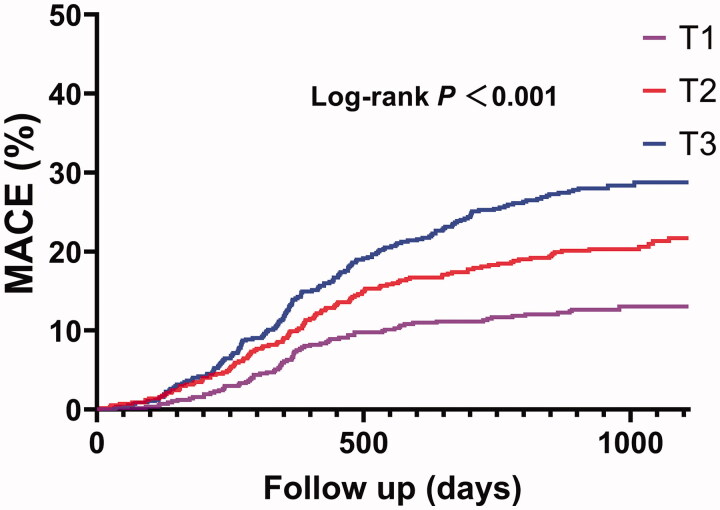
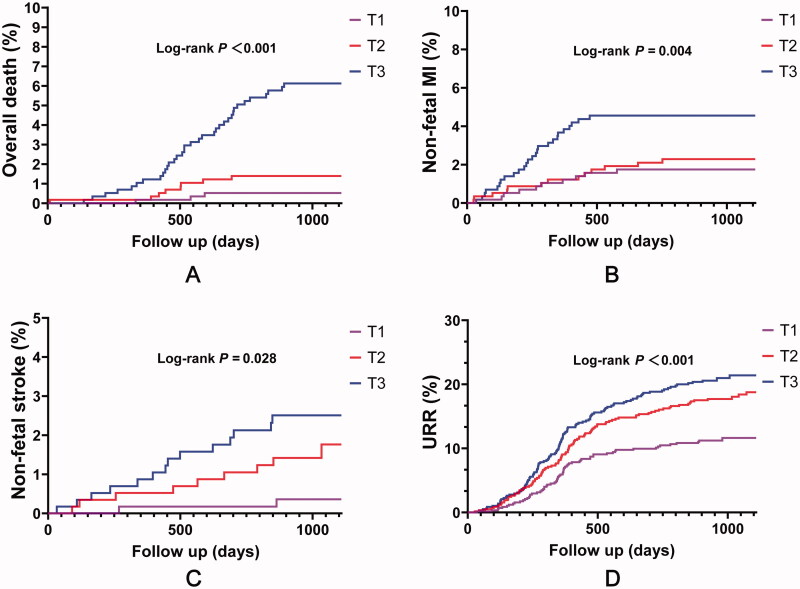
A total of 1724 patients with ACS enrolled from June 2016 to November 2017 at a single centre were included in this study, and SIRI was calculated for each patient. The primary endpoint was the composite of major adverse cardiovascular events (MACE), including overall death, non-fatal myocardial infarction, non-fatal stroke, and unplanned repeat revascularization.
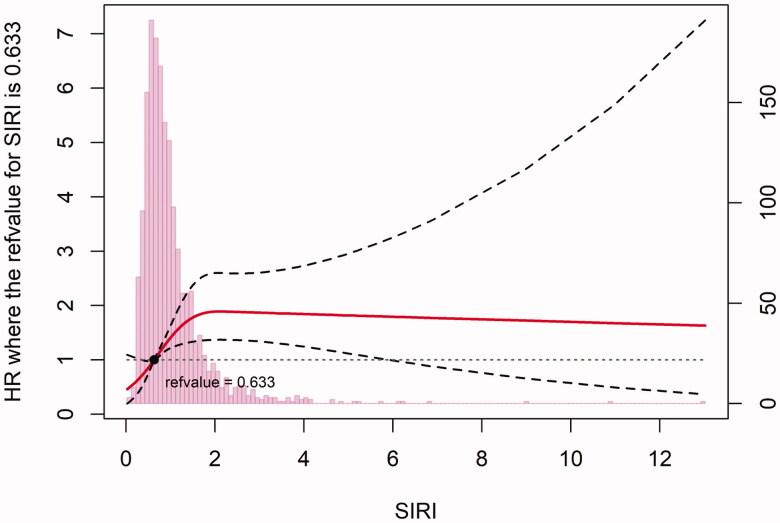
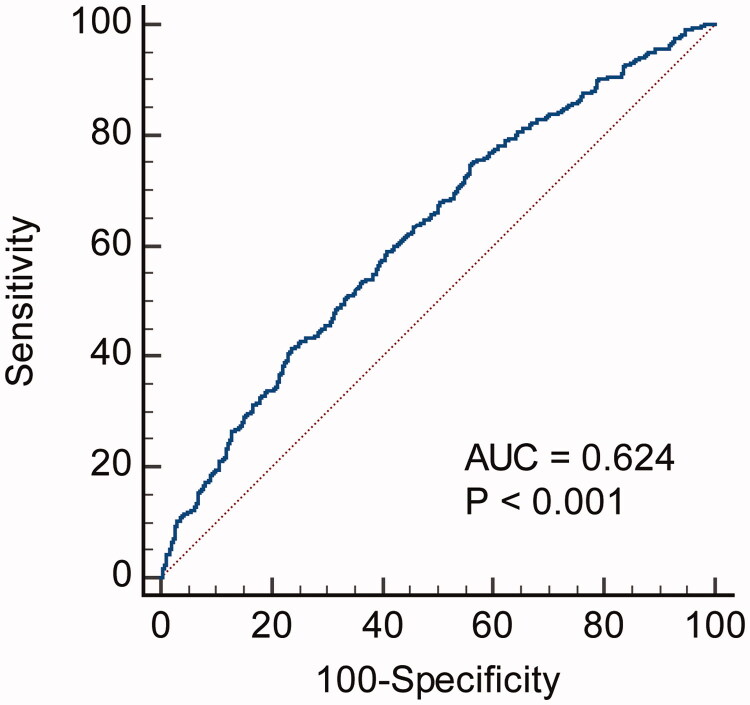
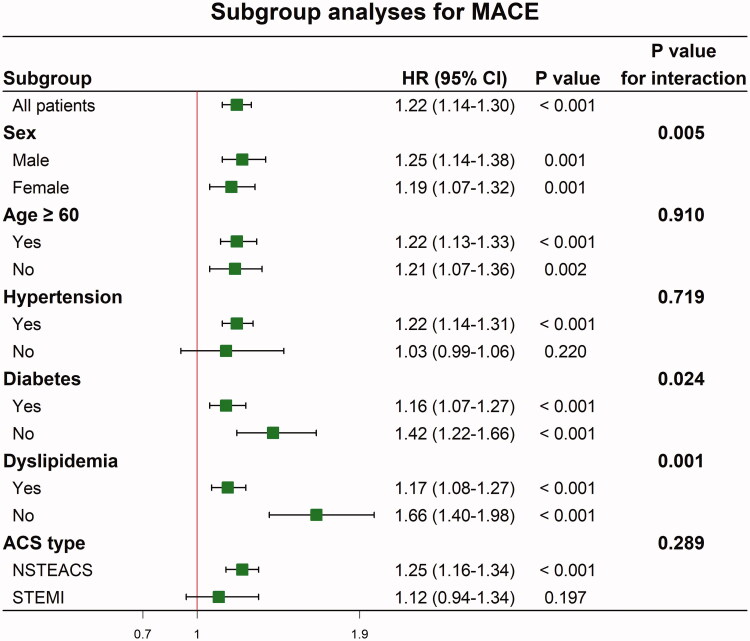
During a median follow-up of 927 days, 355 patients had MACE. Multivariate Cox analysis showed that SIRI was significantly associated with MACE (hazard ratio: 1.127, 95% confidence interval: 1.034-1.229 = .007). The results were consistent in multiple sensitivity analyses. The addition of SIRI had an incremental effect on the predictive ability of the Global Registry of Acute Coronary Events risk score for MACE (integrated discrimination improvement: 0.007, = .040; net reclassification improvement: 0.175, = .020; likelihood ratio test: < .001). The restricted cubic spline showed a monotonic increase with a greater SIRI value for MACE ( < .001).
SIRI was an independent risk factor for MACE and provided incremental prognostic information in patients with ACS undergoing percutaneous coronary intervention. KEY MESSAGESThe SIRI is a strong and independent risk factor for adverse outcomes in patients with ACS undergoing percutaneous coronary intervention.Higher SIRI is associated with a more severe disease status.The SIRI could increase the prognostic value of the GRACE risk score.
全身性炎症反应指数(SIRI)是许多疾病中一种新的炎症生物标志物。
本研究旨在探讨经皮冠状动脉介入治疗的急性冠状动脉综合征(ACS)患者中 SIRI 与不良事件的关系。
本研究共纳入 2016 年 6 月至 2017 年 11 月在单中心接受治疗的 1724 例 ACS 患者,并计算每位患者的 SIRI。主要终点是主要不良心血管事件(MACE)的复合终点,包括全因死亡、非致死性心肌梗死、非致死性卒中和计划外再次血运重建。
在中位随访 927 天期间,355 例患者发生 MACE。多变量 Cox 分析显示,SIRI 与 MACE 显著相关(风险比:1.127,95%置信区间:1.034-1.229, = .007)。多项敏感性分析结果一致。SIRI 的加入对全球急性冠状动脉事件风险评分预测 MACE 的能力具有增量效应(综合判别改善:0.007, = .040;净重新分类改善:0.175, = .020;似然比检验: < .001)。限制性立方样条分析显示,随着 SIRI 值的增加,MACE 的发生呈单调递增趋势( < .001)。
SIRI 是经皮冠状动脉介入治疗的 ACS 患者发生 MACE 的独立危险因素,并为其提供了增量预后信息。
SIRI 是经皮冠状动脉介入治疗的 ACS 患者不良结局的一个强有力的独立危险因素。SIRI 越高,疾病严重程度越大。SIRI 可提高 GRACE 风险评分的预后价值。