Institute of Neuropathology, University Medical Center Hamburg-Eppendorf, Hamburg, Germany.
Neuroscience Group of Antioquia, University of Antioquia, Medellín.
Brain Pathol. 2022 Nov;32(6):e13097. doi: 10.1111/bpa.13097. Epub 2022 Jun 13.
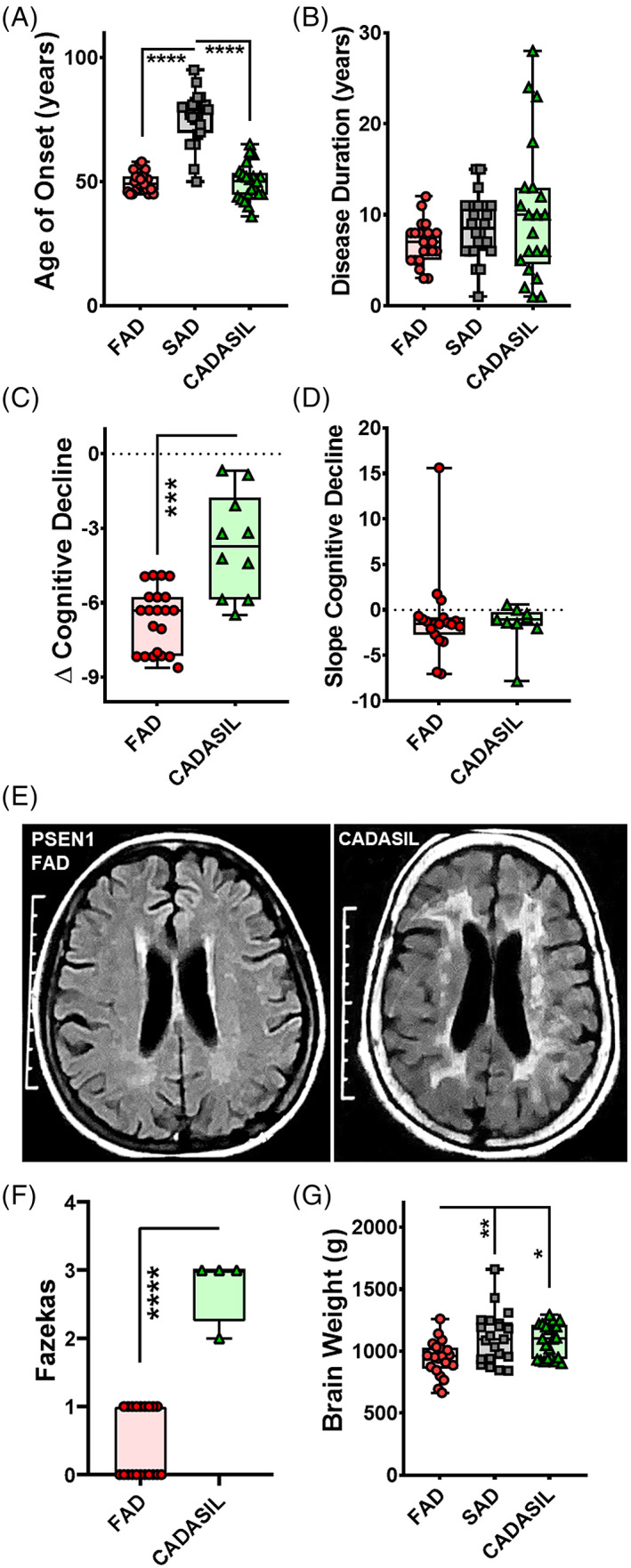
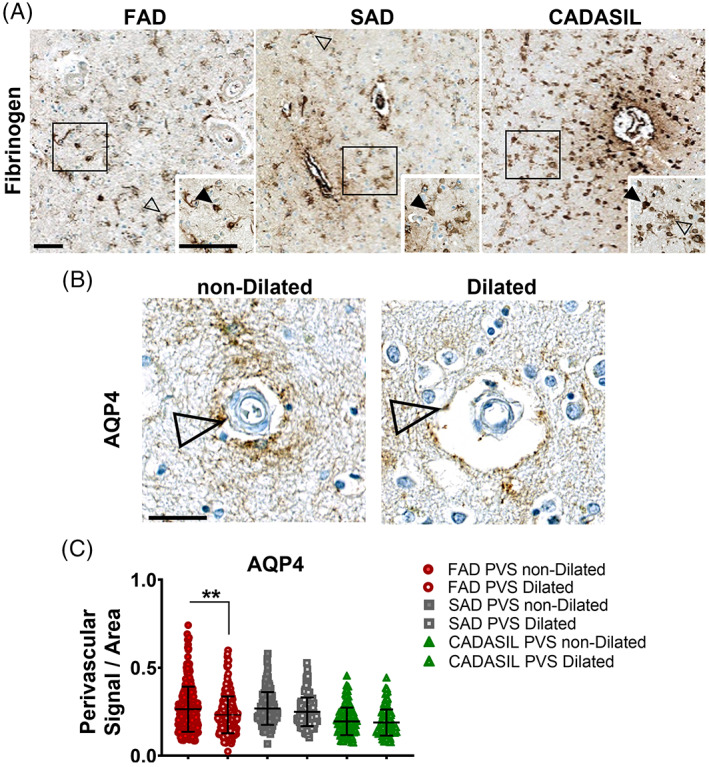
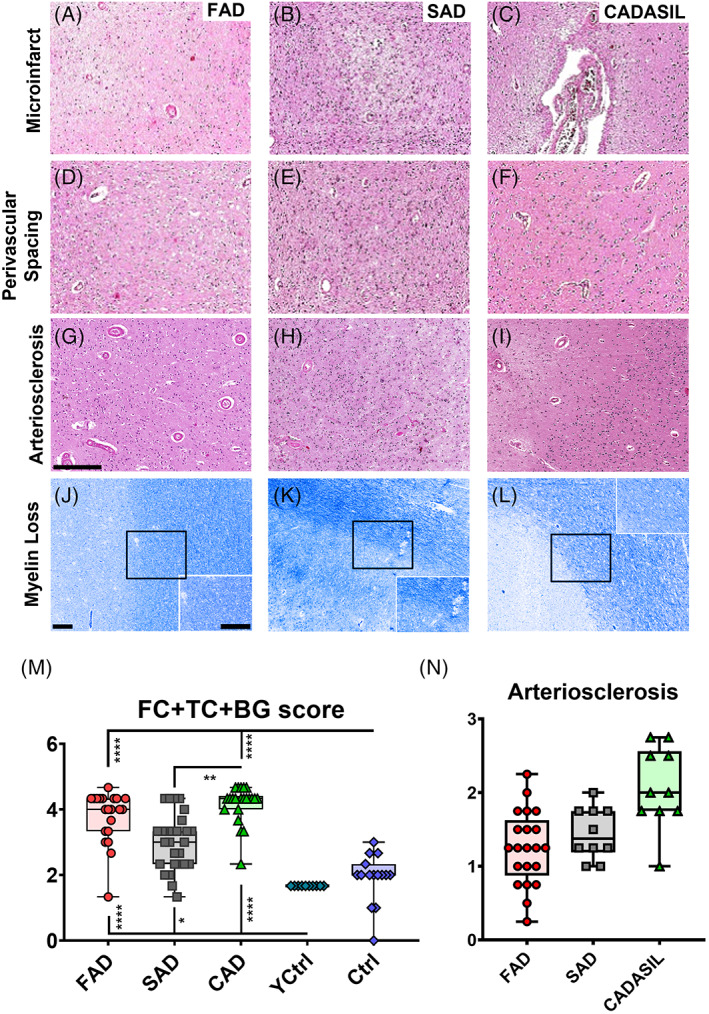
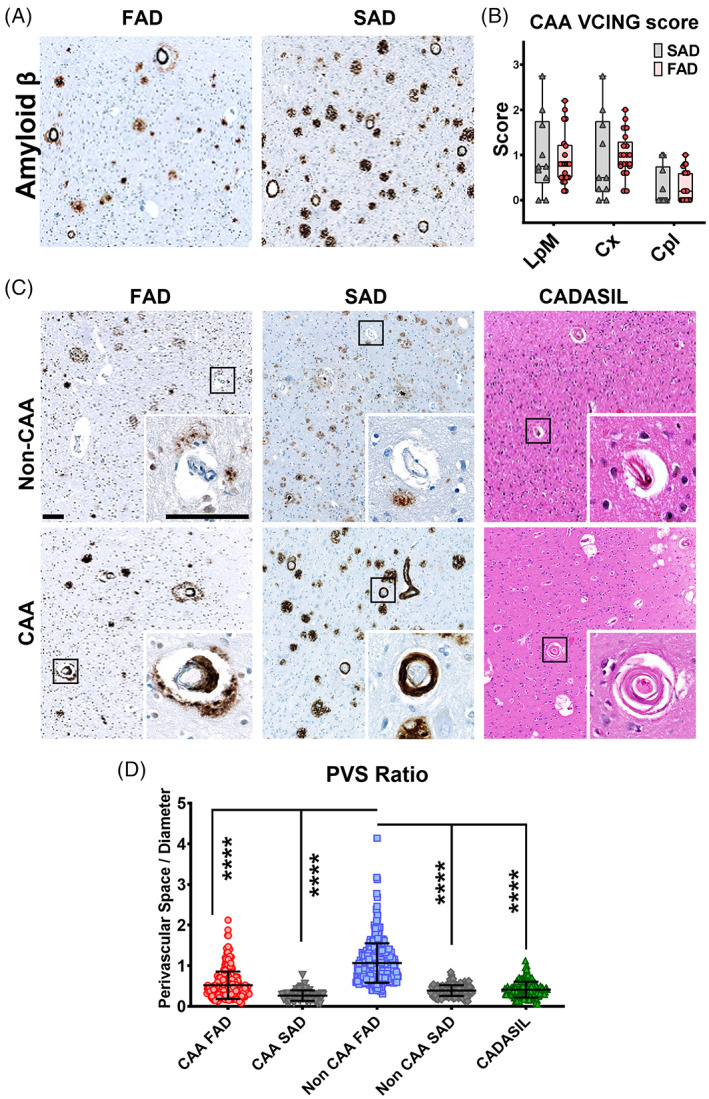
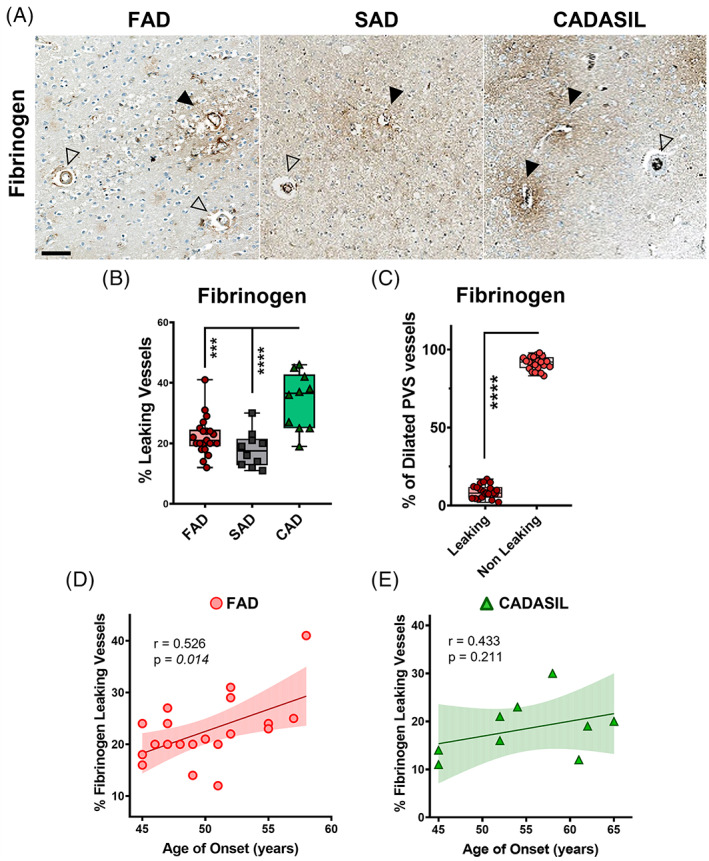
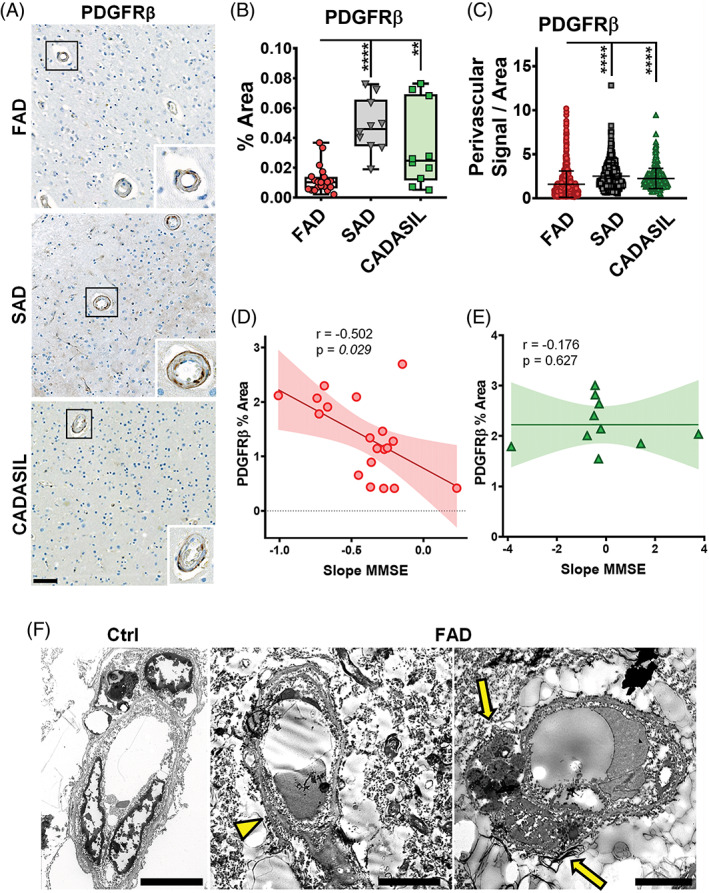
We studied small vessel disease (SVD) pathology in Familial Alzheimer's disease (FAD) subjects carrying the presenilin 1 (PSEN1) p.Glu280Ala mutation in comparison to those with sporadic Alzheimer's disease (SAD) as a positive control for Alzheimer's pathology and Cerebral Autosomal Dominant Arteriopathy with Subcortical Infarcts and Leukoencephalopathy (CADASIL) bearing different NOTCH3 mutations, as positive controls for SVD pathology. Upon magnetic resonance imaging (MRI) in life, some FAD showed mild white matter hyperintensities and no further radiologic evidence of SVD. In post-mortem studies, total SVD pathology in cortical areas and basal ganglia was similar in PSEN1 FAD and CADASIL subjects, except for the feature of arteriosclerosis which was higher in CADASIL subjects than in PSEN1 FAD subjects. Further only a few SAD subjects showed a similar degree of SVD pathology as observed in CADASIL. Furthermore, we found significantly enlarged perivascular spaces in vessels devoid of cerebral amyloid angiopathy in FAD compared with SAD and CADASIL subjects. As expected, there was greater fibrinogen-positive perivascular reactivity in CADASIL but similar reactivity in PSEN1 FAD and SAD groups. Fibrinogen immunoreactivity correlated with onset age in the PSEN1 FAD cases, suggesting increased vascular permeability may contribute to cognitive decline. Additionally, we found reduced perivascular expression of PDGFRβ AQP4 in microvessels with enlarged PVS in PSEN1 FAD cases. We demonstrate that there is Aβ-independent SVD pathology in PSEN1 FAD, that was marginally lower than that in CADASIL subjects although not evident by MRI. These observations suggest presence of covert SVD even in PSEN1, contributing to disease progression. As is the case in SAD, these consequences may be preventable by early recognition and actively controlling vascular disease risk, even in familial forms of dementia.
我们研究了携带早老素 1 (PSEN1) p.Glu280Ala 突变的家族性阿尔茨海默病 (FAD) 患者的小血管疾病 (SVD) 病理学,与作为阿尔茨海默病病理学阳性对照的散发性阿尔茨海默病 (SAD) 以及携带不同 NOTCH3 突变的脑常染色体显性动脉病伴皮质下梗死和白质脑病 (CADASIL) 进行比较,作为 SVD 病理学的阳性对照。在生前磁共振成像 (MRI) 检查中,一些 FAD 患者表现出轻度的脑白质高信号,但没有进一步的 SVD 放射学证据。在尸检研究中,PSEN1 FAD 和 CADASIL 患者的皮质和基底节的总 SVD 病理学相似,除了 CADASIL 患者的动脉硬化特征高于 PSEN1 FAD 患者外。进一步的研究表明,只有少数 SAD 患者表现出与 CADASIL 观察到的相似程度的 SVD 病理学。此外,我们发现与 SAD 和 CADASIL 患者相比,FAD 中无脑淀粉样血管病的血管周围空间明显增大。正如预期的那样,CADASIL 中纤维蛋白原阳性的血管周围反应性更大,但在 PSEN1 FAD 和 SAD 组中反应性相似。纤维蛋白原免疫反应性与 PSEN1 FAD 病例的发病年龄相关,表明血管通透性增加可能导致认知能力下降。此外,我们发现 PSEN1 FAD 病例中,与 PVS 增大的微血管周围 PDGFRβ AQP4 的表达减少。我们证明,在 PSEN1 FAD 中存在 Aβ 非依赖性的 SVD 病理学,尽管 MRI 检查未显示,但与 CADASIL 患者相比略低。这些观察结果表明,即使在 PSEN1 中也存在隐匿性 SVD,这可能导致疾病进展。与 SAD 一样,即使在家族性痴呆症中,通过早期识别和积极控制血管疾病风险,这些后果也可能是可以预防的。