Li Li, Zhang Ming, Chen Wei
Kangda College, Nanjing Medical University, Lianyungang, 222000, PR China.
Department of Pharmaceutical Analysis, Fujian Medical University, Fuzhou, 350004, PR China.
J Food Drug Anal. 2020 Dec 15;28(4):641-653. doi: 10.38212/2224-6614.3114.
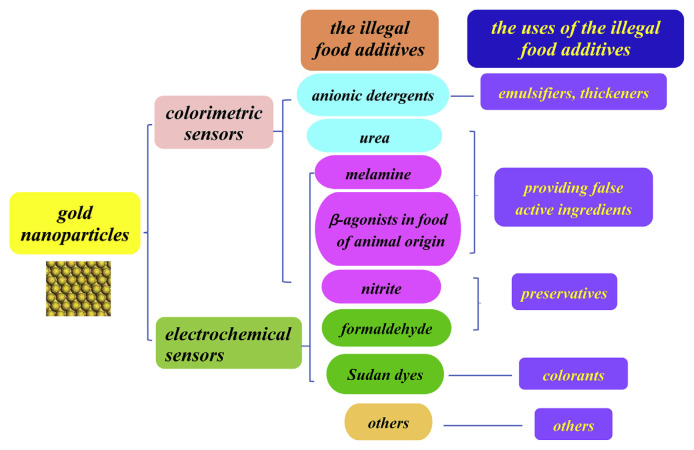
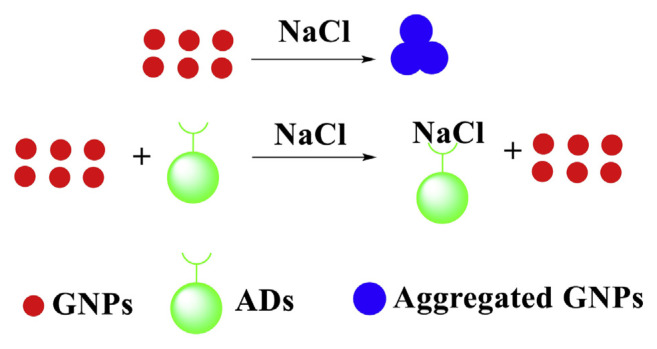
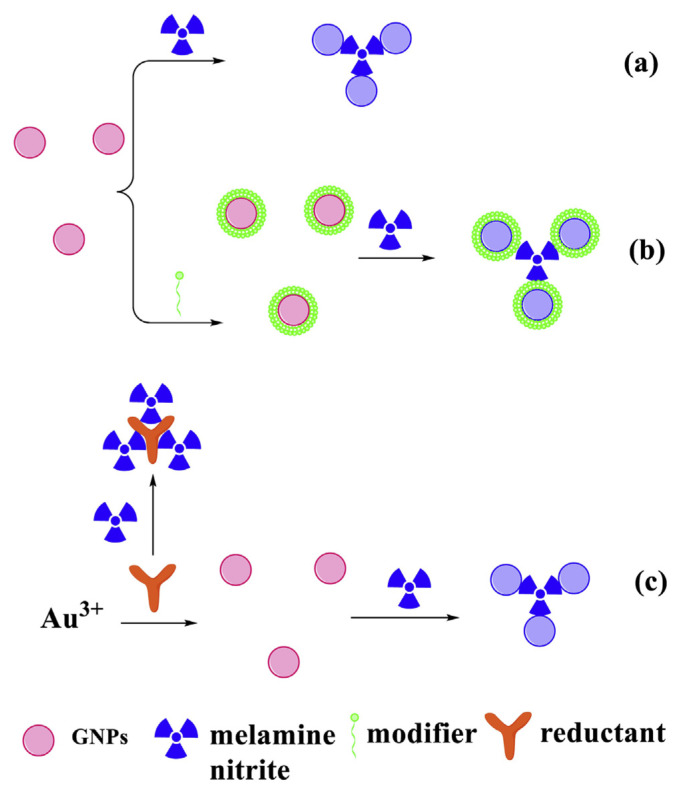
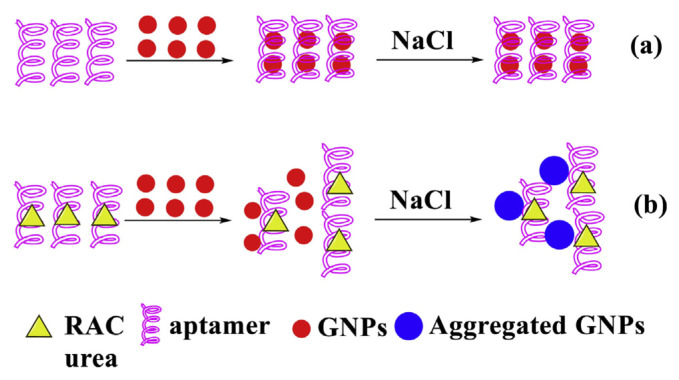
Lately, scandals associated with the illegal addition of poisonous chemicals to food for commercial interests have been gradually disclosed to the public. Problems related to food safety do not only harm public health but also affect the stability of economic and social development. Food safety has become a common issue in society, and strengthening the related regulations have become increasingly important. Although conventional techniques are accurate and sensitive in the detection of the vast majority of illegal food additives, they rely on time-consuming, labor-intensive procedures that depend on expensive instruments. Thus, efficient and rapid identification of poisonous, illegal additives in food is a crucial task in analytical chemistry. Recently, in this context, gold nanoparticles (GNPs) have attracted considerable attention because of their optical, electronic, catalytic, and chemical properties. Their excellent properties have facilitated the widespread use of GNPs in different sensors. This review covers the two most common GNP-based sensors with colorimetric and electrochemical responses, which have proven to be effective in the detection of illegal additives. The GNP-based sensors comply with the requirement of modern analysis, such as high selectivity, sensitivity, simplicity, rapidity, and portability. Thus, they have great potential as powerful sensing tools for food safety screening. This review elucidates the utility and advances of GNP-based colorimetric and electrochemical sensors for the detection of illegal additives in the food industry and in the supervision of food quality and safety. Additionally, an outlook of the trends and future development of research on these sensors is provided.
最近,与出于商业利益在食品中非法添加有毒化学物质相关的丑闻逐渐被公众知晓。食品安全问题不仅危害公众健康,还影响经济和社会发展的稳定性。食品安全已成为社会的一个普遍问题,加强相关法规变得越来越重要。尽管传统技术在检测绝大多数非法食品添加剂时准确且灵敏,但它们依赖耗时、费力的程序,且需要昂贵的仪器。因此,高效快速地识别食品中的有毒非法添加剂是分析化学中的一项关键任务。最近,在这种背景下,金纳米颗粒(GNPs)因其光学、电子、催化和化学性质而备受关注。它们的优异性能促进了金纳米颗粒在不同传感器中的广泛应用。本综述涵盖了两种最常见的基于金纳米颗粒的具有比色和电化学响应的传感器,这些传感器已被证明在检测非法添加剂方面是有效的。基于金纳米颗粒的传感器符合现代分析的要求,如高选择性、灵敏度、简单性、快速性和便携性。因此,它们作为食品安全筛查的强大传感工具具有巨大潜力。本综述阐明了基于金纳米颗粒的比色和电化学传感器在食品工业中检测非法添加剂以及食品质量和安全监管方面的效用和进展。此外,还提供了这些传感器研究的趋势和未来发展展望。