The University of Georgia, Athens, GA, 30602, USA.
Morgan State University, Baltimore, MD, 21251, USA.
J Food Drug Anal. 2019 Jan;27(1):1-21. doi: 10.1016/j.jfda.2018.12.002. Epub 2018 Dec 24.
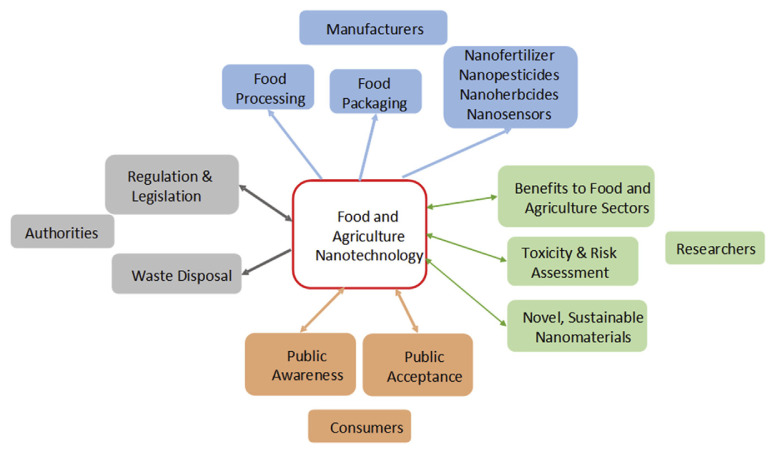
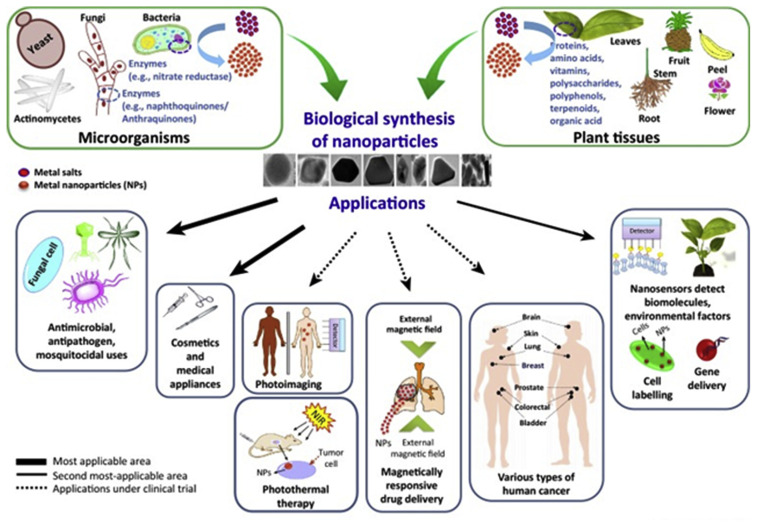
The rapid development of nanotechnology has been facilitating the transformations of traditional food and agriculture sectors, particularly the invention of smart and active packaging, nanosensors, nanopesticides and nanofertilizers. Numerous novel nanomaterials have been developed for improving food quality and safety, crop growth, and monitoring environmental conditions. In this review the most recent trends in nanotechnology are discussed and the most challenging tasks and promising opportunities in the food and agriculture sectors from selected recent studies are addressed. The toxicological fundamentals and risk assessment of nanomaterials in these new food and agriculture products are also discussed. We highlighted the potential application of bio-synthesized and bio-inspired nanomaterial for sustainable development. However, fundamental questions with regard to high performance, low toxic nanomaterials need to be addressed to fuel active development and application of nanotechnology. Regulation and legislation are also paramount to regulating the manufacturing, processing, application, as well as disposal of nanomaterials. Efforts are still needed to strengthen public awareness and acceptance of the novel nano-enabled food and agriculture products. We conclude that nanotechnology offers a plethora of opportunities, by providing a novel and sustainable alternative in the food and agriculture sectors.
纳米技术的快速发展推动了传统食品和农业领域的变革,特别是智能和活性包装、纳米传感器、纳米农药和纳米肥料的发明。为了提高食品质量和安全性、促进作物生长和监测环境条件,已经开发出了许多新型纳米材料。本文讨论了纳米技术的最新趋势,并从选定的近期研究中讨论了食品和农业领域最具挑战性的任务和最有前景的机遇。还讨论了这些新的食品和农业产品中纳米材料的毒理学基础和风险评估。我们强调了生物合成和仿生纳米材料在可持续发展中的潜在应用。然而,需要解决与高性能、低毒性纳米材料相关的基本问题,以推动纳米技术的积极发展和应用。监管和立法对于规范纳米材料的制造、加工、应用以及处置也至关重要。还需要努力加强公众对新型纳米食品和农业产品的认识和接受度。我们的结论是,纳米技术提供了大量的机会,为食品和农业领域提供了新颖和可持续的替代方案。