Graduate Institute and Department of Physiology, College of Medicine, National Taiwan University, Taipei, Taiwan.
J Food Drug Anal. 2021 Jun 15;29(2):240-254. doi: 10.38212/2224-6614.3269.
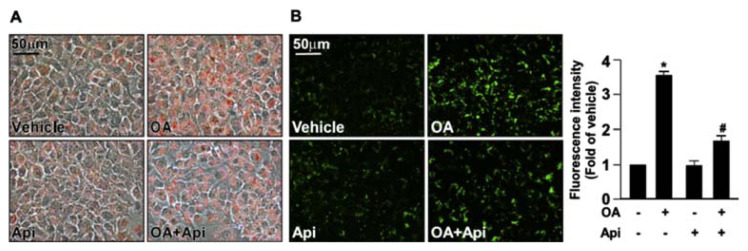
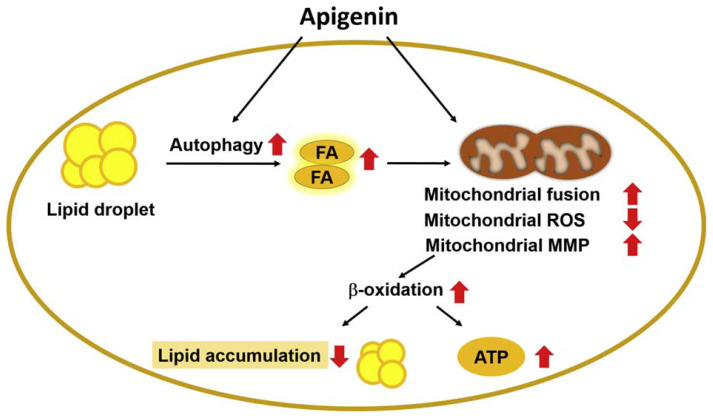
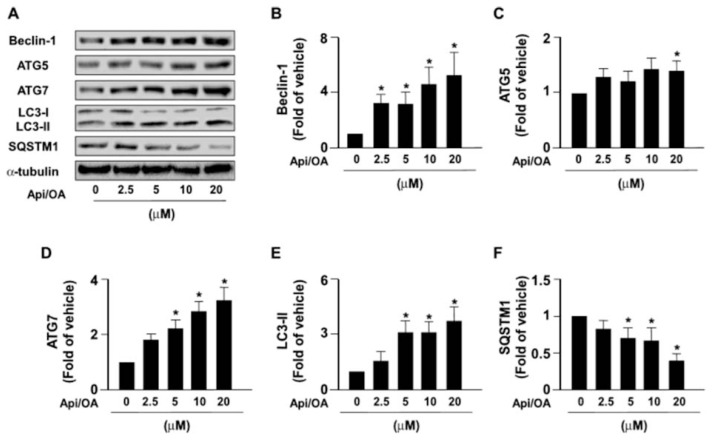
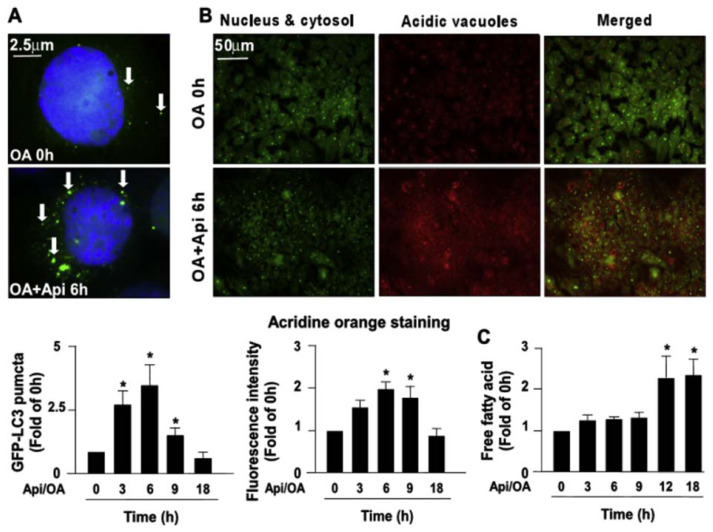
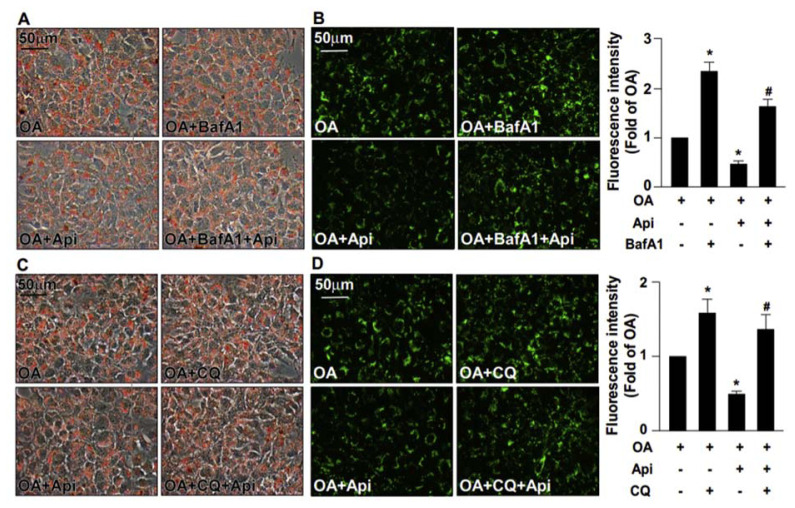
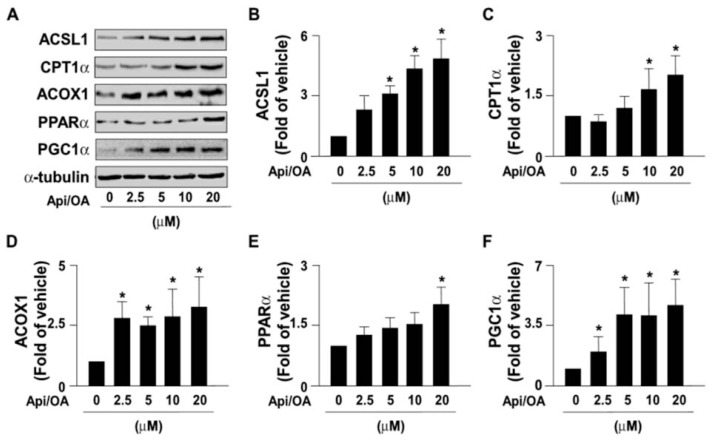
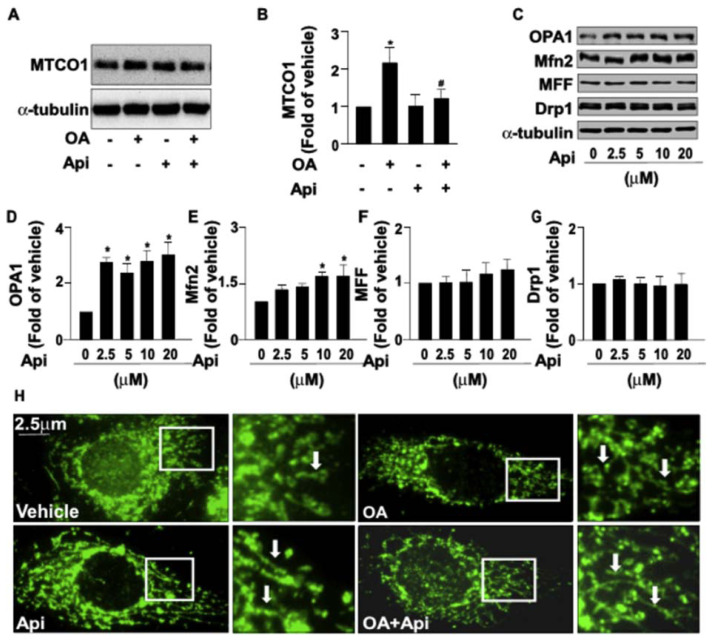
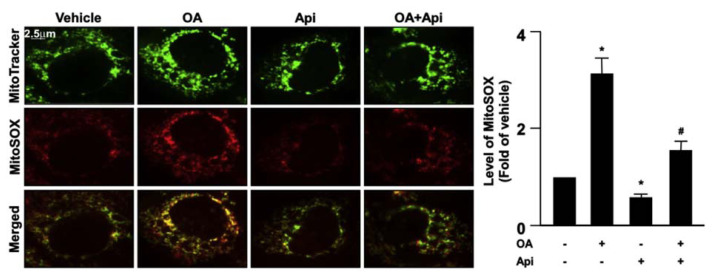
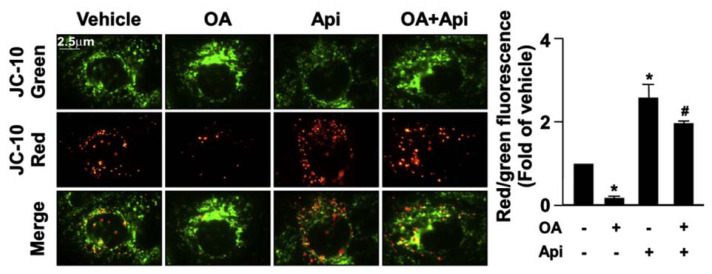
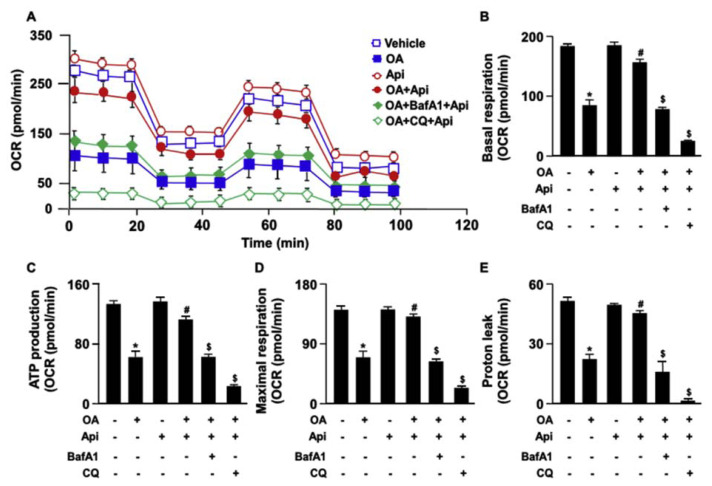
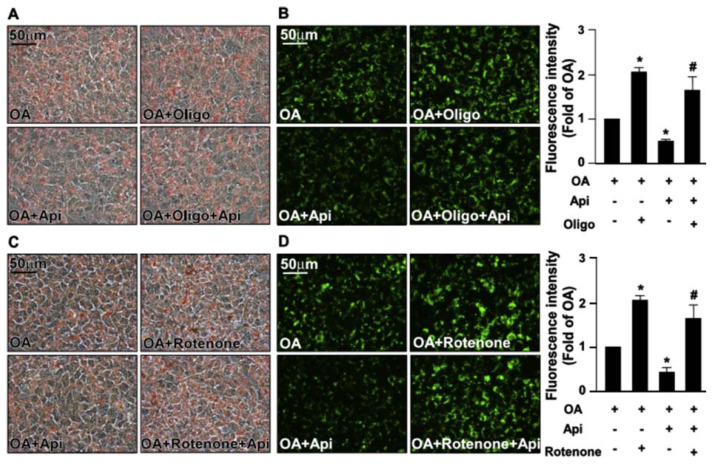
Apigenin, a flavonoid isolated from plants, provides protection against non-alcoholic fatty liver disease. However, the mechanism by which apigenin decreases lipid accumulation in the liver is unclear. In this study, we investigated the molecular mechanism underlying the beneficial effect of apigenin on the hepatic deregulation of lipid metabolism. Oleic acid (OA)-induced lipid accumulation in human hepatoma cells (Huh7 cells) was used as an in vitro model. Western blot analysis was used for evaluating protein expression. Oil red O staining, Nile red staining, and conventional assay kits were used to assess the level of lipids. Immunocytochemistry was performed to observe mitochondrial morphology. Seahorse XF analyzer was used to measure mitochondrial bioenergetics. Treatment with OA induced lipid accumulation in Huh7 cells, which was attenuated by apigenin. Mechanistically, treatment with apigenin increased the expression of autophagy-related proteins including Beclin1, autophagy related gene 5 (ATG5), ATG7, and LC3II, and the formation of autophagolysosomes, leading to an increase in intracellular levels of fatty acids. Inhibition of autophagy by bafilomycin A1 or chloroquine abolished the protection of apigenin in OA-induced lipid accumulation. Apigenin up-regulated the protein expression related to the β-oxidation pathway including acyl-CoA synthetase long chain family member 1, carnitine palmitoyltransferase 1α, acyl-CoA oxidase 1, peroxisome proliferator activated receptor (PPAR) α, and PPARγ coactivator 1-α. Moreover, apigenin increased the mitochondrial network structure and mitochondrial function by increasing the protein expression related to the process of mitochondria fusion and mitochondrial function. Collectively, our findings suggest that apigenin ameliorates hepatic lipid accumulation by activating the autophagy-mitochondrial pathway.
柚皮素是一种从植物中分离出来的类黄酮,可提供对非酒精性脂肪性肝病的保护。然而,柚皮素减少肝脏脂质积累的机制尚不清楚。在这项研究中,我们研究了柚皮素对肝脏脂质代谢失调的有益作用的分子机制。使用油酸(OA)诱导的人肝癌细胞(Huh7 细胞)脂质积累作为体外模型。使用 Western blot 分析评估蛋白质表达。使用油红 O 染色、尼罗红染色和常规测定试剂盒评估脂质水平。进行免疫细胞化学观察线粒体形态。使用 Seahorse XF 分析仪测量线粒体生物能学。OA 处理诱导 Huh7 细胞脂质积累,柚皮素可减弱这种积累。在机制上,柚皮素增加了自噬相关蛋白的表达,包括 Beclin1、自噬相关基因 5(ATG5)、ATG7 和 LC3II,以及自噬溶酶体的形成,导致细胞内脂肪酸水平增加。用巴弗洛霉素 A1 或氯喹抑制自噬会消除柚皮素在 OA 诱导的脂质积累中的保护作用。柚皮素上调与β-氧化途径相关的蛋白表达,包括酰基辅酶 A 合成酶长链家族成员 1、肉碱棕榈酰基转移酶 1α、酰基辅酶 A 氧化酶 1、过氧化物酶体增殖物激活受体(PPAR)α 和 PPARγ 共激活因子 1-α。此外,柚皮素通过增加与线粒体融合和线粒体功能相关的蛋白表达来增加线粒体网络结构和线粒体功能。总之,我们的研究结果表明,柚皮素通过激活自噬-线粒体途径改善肝脏脂质积累。