Cowan Landon S, Lerman Dorothea C, Berdeaux Kally Luck, Prell Amber H, Chen Ning
Milwaukee, WI USA Present Address: Marquette University.
2700 Bay Area Blvd., Houston, TX 77058 USA University of Houston-Clear Lake.
Behav Anal Pract. 2022 Jun 8;16(2):459-474. doi: 10.1007/s40617-022-00722-8. eCollection 2023 Jun.
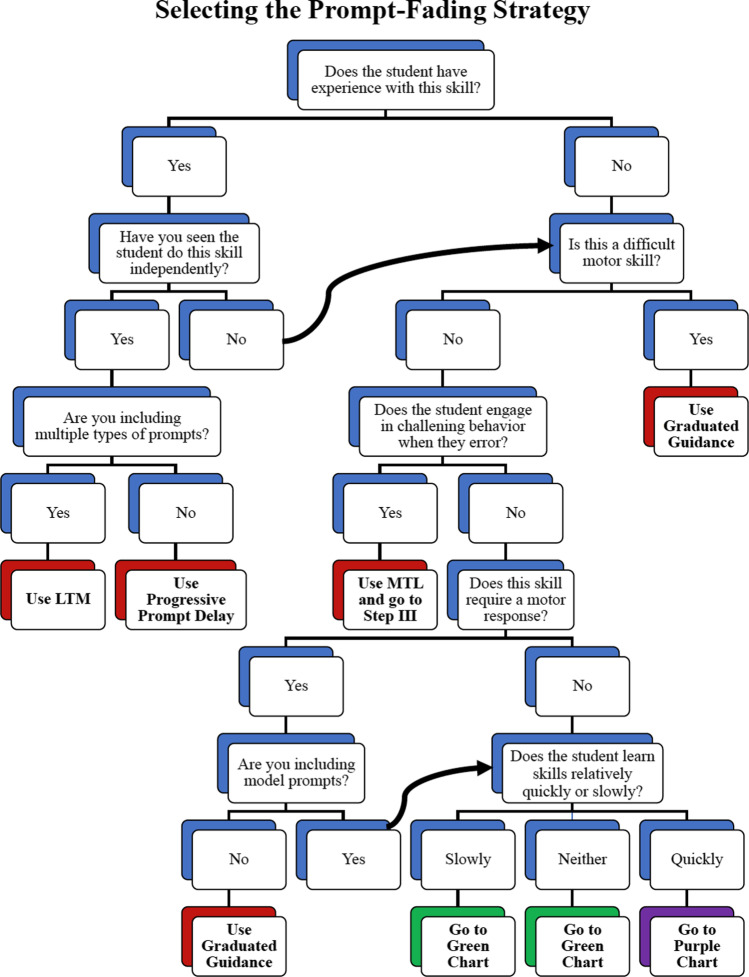
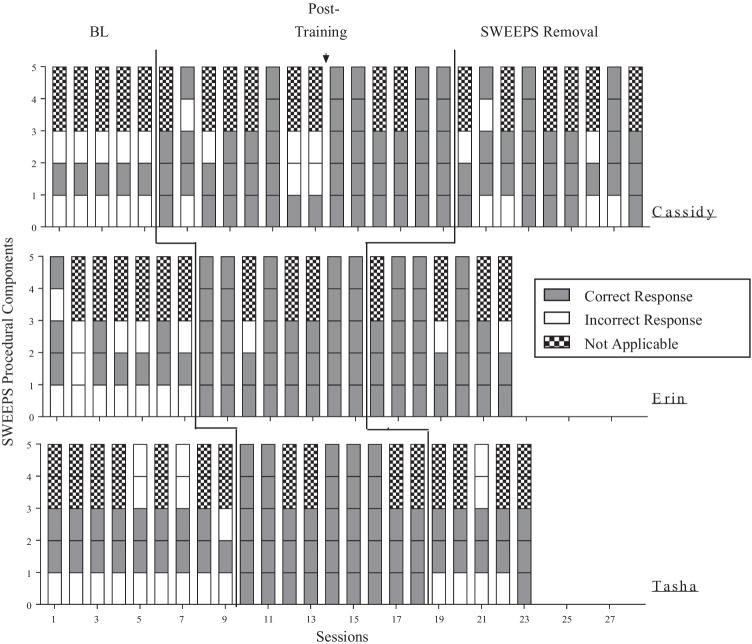
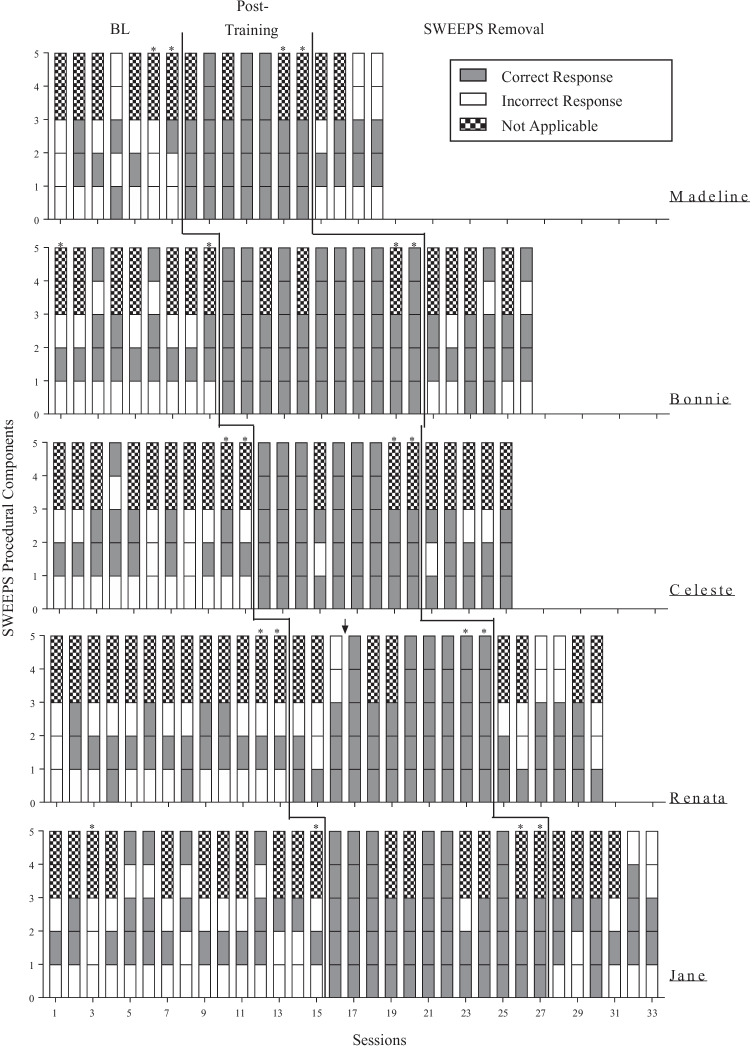
Literature has demonstrated the successful application of various prompts and prompt-fading procedures for teaching clients with intellectual and developmental disabilities. However, few practical resources exist to guide behavior analysts in the evaluation and selection of a prompting strategy for a given client and a targeted skill. In this article, we describe the development of a decision-making tool for selecting and evaluating prompting strategies, highlighting steps needed prior to evaluating clinical outcomes associated with the use of the tool. We used a multiple baseline across participants design to assess the ease with which graduate students could apply the decision-making tool with clients across a variety of skills. Results indicated that the participants learned to apply the decision-making tool with relatively limited involvement from a trainer. Social validity data collected from participants suggested that they found the tool helpful. Results contribute to the literature on the development of decision-making tools to guide behavior analysts in the selection of interventions to use with clients.
The online version contains supplementary material available at 10.1007/s40617-022-00722-8.
文献表明,各种提示和提示消退程序已成功应用于对智力和发育障碍患者的教学。然而,几乎没有实用资源可指导行为分析师为特定患者和目标技能评估和选择提示策略。在本文中,我们描述了一种用于选择和评估提示策略的决策工具的开发过程,重点介绍了在评估与使用该工具相关的临床结果之前所需的步骤。我们采用了跨参与者的多基线设计,以评估研究生在各种技能中对不同患者应用决策工具的难易程度。结果表明,参与者在培训师参与相对有限的情况下学会了应用决策工具。从参与者收集的社会效度数据表明他们认为该工具很有用。这些结果为有关开发决策工具以指导行为分析师选择与患者一起使用的干预措施的文献做出了贡献。
在线版本包含可在10.1007/s40617-022-00722-8获取的补充材料。