Shou Di-Wen, Yu Zi-Lin, Meng Jian-Biao, Lai Zhi-Zhen, Pang Li-Sha, Dai Mu-Hua, Yang Xue, Tu Yue-Xing
The First Affiliated Hospital of Zhejiang Chinese Medical University (Zhejiang Provincial Hospital of Traditional Chinese Medicine), Hangzhou 310003, China.
Emergency and Critical Care Center, Intensive Care Unit, Zhejiang Provincial People's Hospital (Affiliated People's Hospital, Hangzhou Medical College), Hangzhou 310014, China.
Evid Based Complement Alternat Med. 2022 May 21;2022:9742169. doi: 10.1155/2022/9742169. eCollection 2022.
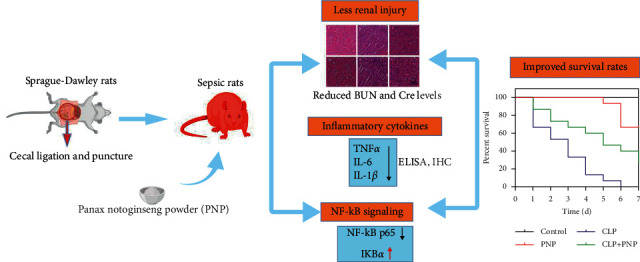
Sepsis is defined as a host inflammatory response to infection that can result in end-organ dysfunction. One of the most common consequences of sepsis is acute kidney injury (AKI). powder (PNP) has been previously reported to protect against overactive inflammation process. However, the potential effect of PNP on septic AKI is poorly described. The current study was conducted to investigate the protective effects of PNP in septic AKI rats.
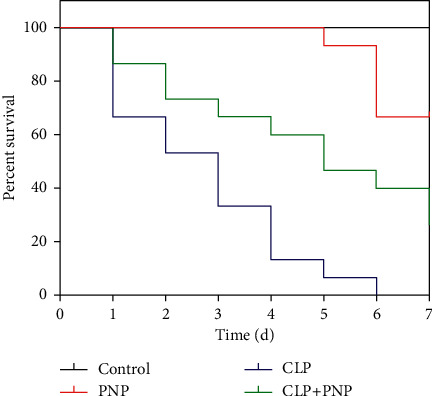
A model of septic AKI was established on male SD rats by using the cecal ligation and puncture procedure. PNP was administrated by gavage after the cecal ligation and puncture (CLP) procedure, and the mice were sacrificed at 6, 12, and 72 h after induction of sepsis. The serum and kidney samples were collected and assayed for biochemical tests, histopathological staining, inflammation, and apoptosis-related gene/protein expression. In addition, 15 rats in each group were used to calculate the 7-day survival rate.
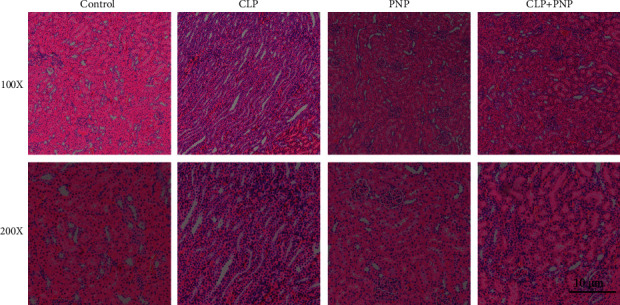
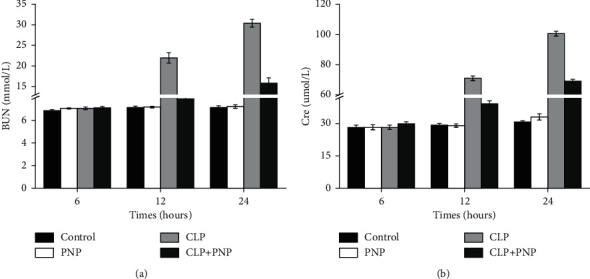
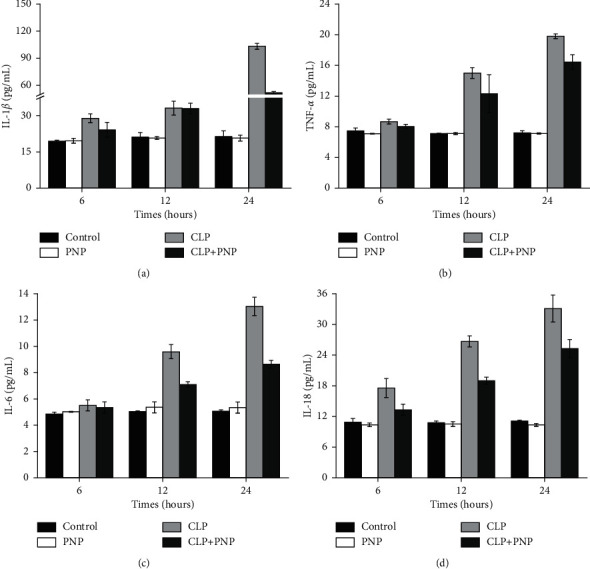
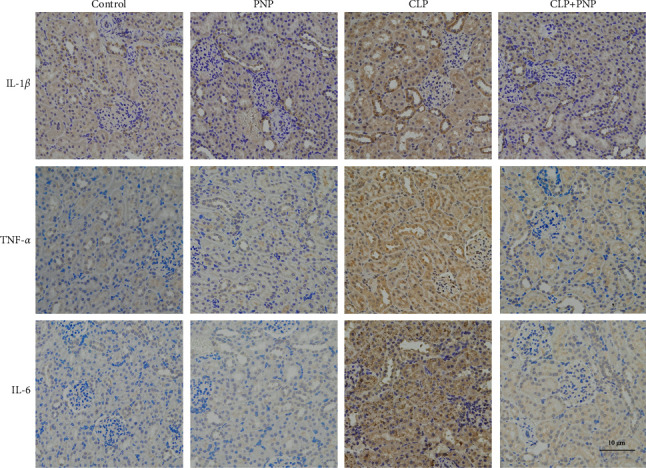
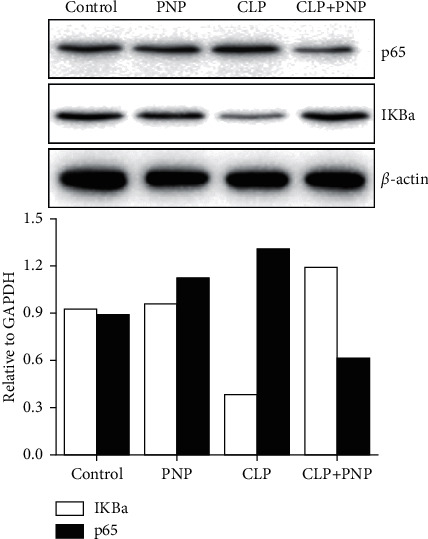
CLP-induced kidney injury was observed by the histopathological score, which markedly was attenuated by PNP treatment. Consistently, PNP intervention significantly alleviated the elevated levels of serum creatinine and blood urea nitrogen in CLP-induced sepsis rats. The CLP procedure also triggered proinflammatory cytokine production and increased the expression of various inflammation-related proteins in the kidneys. However, PNP inhibited the renal expression of IL-18, IL-1, TNF-, and IL-6 to substantially improve inflammatory response. Mechanistically, CLP induced the increase of the NF-B p65 level in the injured kidneys, while PNP notably inhibited the corresponding protein expression.
PNP attenuated kidney inflammation to protect against CLP-induced septic AKI in rats via inhibiting the NF-B signaling pathway.
脓毒症被定义为宿主对感染的炎症反应,可导致终末器官功能障碍。脓毒症最常见的后果之一是急性肾损伤(AKI)。先前有报道称,粉状物质(PNP)可防止炎症过程过度活跃。然而,PNP对脓毒症性AKI的潜在作用描述甚少。本研究旨在探讨PNP对脓毒症性AKI大鼠的保护作用。
采用盲肠结扎和穿刺术在雄性SD大鼠上建立脓毒症性AKI模型。在盲肠结扎和穿刺(CLP)术后通过灌胃给予PNP,在诱导脓毒症后6、12和72小时处死小鼠。收集血清和肾脏样本,进行生化检测、组织病理学染色、炎症及凋亡相关基因/蛋白表达检测。此外,每组用15只大鼠计算7天生存率。
通过组织病理学评分观察到CLP诱导的肾损伤,PNP治疗明显减轻了该损伤。同样,PNP干预显著减轻了CLP诱导的脓毒症大鼠血清肌酐和血尿素氮水平的升高。CLP手术还引发了促炎细胞因子的产生,并增加了肾脏中各种炎症相关蛋白的表达。然而,PNP抑制了IL-18、IL-1、TNF-α和IL-6的肾脏表达,从而显著改善炎症反应。机制上,CLP诱导损伤肾脏中NF-κB p65水平升高,而PNP显著抑制了相应蛋白的表达。
PNP通过抑制NF-κB信号通路减轻肾脏炎症,从而保护大鼠免受CLP诱导的脓毒症性AKI。