Cech Erin A
Department of Sociology and Department of Mechanical Engineering (by courtesy), University of Michigan, Ann Arbor, MI 48109, USA.
Sci Adv. 2022 Jun 17;8(24):eabo1558. doi: 10.1126/sciadv.abo1558. Epub 2022 Jun 15.
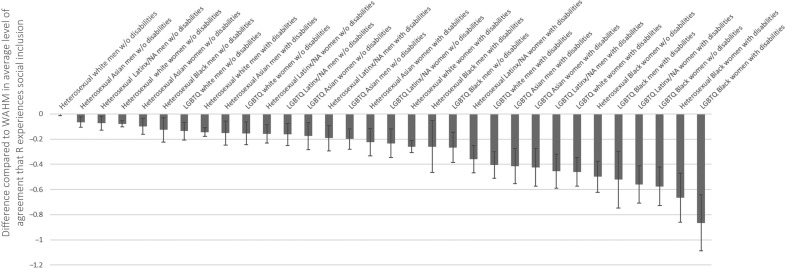
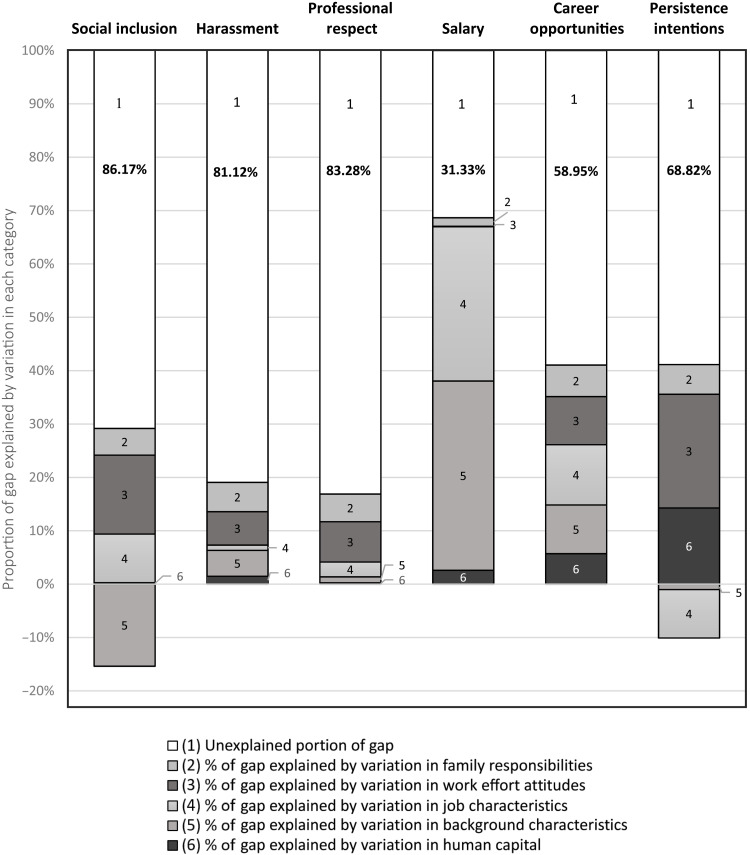
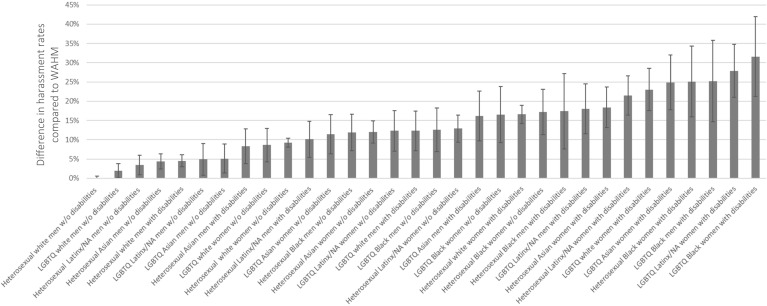
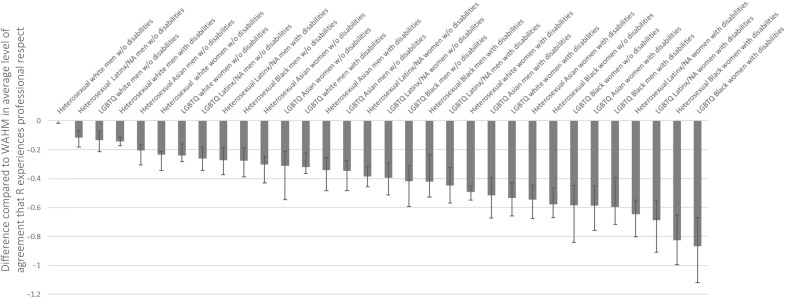
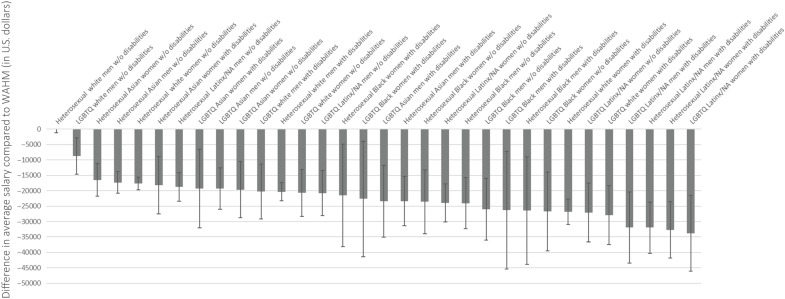
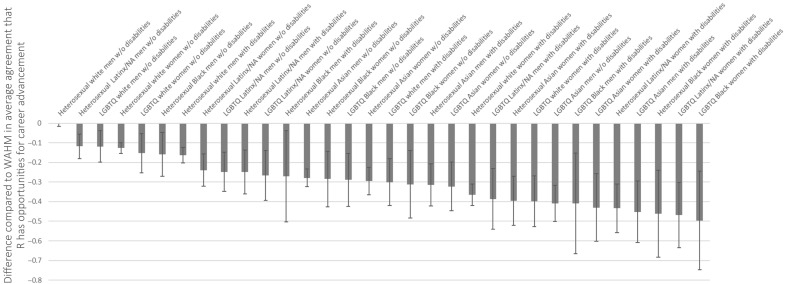
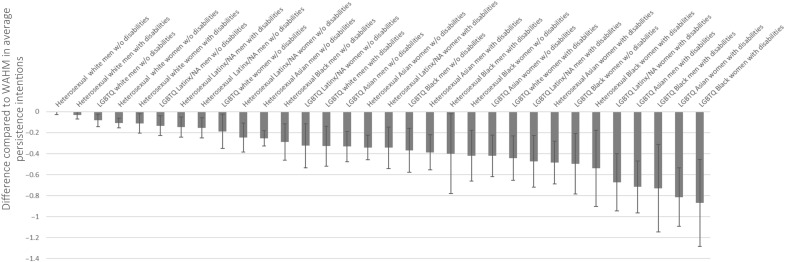
A foundational assumption of science, technology, engineering, and math (STEM) inequality research is that members of the most well represented demographic group-white able-bodied heterosexual men (WAHM)-are uniquely privileged in STEM. But is this really the case? Using survey data of U.S. STEM professionals ( = 25,324), this study examines whether WAHM experience better treatment and rewards in STEM compared with members of all 31 other intersectional gender, race, sexual identity, and disability status categories. Indicating systematic advantages accompanying WAHM status, WAHM experience more social inclusion, professional respect, and career opportunities, and have higher salaries and persistence intentions than STEM professionals in 31 other intersectional groups. Decomposition analyses illustrate that these advantages operate in part as premiums-benefits attached to WAHM status that cannot be attributed to variation in human capital, work effort, and other factors. These findings motivate research and policy efforts to move beyond a single axis paradigm to better understand and address intersectional (dis)advantages in STEM.
科学、技术、工程和数学(STEM)不平等研究的一个基本假设是,在STEM领域中代表性最强的人口群体——身体健全的白人异性恋男性(WAHM)——享有独特的特权。但实际情况真的如此吗?本研究利用美国STEM专业人士的调查数据( = 25324),考察与其他31个交叉性别、种族、性取向和残疾状况类别中的成员相比,WAHM在STEM领域是否经历了更好的待遇和回报。WAHM的地位显示出系统性优势,他们比其他31个交叉群体中的STEM专业人士享有更多的社会包容、职业尊重和职业机会,并且薪资更高,职业坚持意愿更强。分解分析表明,这些优势部分表现为附加在WAHM地位上的溢价——这些福利不能归因于人力资本、工作努力和其他因素的差异。这些发现促使研究和政策努力超越单一轴范式,以更好地理解和解决STEM领域中的交叉(不利)优势问题。