Centro Interdisciplinario de Neurociencia de Valparaíso, Facultad de Ciencias, Universidad de Valparaíso, Valparaíso 2340000, Chile.
Center for Bioinformatics and Integrative Biology, Facultad de Ciencias de la Vida, Universidad Andrés Bello, Santiago 8370146, Chile.
Proc Natl Acad Sci U S A. 2022 Jun 21;119(25):e2204620119. doi: 10.1073/pnas.2204620119. Epub 2022 Jun 15.
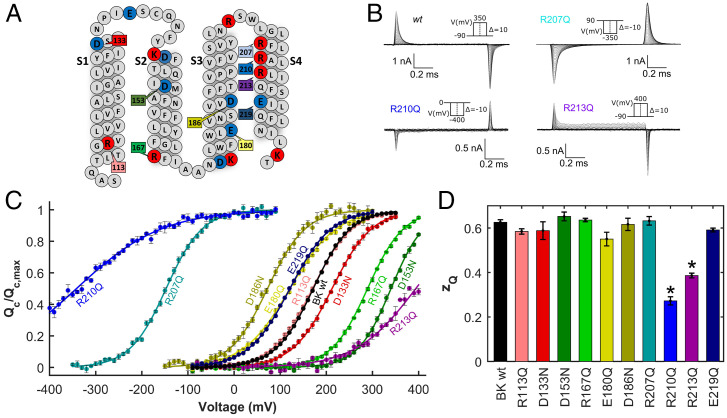
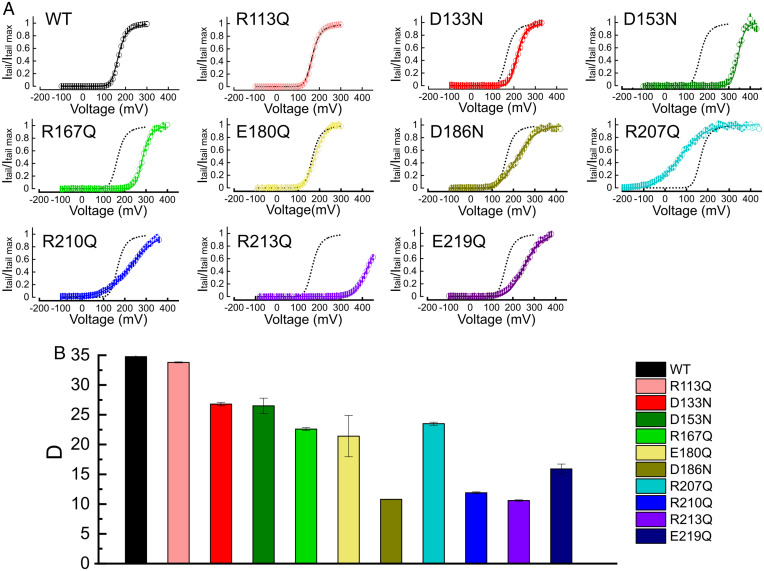
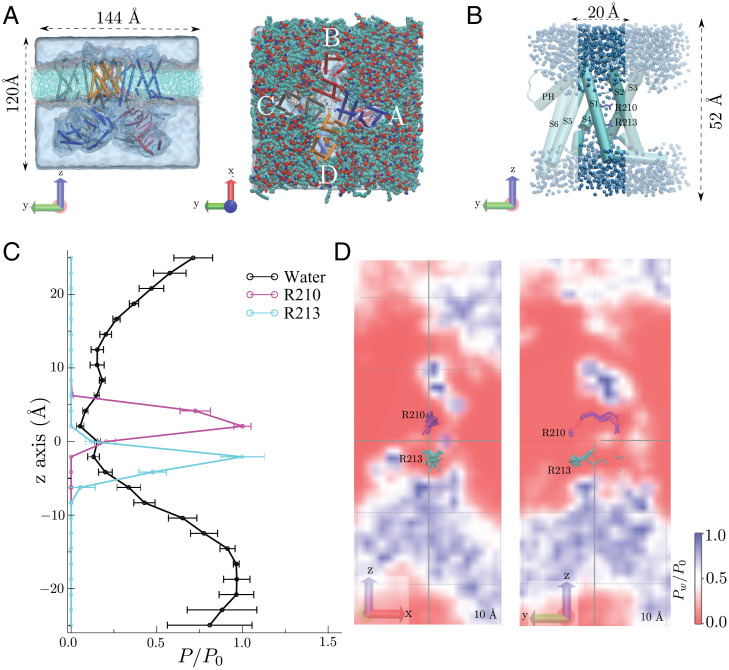
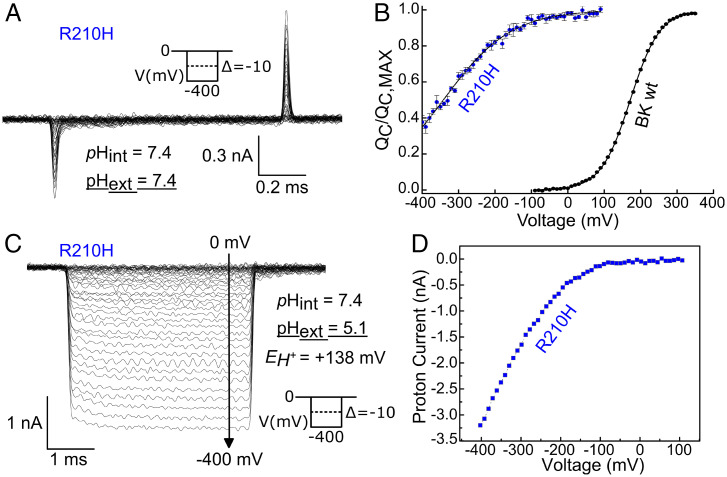
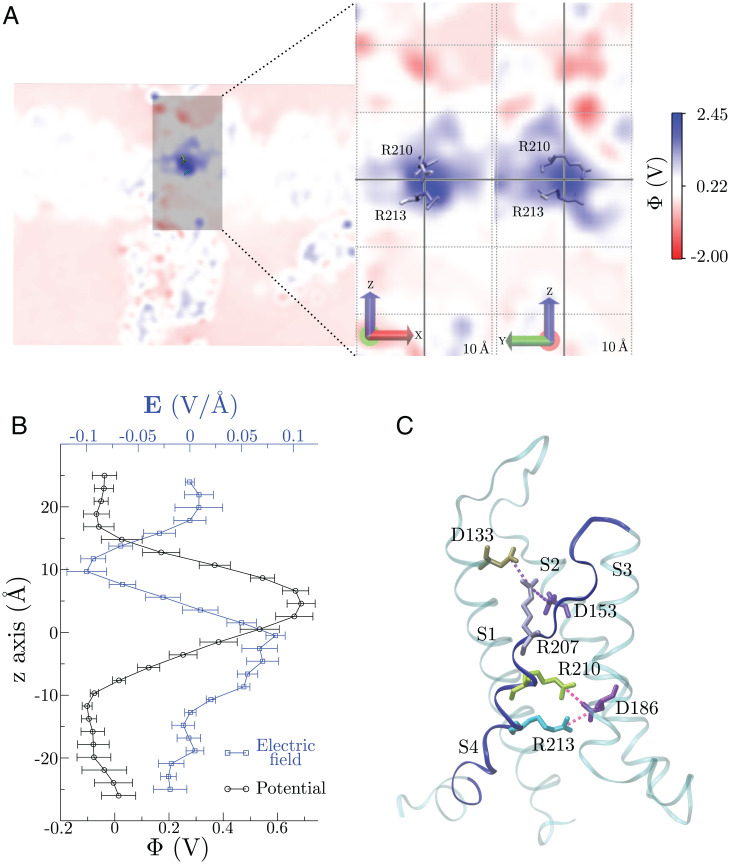
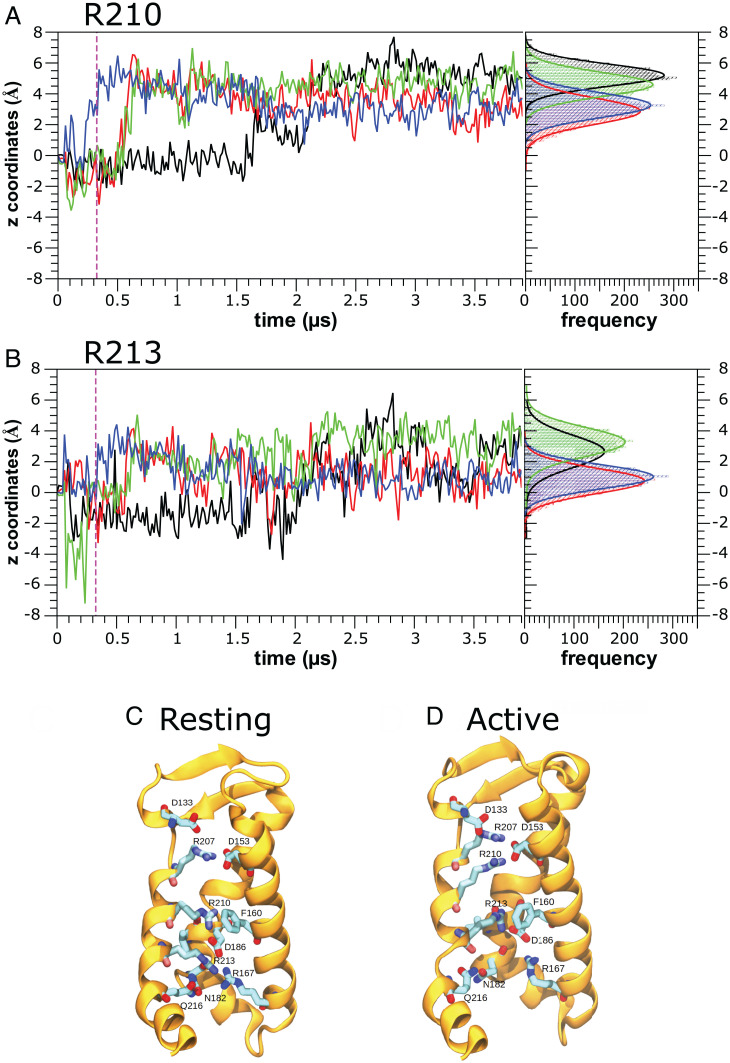
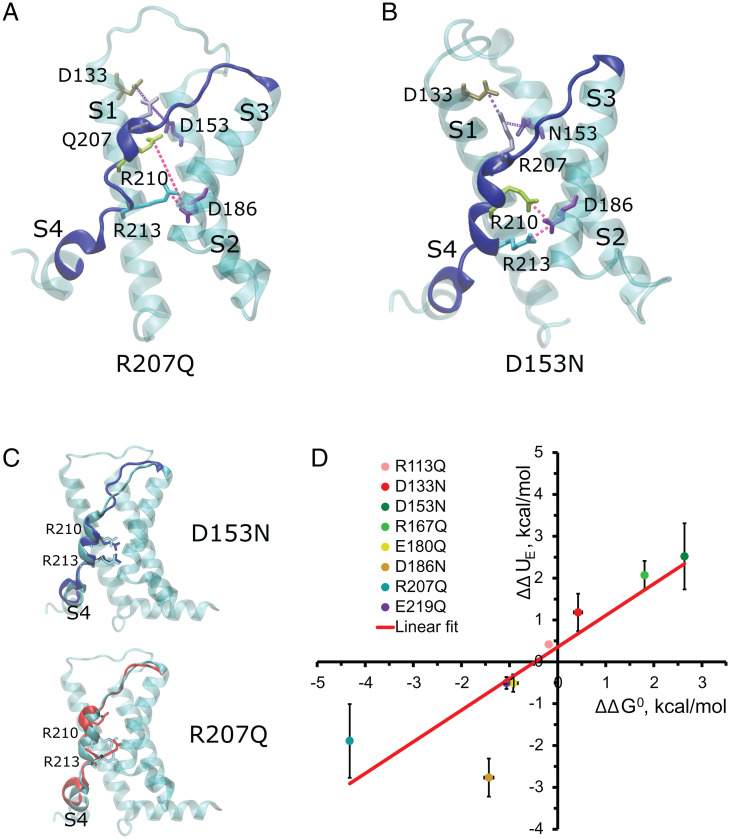
In neurosecretion, allosteric communication between voltage sensors and Ca binding in BK channels is crucially involved in damping excitatory stimuli. Nevertheless, the voltage-sensing mechanism of BK channels is still under debate. Here, based on gating current measurements, we demonstrate that two arginines in the transmembrane segment S4 (R210 and R213) function as the BK gating charges. Significantly, the energy landscape of the gating particles is electrostatically tuned by a network of salt bridges contained in the voltage sensor domain (VSD). Molecular dynamics simulations and proton transport experiments in the hyperpolarization-activated R210H mutant suggest that the electric field drops off within a narrow septum whose boundaries are defined by the gating charges. Unlike Kv channels, the charge movement in BK appears to be limited to a small displacement of the guanidinium moieties of R210 and R213, without significant movement of the S4.
在神经分泌中,变构通讯在 BK 通道的电压传感器和 Ca 结合之间起着至关重要的作用,有助于抑制兴奋性刺激。然而,BK 通道的电压传感机制仍存在争议。在这里,基于门控电流测量,我们证明了跨膜片段 S4 中的两个精氨酸(R210 和 R213)作为 BK 门控电荷。重要的是,门控粒子的能量景观由包含在电压传感器域(VSD)中的盐桥网络静电调节。分子动力学模拟和超极化激活的 R210H 突变体中的质子传输实验表明,电场在由门控电荷定义的狭窄隔板内下降。与 Kv 通道不同,BK 中的电荷移动似乎仅限于 R210 和 R213 的胍基部分的小位移,而 S4 没有明显的移动。