Graduate School of Public Health Department, Faculty of Health Sciences, Alma Ata University, Yogyakarta, 55183, Indonesia.
Department of Nutrition, Faculty of Health Sciences, Alma Ata University, Yogyakarta, 55183, Indonesia.
BMC Pregnancy Childbirth. 2022 Jun 15;22(1):492. doi: 10.1186/s12884-022-04815-8.
Pre-pregnancy BMI (PP BMI) and gestational weight gain (GWG) are prominent anthropometric indicators for maternal nutritional status and are related to an increased risk of adverse pregnancy outcomes. This study aimed to determine the factors affecting total GWG, PP BMI and pregnancy outcomes among pregnant women in West Sumatra, Indonesia.
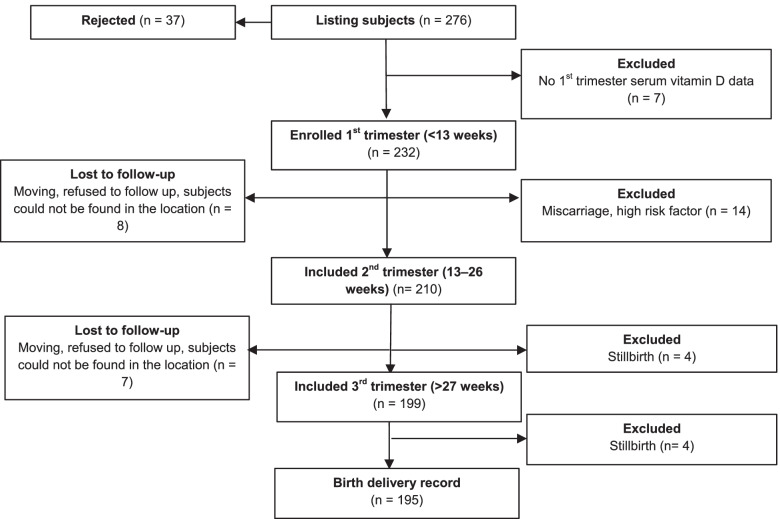
This observational analysis was conducted among healthy women in the Vitamin D Pregnant Mother (VDPM) cohort study. A total of 195 pregnant women and their newborn babies were enrolled, and information regarding their socio-demographic characteristics, obstetric history, dietary intake and anthropometric data were assessed through direct interviews. Furthermore, the Institute of Medicine (IOM) 2009 guidelines were used to obtain the total GWG.
PP BMI was used to categorise the 195 pregnant women as overweight/obese (43.1%), normal (46.7%) and underweight (10.2%). There were 53.3%, 34.4% and 12.3% of women who had inadequate, adequate and excessive GWG, respectively. The multinomial logistic regression model indicated that overweight or obese women at the pre-pregnancy stage were 4.09 times more likely to have an excessive rate of GWG (AOR = 4.09, 95% CI: 1.38-12.12, p = 0.011) than those whose weight was normal. Furthermore, women with excessive GWG were 27.11 times more likely to have a baby with macrosomia (AOR = 27.11, 95% CI: 2.99-245.14) (p = 0.001) and those with inadequate GWG were 9.6 times more likely to give birth to a baby with low birth weight (LBW) (AOR = 9.60, 95% CI; 0.88-105.2) (p = 0.002).
This study demonstrates that the malnutrition status prior to pregnancy and inadequate or excessive GWG status during pregnancy as significant risk factors for developing adverse pregnancy outcomes. These findings highlight the importance of providing information, preconception counselling and health education on weight management for healthy pregnancies.
孕前 BMI(PP BMI)和孕期体重增加(GWG)是衡量产妇营养状况的重要人体测量指标,与不良妊娠结局的风险增加有关。本研究旨在确定影响印度尼西亚西苏门答腊孕妇总 GWG、PP BMI 和妊娠结局的因素。
本观察性分析纳入了维生素 D 孕妇母亲(VDPM)队列研究中的健康孕妇。共纳入 195 名孕妇及其新生儿,通过直接访谈评估其社会人口统计学特征、产科史、饮食摄入和人体测量数据。此外,还使用医学研究所(IOM)2009 年指南来获得总 GWG。
PP BMI 将 195 名孕妇分为超重/肥胖(43.1%)、正常(46.7%)和体重不足(10.2%)。分别有 53.3%、34.4%和 12.3%的女性 GWG 不足、充足和过多。多变量逻辑回归模型表明,孕前超重或肥胖的女性 GWG 过多的可能性是体重正常女性的 4.09 倍(AOR=4.09,95%CI:1.38-12.12,p=0.011)。此外,GWG 过多的女性发生巨大儿的可能性是 GWG 充足女性的 27.11 倍(AOR=27.11,95%CI:2.99-245.14)(p=0.001),GWG 不足的女性发生低出生体重儿的可能性是 GWG 充足女性的 9.6 倍(AOR=9.60,95%CI:0.88-105.2)(p=0.002)。
本研究表明,孕前营养不良状况以及孕期 GWG 不足或过多是不良妊娠结局的重要危险因素。这些发现强调了为健康妊娠提供体重管理相关信息、孕前咨询和健康教育的重要性。