• 文献检索
  • 文档翻译
  • 深度研究
  • 学术资讯
  • Suppr Zotero 插件Zotero 插件
  • 邀请有礼
  • 套餐&价格
  • 历史记录
应用&插件
Suppr Zotero 插件Zotero 插件浏览器插件Mac 客户端Windows 客户端微信小程序
定价
高级版会员购买积分包购买API积分包
服务
文献检索文档翻译深度研究API 文档MCP 服务
关于我们
关于 Suppr公司介绍联系我们用户协议隐私条款
关注我们

Suppr 超能文献

核心技术专利:CN118964589B侵权必究
粤ICP备2023148730 号-1Suppr @ 2026

文献检索

告别复杂PubMed语法,用中文像聊天一样搜索,搜遍4000万医学文献。AI智能推荐,让科研检索更轻松。

立即免费搜索

文件翻译

保留排版,准确专业,支持PDF/Word/PPT等文件格式,支持 12+语言互译。

免费翻译文档

深度研究

AI帮你快速写综述,25分钟生成高质量综述,智能提取关键信息,辅助科研写作。

立即免费体验

青春期后期,社交媒体中大脑对同伴反馈的反应受效价调节。

Brain Responses to Peer Feedback in Social Media Are Modulated by Valence in Late Adolescence.

作者信息

Wikman Patrik, Moisala Mona, Ylinen Artturi, Lindblom Jallu, Leikas Sointu, Salmela-Aro Katariina, Lonka Kirsti, Güroğlu Berna, Alho Kimmo

机构信息

Department of Psychology and Logopedics, Faculty of Medicine, University of Helsinki, Helsinki, Finland.

Advanced Magnetic Imaging Centre, Aalto NeuroImaging, Aalto University, Espoo, Finland.

出版信息

Front Behav Neurosci. 2022 May 30;16:790478. doi: 10.3389/fnbeh.2022.790478. eCollection 2022.

DOI:10.3389/fnbeh.2022.790478
PMID:35706832
原文链接:https://pmc.ncbi.nlm.nih.gov/articles/PMC9190756/
Abstract

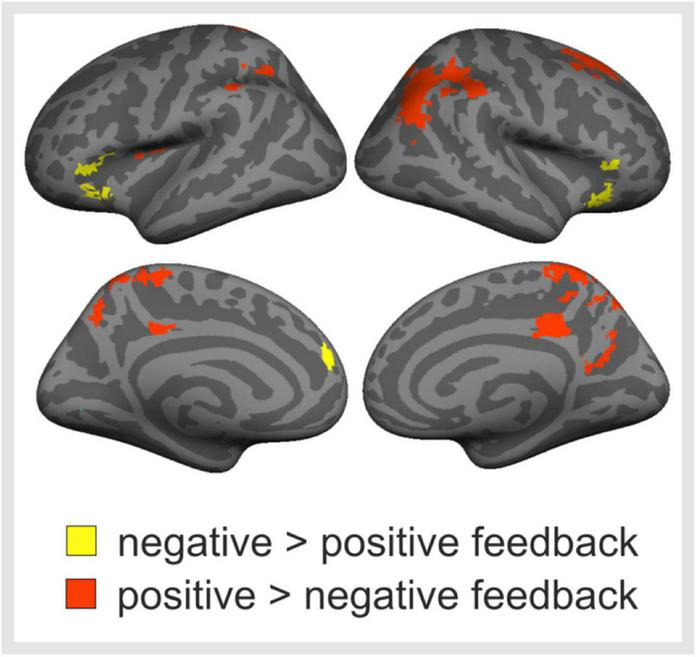
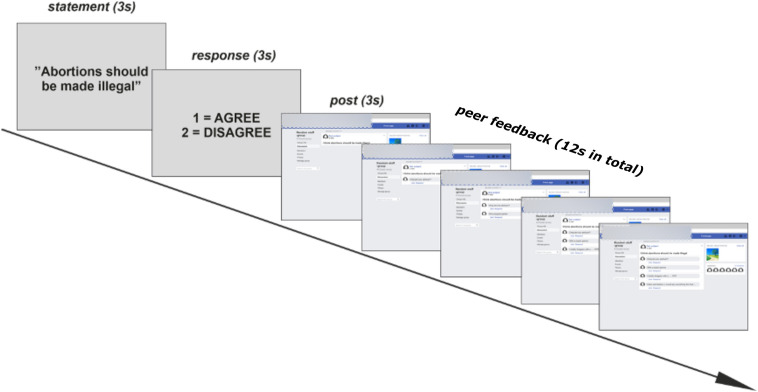
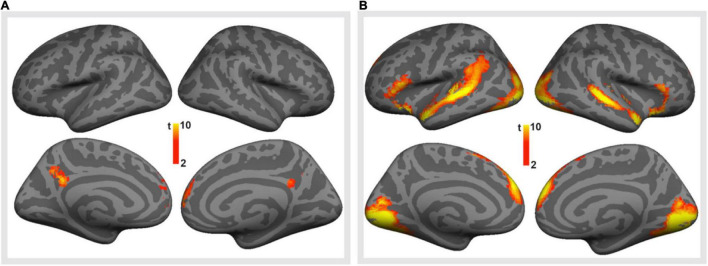
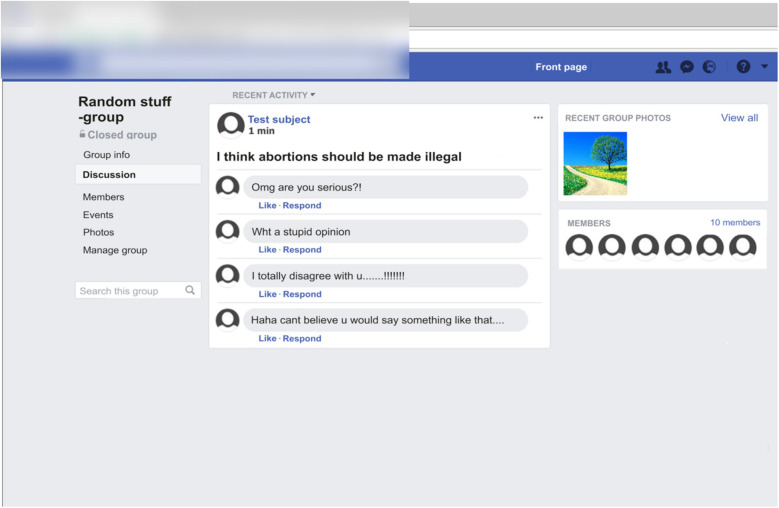
Previous studies have examined the neural correlates of receiving negative feedback from peers during virtual social interaction in young people. However, there is a lack of studies applying platforms adolescents use in daily life. In the present study, 92 late-adolescent participants performed a task that involved receiving positive and negative feedback to their opinions from peers in a Facebook-like platform, while brain activity was measured using functional magnetic resonance imaging (fMRI). Peer feedback was shown to activate clusters in the ventrolateral prefrontal cortex (VLPFC), medial prefrontal cortex (MPFC), superior temporal gyrus and sulcus (STG/STS), and occipital cortex (OC). Negative feedback was related to greater activity in the VLPFC, MPFC, and anterior insula than positive feedback, replicating previous findings on peer feedback and social rejection. Real-life habits of social media use did not correlate with brain responses to negative feedback.

摘要

以往的研究探讨了年轻人在虚拟社交互动中收到同伴负面反馈时的神经关联。然而,缺乏使用青少年日常生活中所使用平台的研究。在本研究中,92名青少年晚期参与者在一个类似脸书的平台上完成了一项任务,该任务涉及从同伴那里收到对自己观点的正面和负面反馈,同时使用功能磁共振成像(fMRI)测量大脑活动。结果显示,同伴反馈激活了腹外侧前额叶皮层(VLPFC)、内侧前额叶皮层(MPFC)、颞上回和颞上沟(STG/STS)以及枕叶皮层(OC)中的多个脑区。与正面反馈相比,负面反馈与VLPFC、MPFC和前脑岛中更强的活动相关,这重复了先前关于同伴反馈和社会排斥的研究结果。社交媒体使用的现实生活习惯与大脑对负面反馈的反应无关。
https://cdn.ncbi.nlm.nih.gov/pmc/blobs/11a1/9190756/e75d4ceedc45/fnbeh-16-790478-g004.jpg
https://cdn.ncbi.nlm.nih.gov/pmc/blobs/11a1/9190756/1a9ad8a2830b/fnbeh-16-790478-g001.jpg
https://cdn.ncbi.nlm.nih.gov/pmc/blobs/11a1/9190756/4c4c513ea603/fnbeh-16-790478-g002.jpg
https://cdn.ncbi.nlm.nih.gov/pmc/blobs/11a1/9190756/2cc6bd95034c/fnbeh-16-790478-g003.jpg
https://cdn.ncbi.nlm.nih.gov/pmc/blobs/11a1/9190756/e75d4ceedc45/fnbeh-16-790478-g004.jpg
https://cdn.ncbi.nlm.nih.gov/pmc/blobs/11a1/9190756/1a9ad8a2830b/fnbeh-16-790478-g001.jpg
https://cdn.ncbi.nlm.nih.gov/pmc/blobs/11a1/9190756/4c4c513ea603/fnbeh-16-790478-g002.jpg
https://cdn.ncbi.nlm.nih.gov/pmc/blobs/11a1/9190756/2cc6bd95034c/fnbeh-16-790478-g003.jpg
https://cdn.ncbi.nlm.nih.gov/pmc/blobs/11a1/9190756/e75d4ceedc45/fnbeh-16-790478-g004.jpg

相似文献

1
Brain Responses to Peer Feedback in Social Media Are Modulated by Valence in Late Adolescence.青春期后期,社交媒体中大脑对同伴反馈的反应受效价调节。
Front Behav Neurosci. 2022 May 30;16:790478. doi: 10.3389/fnbeh.2022.790478. eCollection 2022.
2
Neural circuitry underlying affective response to peer feedback in adolescence.青少年对同伴反馈的情感反应的神经回路。
Soc Cogn Affect Neurosci. 2012 Jan;7(1):81-92. doi: 10.1093/scan/nsr043. Epub 2011 Aug 9.
3
Developmental influences on the neural bases of responses to social rejection: implications of social neuroscience for education.发展对社会拒绝反应的神经基础的影响:社会神经科学对教育的启示。
Neuroimage. 2011 Aug 1;57(3):686-94. doi: 10.1016/j.neuroimage.2010.09.063. Epub 2010 Oct 12.
4
Brain activation upon ideal-body media exposure and peer feedback in late adolescent girls.青春期晚期女孩接触理想身材媒体及同伴反馈时的大脑激活情况。
Cogn Affect Behav Neurosci. 2017 Aug;17(4):712-723. doi: 10.3758/s13415-017-0507-y.
5
Neural correlates of peer evaluation in irritable adolescents: Linking anticipation to receipt of social feedback.激惹青少年同伴评价的神经相关性:将预期与社会反馈的接收联系起来。
Biol Psychol. 2023 Apr;179:108564. doi: 10.1016/j.biopsycho.2023.108564. Epub 2023 Apr 13.
6
Overlapping and distinct neural correlates of self-evaluations and self-regulation from the perspective of self and others.从自我和他人的角度看自我评价和自我调节的重叠和不同的神经相关性。
Neuropsychologia. 2021 Oct 15;161:108000. doi: 10.1016/j.neuropsychologia.2021.108000. Epub 2021 Aug 20.
7
Heritability of aggression following social evaluation in middle childhood: An fMRI study.社会评价后儿童中期攻击行为的遗传性:一项 fMRI 研究。
Hum Brain Mapp. 2018 Jul;39(7):2828-2841. doi: 10.1002/hbm.24043. Epub 2018 Mar 12.
8
Neural correlates of prosocial peer influence on public goods game donations during adolescence.青春期亲社会同伴影响对公共物品博弈捐赠的神经关联
Soc Cogn Affect Neurosci. 2016 Jun;11(6):923-33. doi: 10.1093/scan/nsw013. Epub 2016 Feb 9.
9
Self-esteem modulates medial prefrontal cortical responses to evaluative social feedback.自尊调节内侧前额皮质对评价性社会反馈的反应。
Cereb Cortex. 2010 Dec;20(12):3005-13. doi: 10.1093/cercor/bhq049. Epub 2010 Mar 29.
10
Adolescents' affective and neural responses to parental praise and criticism.青少年对父母表扬和批评的情感和神经反应。
Dev Cogn Neurosci. 2022 Apr;54:101099. doi: 10.1016/j.dcn.2022.101099. Epub 2022 Mar 15.

引用本文的文献

1
The Effects of Social Feedback Through the "Like" Feature on Brain Activity: A Systematic Review.通过“点赞”功能进行的社交反馈对大脑活动的影响:一项系统综述。
Healthcare (Basel). 2025 Jan 6;13(1):89. doi: 10.3390/healthcare13010089.
2
Youths' sensitivity to social media feedback: A computational account.青少年对社交媒体反馈的敏感性:一种计算视角。
Sci Adv. 2024 Oct 25;10(43):eadp8775. doi: 10.1126/sciadv.adp8775. Epub 2024 Oct 23.
3
A Systematic Review of Structural and Functional MRI Studies Investigating Social Networking Site Use.

本文引用的文献

1
Modulation of Brain Activity by Selective Attention to Audiovisual Dialogues.通过对视听对话的选择性注意调节大脑活动
Front Neurosci. 2020 May 12;14:436. doi: 10.3389/fnins.2020.00436. eCollection 2020.
2
Being liked or not being liked: A study on social-media exclusion in a preadolescent population.被喜欢或不被喜欢:一项针对青春期前人群社交媒体排斥现象的研究。
J Adolesc. 2020 Apr;80:173-181. doi: 10.1016/j.adolescence.2020.02.010. Epub 2020 Mar 6.
3
Feeling left out or just surprised? Neural correlates of social exclusion and overinclusion in adolescence.
一项关于调查社交网站使用情况的结构和功能磁共振成像研究的系统综述
Brain Sci. 2023 May 11;13(5):787. doi: 10.3390/brainsci13050787.
4
Early life stress is associated with the default mode and fronto-limbic network connectivity among young adults.早年生活压力与年轻人的默认模式及额边缘网络连通性相关。
Front Behav Neurosci. 2022 Sep 23;16:958580. doi: 10.3389/fnbeh.2022.958580. eCollection 2022.
感到被排斥还是只是感到惊讶?青少年时期社会排斥和过度包容的神经相关性。
Cogn Affect Behav Neurosci. 2020 Apr;20(2):340-355. doi: 10.3758/s13415-020-00772-x.
4
Social Media Use and Adolescent Mental Health: Findings From the UK Millennium Cohort Study.社交媒体使用与青少年心理健康:来自英国千禧队列研究的结果
EClinicalMedicine. 2019 Jan 4;6:59-68. doi: 10.1016/j.eclinm.2018.12.005. eCollection 2018 Dec.
5
Friends and foes: Neural correlates of prosocial decisions with peers in adolescence.朋友与敌人:青少年同伴间亲社会决策的神经关联
Neuropsychologia. 2019 Jun;129:153-163. doi: 10.1016/j.neuropsychologia.2019.03.004. Epub 2019 Mar 12.
6
Meta-analysis of the moral brain: patterns of neural engagement assessed using multilevel kernel density analysis.元分析道德大脑:使用多层次核密度分析评估的神经参与模式。
Brain Imaging Behav. 2020 Apr;14(2):534-547. doi: 10.1007/s11682-019-00035-5.
7
Proactive and reactive cognitive control rely on flexible use of the ventrolateral prefrontal cortex.主动和被动认知控制依赖于腹外侧前额叶皮层的灵活运用。
Hum Brain Mapp. 2019 Feb 15;40(3):955-966. doi: 10.1002/hbm.24424. Epub 2018 Nov 8.
8
What the brain 'Likes': neural correlates of providing feedback on social media.大脑的“喜好”:社交媒体反馈的神经关联。
Soc Cogn Affect Neurosci. 2018 Sep 4;13(7):699-707. doi: 10.1093/scan/nsy051.
9
When compliments do not hit but critiques do: an fMRI study into self-esteem and self-knowledge in processing social feedback.当赞美未被接受而批评却被接受时:一项关于处理社会反馈中自尊和自我认知的功能磁共振成像研究。
Soc Cogn Affect Neurosci. 2018 Apr 1;13(4):404-417. doi: 10.1093/scan/nsy014.
10
Media use and brain development during adolescence.青少年时期的媒体使用与大脑发育
Nat Commun. 2018 Feb 21;9(1):588. doi: 10.1038/s41467-018-03126-x.