Liu Ye, Xu Lingling, Zhang Qiuyun, Kang Yong, Liu Lifeng, Liu Zheng, Wang Yuxing, Jiang Xuejiao, Shan Yizhu, Luo Ruizeng, Cui Xi, Yang Yuan, Yang Xinchun, Liu Xiaoqing, Li Zhou
Heart Center & Beijing Key Laboratory of Hypertension, Beijing Chaoyang Hospital, Capital Medical University, Beijing 100020, China.
Beijing Key Laboratory of Micro-Nano Energy and Sensor, Beijing Institute of Nanoenergy and Nanosystems, Chinese Academy of Sciences, Beijing 101400, China.
Research (Wash D C). 2022 May 31;2022:9816234. doi: 10.34133/2022/9816234. eCollection 2022.
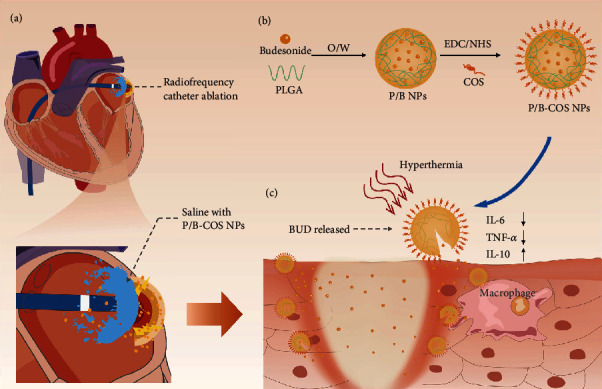
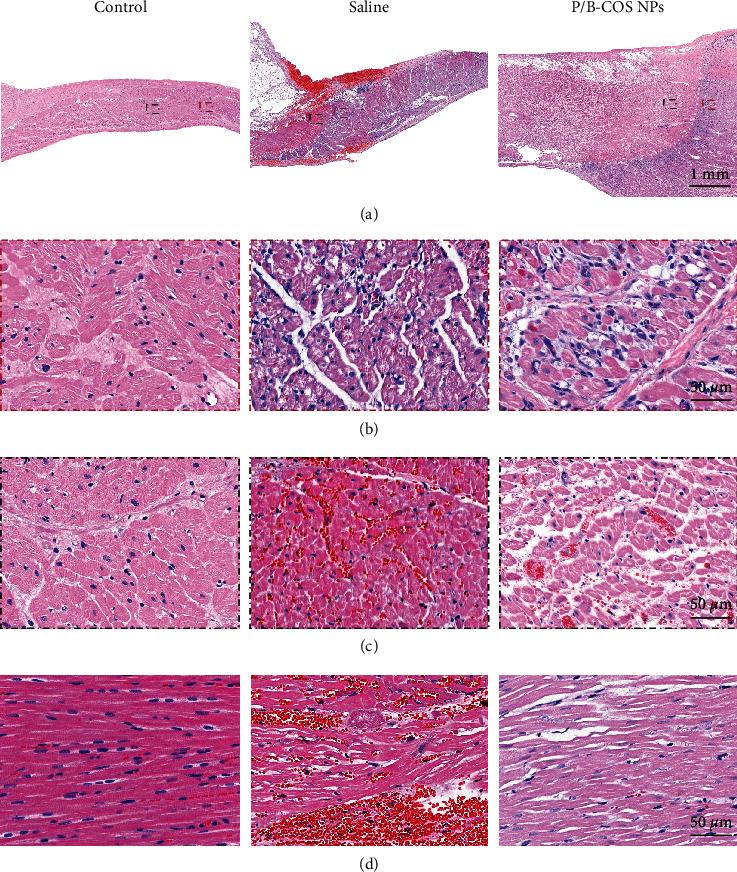
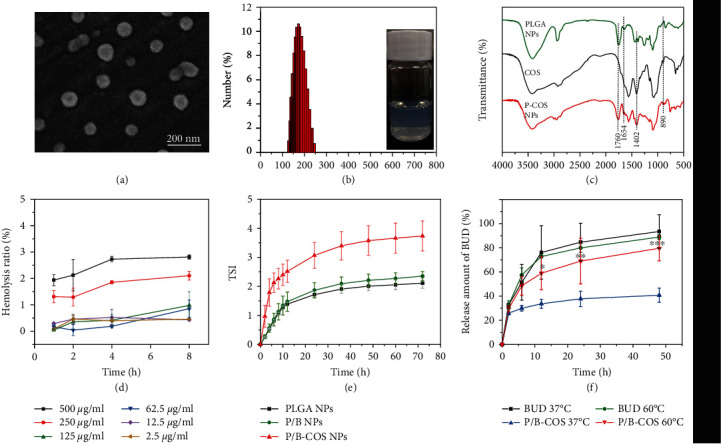
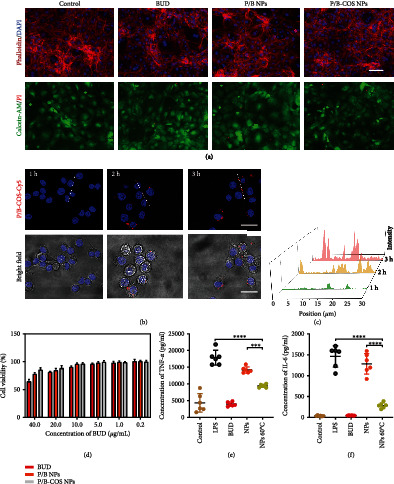
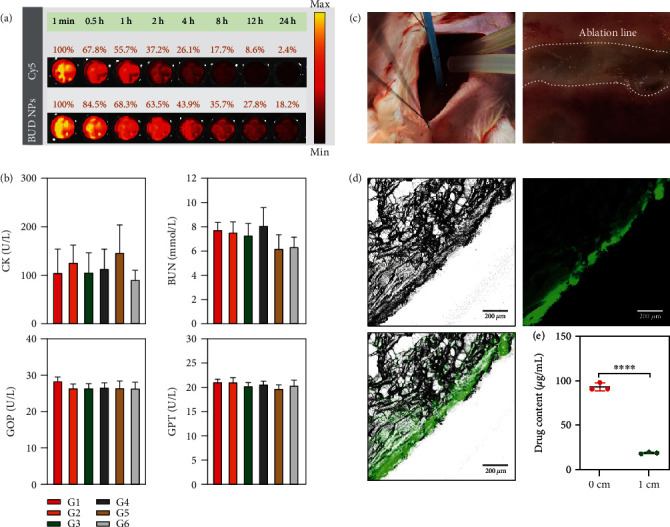
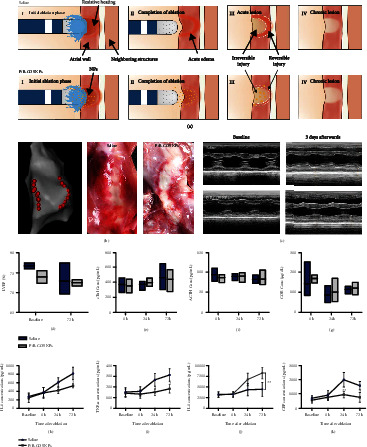
Radiofrequency (RF) catheter ablation has emerged as an effective alternative for the treatment of atrial fibrillation (AF), but ablation lesions will result in swelling and hematoma of local surrounding tissue, triggering inflammatory cell infiltration and increased release of inflammatory cytokines. Some studies have shown that the inflammatory response may be related to the early occurrence of AF. The most direct way to inhibit perioperative inflammation is to use anti-inflammatory drugs such as glucocorticoids. Here, we prepared polylactic-co-glycolic acid (PLGA) nanoparticles loaded with budesonide (BUD) and delivered them through irrigation of saline during the onset of ablation. Local high temperature promoted local rupture of PLGA nanoparticles, releasing BUD, and produced a timely and effective local myocardial anti-inflammatory effect, resulting in the reduction of acute hematoma and inflammatory cell infiltration and the enhancement of ablation effect. Nanoparticles would also infiltrate into the local myocardium and gradually release BUD ingredients to produce a continuous anti-inflammatory effect in the next few days. This resulted in a decrease in the level of inflammatory cytokine IL-6 and an increase of anti-inflammatory cytokine IL-10. This study explored an extraordinary drug delivery strategy to reduce ablation-related inflammation, which may prevent early recurrence of AF.
射频(RF)导管消融已成为治疗心房颤动(AF)的一种有效替代方法,但消融损伤会导致局部周围组织肿胀和血肿,引发炎症细胞浸润并增加炎症细胞因子的释放。一些研究表明,炎症反应可能与AF的早期发生有关。抑制围手术期炎症的最直接方法是使用糖皮质激素等抗炎药物。在此,我们制备了负载布地奈德(BUD)的聚乳酸-乙醇酸共聚物(PLGA)纳米颗粒,并在消融开始时通过盐水灌注来递送它们。局部高温促进了PLGA纳米颗粒的局部破裂,释放出BUD,并产生及时有效的局部心肌抗炎作用,导致急性血肿和炎症细胞浸润减少以及消融效果增强。纳米颗粒还会渗入局部心肌,并在接下来的几天内逐渐释放BUD成分以产生持续的抗炎作用。这导致炎症细胞因子IL-6水平降低和抗炎细胞因子IL-10增加。本研究探索了一种非凡的药物递送策略来减少消融相关炎症,这可能预防AF的早期复发。