Langyan Sapna, Bhardwaj Rakesh, Radhamani J, Yadav Rashmi, Gautam Raj Kumar, Kalia Sanjay, Kumar Ashok
ICAR-National Bureau of Plant Genetic Resources (NBPGR), New Delhi, India.
Department of Biotechnology (DBT), New Delhi, India.
Front Nutr. 2022 May 31;9:892695. doi: 10.3389/fnut.2022.892695. eCollection 2022.
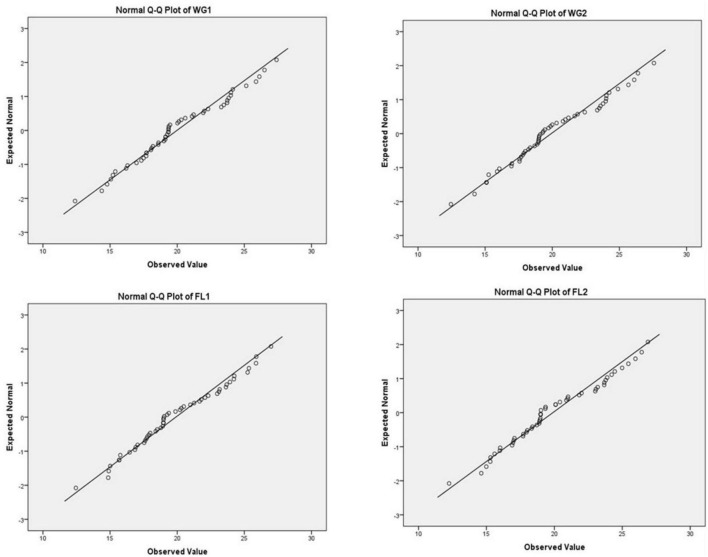
Protein is one of the most abundant substances in plants and plays a major role in human health hence standardization of its analytical quantification method is essential. Various methods for protein quantification exist, such as Kjeldahl, Bradford, Lowry, bicinchoninic acid assay (BCA), Biuret, and total amino acid content methods. These methods are widely applied; however, the development of the rapid and efficient method is the need of the time hence the objective of this research was to analyze and comparing compare the modification of the Kjeldahl method for the determination of protein content in oilseed crops. The study was performed to improve the sample preparation method (processing and digestion) for protein quantification. Generally, the method initially requires homogenization of grains to a fine flour, which involves time and increases the risk of sample cross-contamination and partial loss of oil from the sample during grinding. Moreover at times, it becomes challenging to homogenize oil seeds to fine flour due to high oil content. However, in the present research, the whole grain was digested in place of grounded flour to accomplish quick protein quantification and compared it with the flour matrix of different oil seeds. To further reduce the digestion time and avoid frothing, we have used the modified digestion mixture. The developed method was statistically validated using analysis of variance (ANOVA), Pearson correlation reliability test, paired -test, and different types of plot analysis. The validation of the sample preparation method in protein quantification demonstrated non-significant differences that the protein content from whole grain of all the five oilseed crops shows 100% non-significant results compared with the flour matrix in both the digestion mixtures. The developed novel method could be used to prepare the sample for protein analysis and reduces the overall analysis time while ensuring the accuracy of the results.
蛋白质是植物中含量最丰富的物质之一,对人体健康起着重要作用,因此其分析定量方法的标准化至关重要。存在多种蛋白质定量方法,如凯氏定氮法、考马斯亮蓝法、洛瑞法、二喹啉甲酸法(BCA)、双缩脲法和总氨基酸含量法。这些方法应用广泛;然而,开发快速高效的方法是当下的需求,因此本研究的目的是分析和比较凯氏定氮法的改进方法,以测定油料作物中的蛋白质含量。该研究旨在改进蛋白质定量的样品制备方法(处理和消化)。一般来说,该方法最初需要将谷物均质化为细粉,这既耗时,又增加了样品交叉污染的风险,且在研磨过程中样品会部分损失油脂。此外,有时由于含油量高,将油料种子均质化为细粉具有挑战性。然而,在本研究中,使用整粒谷物进行消化以实现快速蛋白质定量,并将其与不同油料种子的面粉基质进行比较。为了进一步缩短消化时间并避免起泡,我们使用了改良的消化混合物。使用方差分析(ANOVA)、皮尔逊相关可靠性检验、配对检验和不同类型的绘图分析对所开发的方法进行了统计学验证。蛋白质定量中样品制备方法的验证表明,所有五种油料作物整粒中的蛋白质含量与两种消化混合物中的面粉基质相比,均显示出100%无显著差异。所开发的新方法可用于制备蛋白质分析样品,减少整体分析时间,同时确保结果的准确性。