Alemayehu Astawus, Demissie Abebaw, Yusuf Mohammed, Gemechu Lencha Abebe, Oljira Lemessa
Public Health Department, Harar Health Science College, Harar, Ethiopia.
Nursing Department, Rift Valley University, Harar, Ethiopia.
Health Serv Res Manag Epidemiol. 2022 Jun 13;9:23333928221106269. doi: 10.1177/23333928221106269. eCollection 2022 Jan-Dec.
Vaccines are an effective and ideal solution that can reduce the burden of disease worldwide. Although vaccines are the most effective way to prevent infectious diseases. Anti-vaccine conspiracy theories impair vaccination acceptance intentions. Several studies were conducted in East Africa. However, these studies had reported inconsistent findings. Therefore, this systematic review aimed to pool the prevalence of COVID-19 vaccine acceptance and identify its determinants.
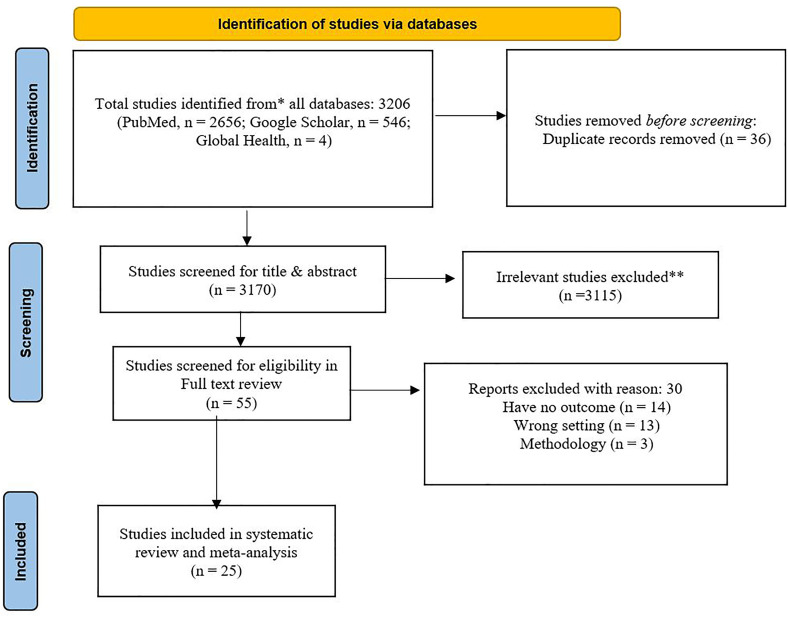
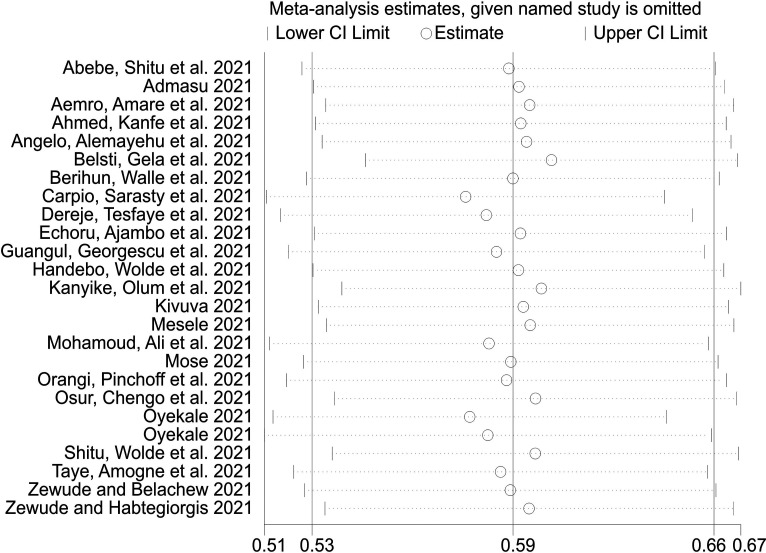
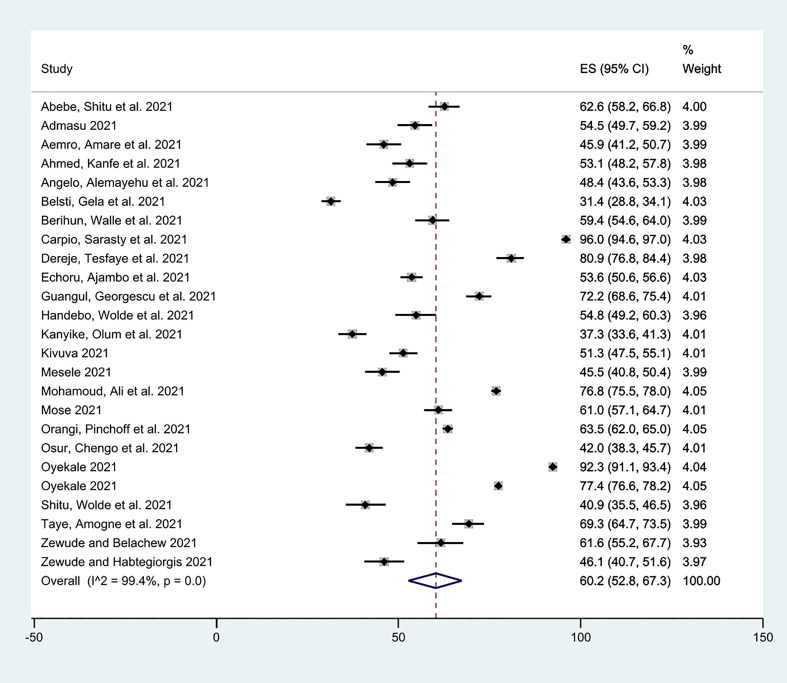
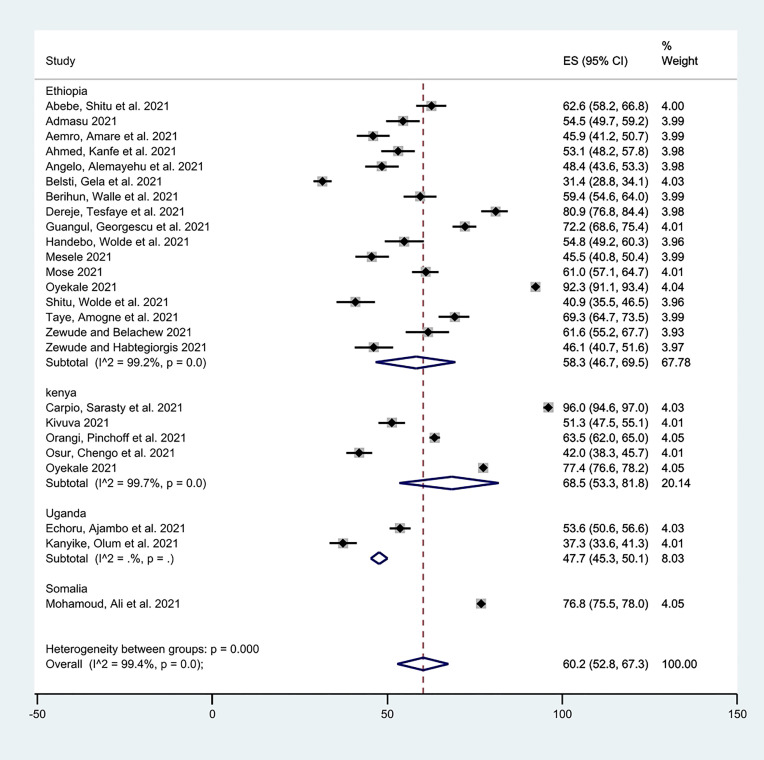
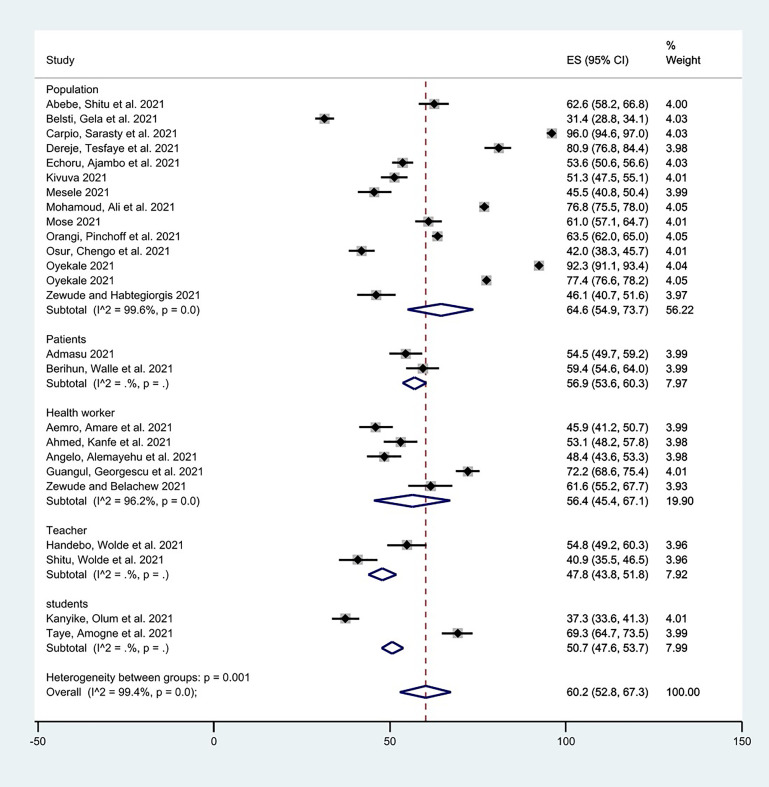
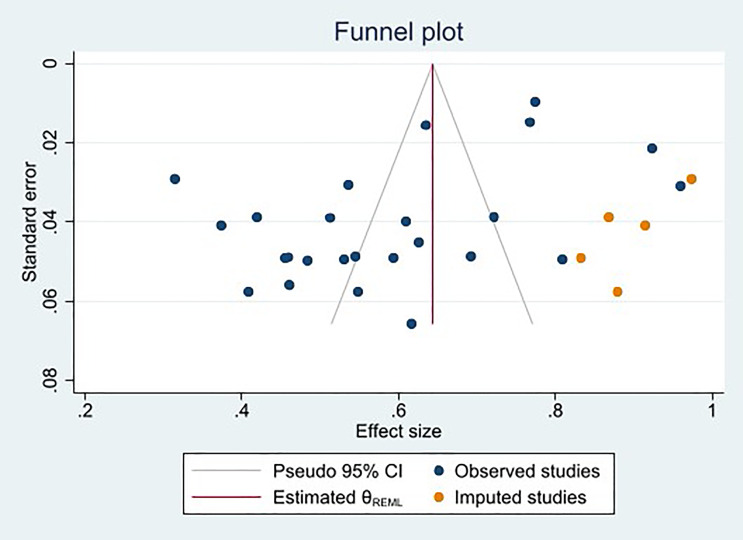
PubMed, Google Scholar, and GLOBAL HEALTH databases were used to retrieve previously published studies. All papers published in the English language up to February 28, 2022 were included. The result was written and reported according to the PRISMA updated guideline. A random-effect model was used to estimate the pooled prevalence and effect sizes. Heterogeneity was assessed using I test statistics. Publication bias was assessed using funnel plot and egger's test statistics. Statistical tests result at P-value<0.05 were declared as having significance.Result: A total of 25 Cross-sectional studies with a total sample size of 33,044 were included in this study. The pooled prevalence of Covid-19 vaccine acceptance was 60.2%, (95%CI: 52.8- 67.3). Egger's test statistics (P = 0.003) showed there is a significant publication bias. Attending above secondary school (AOR: 2.1, 95%CI: 1.37, 2.96), having good knowledge about the vaccine (AOR: 2.1, 95%CI: 1.6, 2.8), having a positive attitude towards vaccine (AOR: 3.8, 95%CI: 2.3, 6.2), history of COVID-19 infection (AOR: 2.7, 95%CI: 1.6, 4.7) and being male (AOR: 1.8, 95%CI: 1.2, 2.7) were found to have a significant association with COVID-19 vaccine acceptance.
The COVID-19 vaccination acceptance rate was good, but it could be improved. The findings could help governments to figure out the best way to carry out COVID-19 mass vaccination campaigns. There is a lack of data in most countries. Therefore, we suggest more studies be conducted in the future.
疫苗是一种有效的理想解决方案,可减轻全球疾病负担。尽管疫苗是预防传染病的最有效方法,但反疫苗阴谋论削弱了人们接受疫苗接种的意愿。在东非进行了多项研究。然而,这些研究报告的结果并不一致。因此,本系统评价旨在汇总新冠疫苗接种的接受率并确定其决定因素。
使用PubMed、谷歌学术和全球健康数据库检索先前发表的研究。纳入截至2022年2月28日发表的所有英文论文。结果根据PRISMA更新指南进行撰写和报告。使用随机效应模型估计合并患病率和效应大小。使用I检验统计量评估异质性。使用漏斗图和埃格检验统计量评估发表偏倚。P值<0.05的统计检验结果被判定为具有显著性。结果:本研究共纳入25项横断面研究,总样本量为33044。新冠疫苗接种的合并接受率为60.2%,(95%置信区间:52.8 - 67.3)。埃格检验统计量(P = 0.003)表明存在显著的发表偏倚。接受过高中以上教育(比值比:2.1,95%置信区间:1.37,2.96)、对疫苗有充分了解(比值比:2.1,95%置信区间:1.6,2.8)、对疫苗持积极态度(比值比:3.8,95%置信区间:2.3,6.2)、有新冠感染史(比值比:2.7,95%置信区间:1.6,4.7)以及男性(比值比:1.8,95%置信区间:1.2,2.7)被发现与新冠疫苗接种接受率有显著关联。
新冠疫苗接种接受率良好,但仍有提升空间。这些研究结果有助于各国政府找出开展新冠大规模疫苗接种运动的最佳方式。大多数国家缺乏相关数据。因此,我们建议未来开展更多研究。