Jacob Peyton, Chan Lawrence, Cheung Polly, Bello Kristina, Yu Lisa, StHelen Gideon, Benowitz Neal L
Clinical Pharmacology Program, Division of Cardiology, Department of Medicine, University of California, San Francisco, San Francisco, CA, United States.
Front Chem. 2022 Jun 1;10:749089. doi: 10.3389/fchem.2022.749089. eCollection 2022.
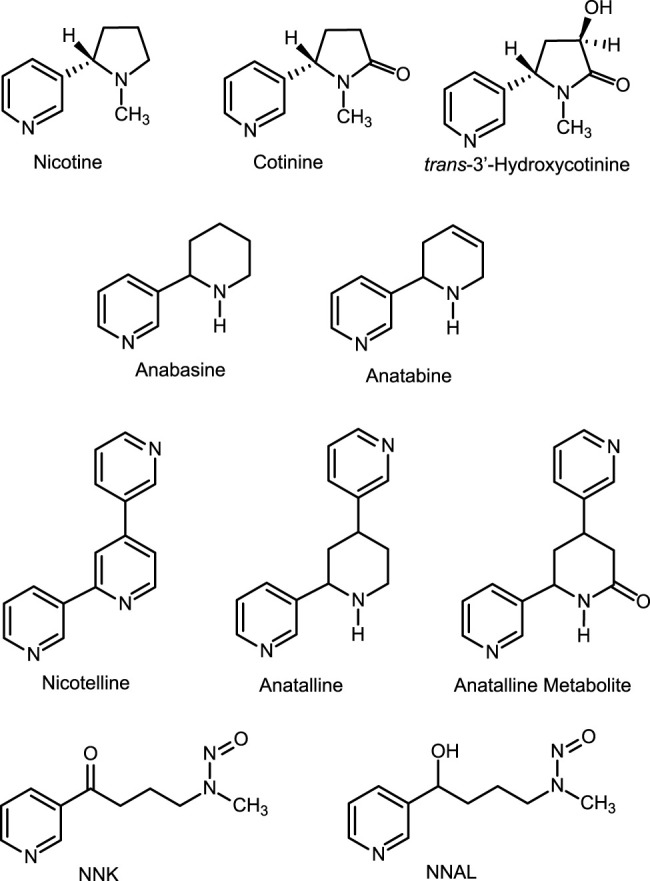
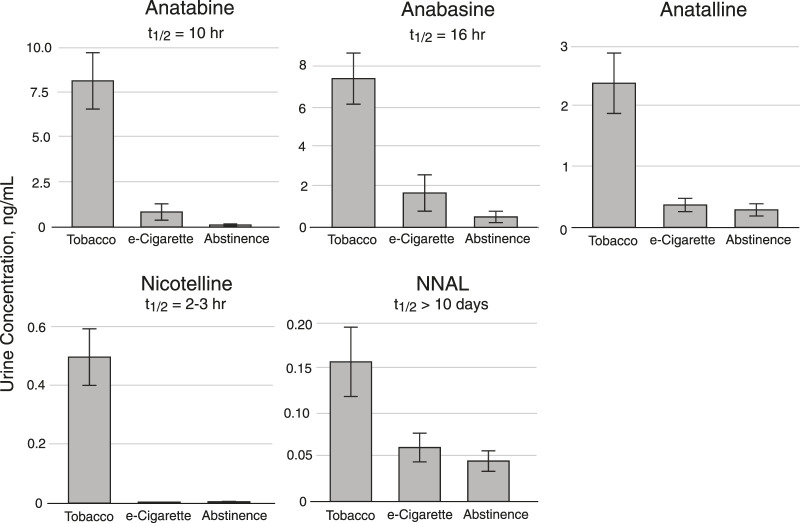
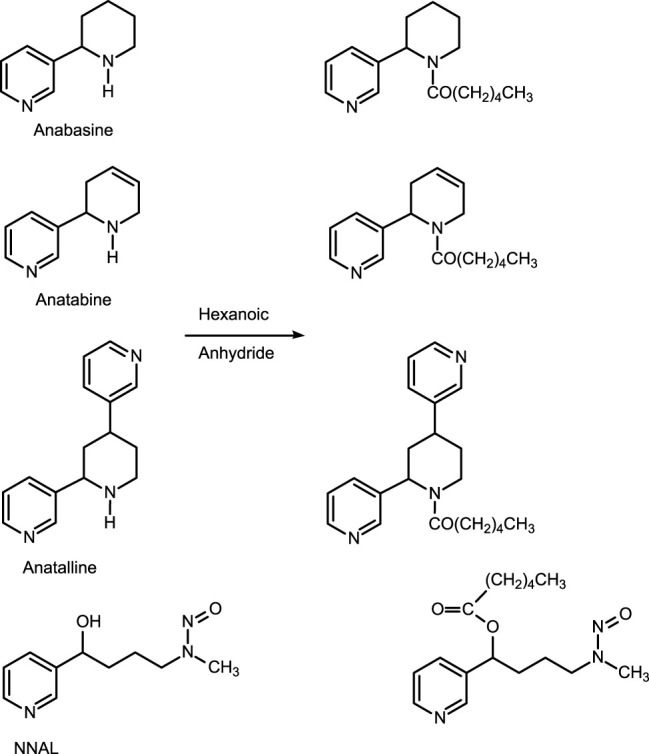
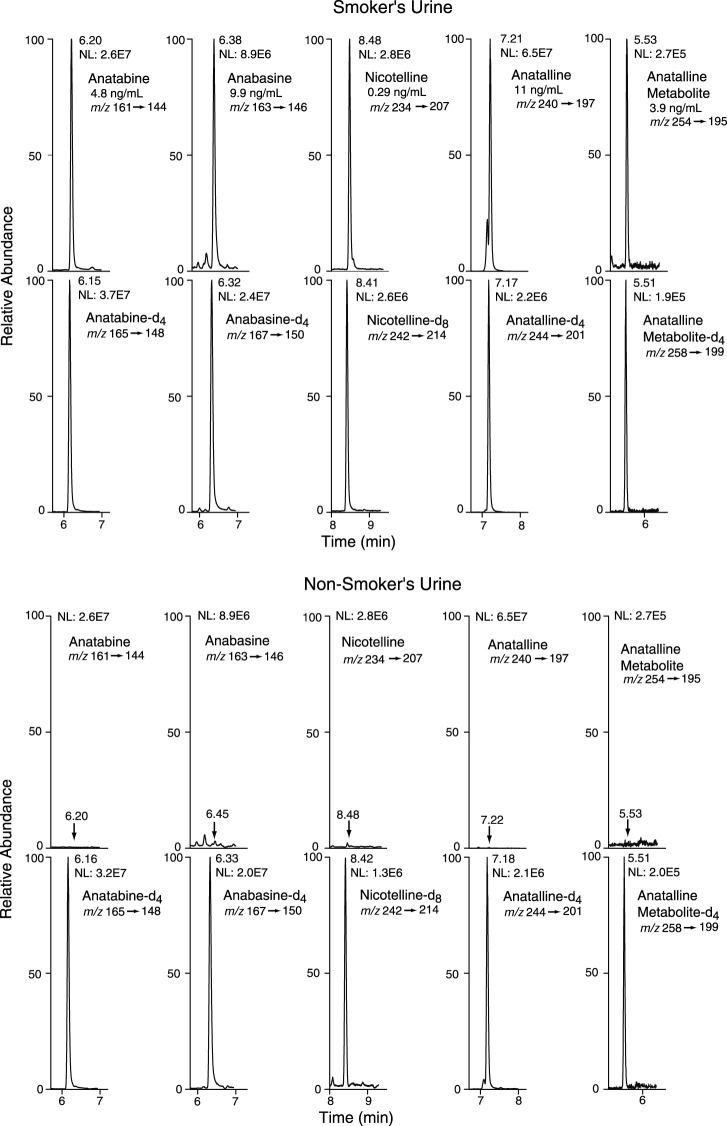
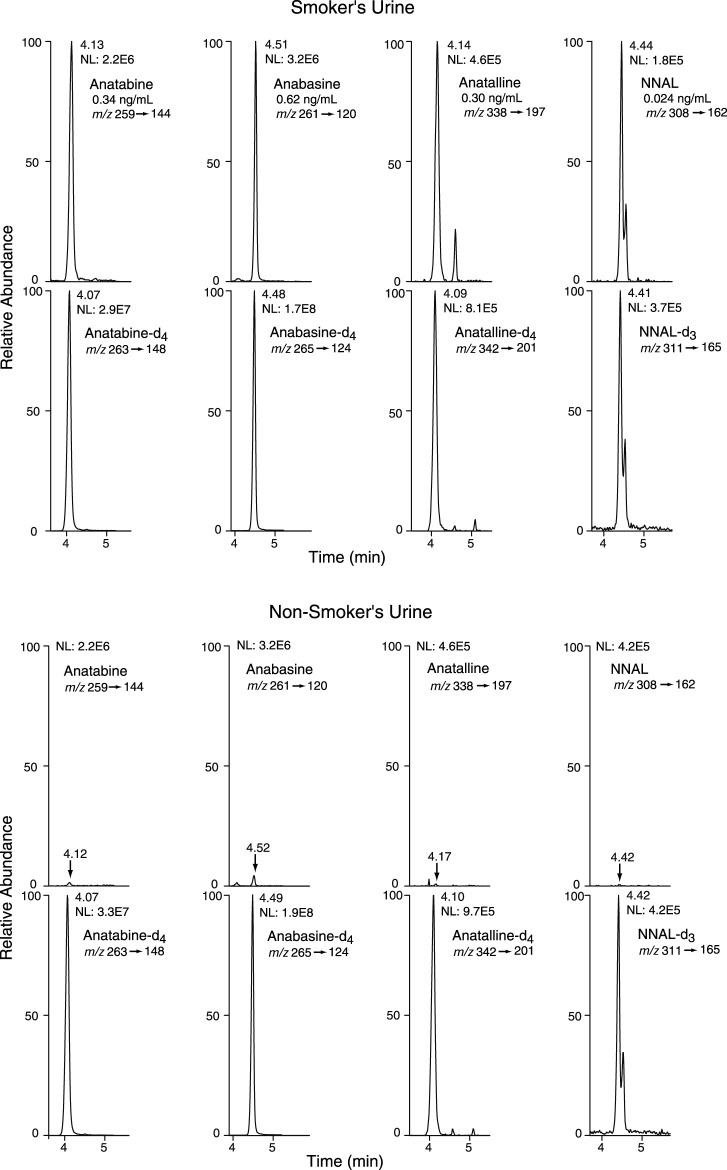
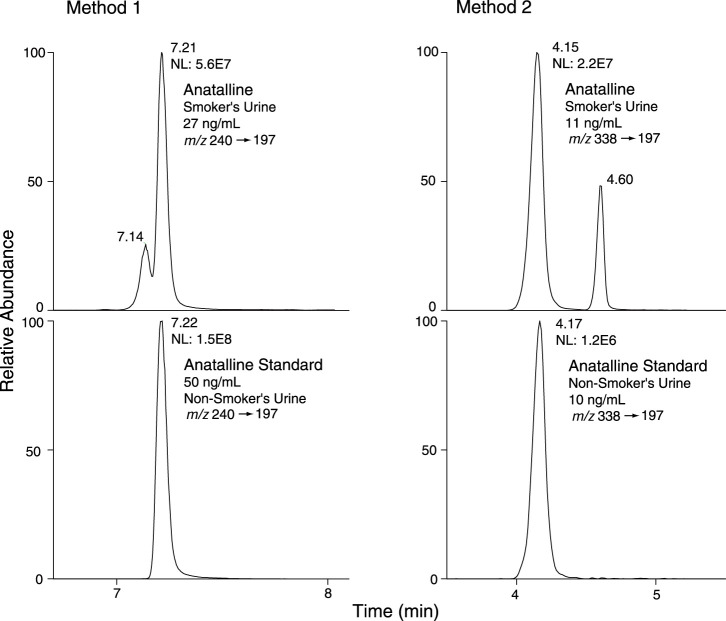
Biomarkers for the use of electronic nicotine delivery systems (ENDS) are desirable for studies of the health effects of electronic cigarettes and related devices. However, the aerosols inhaled from these devices do not contain substances that are unique to this class of products, ., substances that are not present in cigarette smoke or those that do not have common environmental or dietary sources. Consequently, identifying selective biomarkers for ENDS use remains a challenge. If co-use of conventional tobacco products can be definitively ruled out, then nicotine and its metabolites are suitable for assessing exposure. Self-reports from questionnaires are often used to obtain information on product use. But self-reports may not always be accurate, and are not amenable to obtaining quantitative information on exposure. An alternative approach is to use selective biomarkers for conventional tobacco products to definitively rule out their use. In this article, we describe two new LC-MS/MS methods for the minor tobacco alkaloids anabasine, anatabine, nicotelline, anatalline, and 4-(methylnitrosamino)-1-(3-pyridyl)-1-butanol (NNAL), a tobacco-specific nitrosamine metabolite, all biomarkers that are selective for the use of conventional tobacco products. Applications of these biomarkers in studies of ENDS use and dual use of ENDS and conventional tobacco products are also discussed.
对于电子烟及相关设备的健康影响研究而言,电子尼古丁传送系统(ENDS)的生物标志物是很有必要的。然而,从这些设备吸入的气溶胶并不包含此类产品所特有的物质,即香烟烟雾中不存在的物质,或没有常见环境或饮食来源的物质。因此,确定ENDS使用的选择性生物标志物仍然是一项挑战。如果能够明确排除传统烟草产品的共同使用,那么尼古丁及其代谢物就适合用于评估暴露情况。问卷调查中的自我报告常被用于获取产品使用信息。但自我报告可能并不总是准确的,而且无法获取关于暴露的定量信息。另一种方法是使用传统烟草产品的选择性生物标志物来明确排除其使用。在本文中,我们描述了两种新的液相色谱-串联质谱法,用于检测次要烟草生物碱新烟草碱、降烟碱、麦斯明、新烟草灵,以及烟草特异性亚硝胺代谢物4-(甲基亚硝胺基)-1-(3-吡啶基)-1-丁醇(NNAL),这些都是传统烟草产品使用的选择性生物标志物。还讨论了这些生物标志物在ENDS使用研究以及ENDS与传统烟草产品双重使用研究中的应用。