Oltean-Dan Daniel, Apostu Dragos, Tomoaia Gheorghe, Kerekes Kinga, Păiuşan Mihai Gheorghe, Bardas Ciprian-Alin, Benea Horea Rares Ciprian
Department of Orthopedics and Traumatology, Iuliu Hatieganu University of Medicine and Pharmacy, Cluj-Napoca, Romania.
Academy of Romanian Scientists, Bucharest, Romania.
Med Pharm Rep. 2022 Apr;95(2):179-184. doi: 10.15386/mpr-2136. Epub 2022 Apr 28.
Despite the great success of primary total hip arthroplasty (THA), the number of revisions has significantly increased over the past years. The objectives of the study were to investigate the main causes that lead to revision of THA, the time interval between primary THA and revision, and the results of the revision surgery. We also assessed whether there was any correlation between the patients' age, BMI, diagnosis for primary THA and the cause of failure.
This paper retrospectively analyzed 189 patients with THA revision surgery performed over a six-year period, between 2015 and 2020. Patients' charts were reviewed to collect data on patient's demographics, patient's primary THA and revision procedures, and the time interval between primary THA and revision surgery. Patients were divided into 3 groups according to the time interval THA-revision: group I (<5 years), group II (5-10 years) and group III (>10 years).
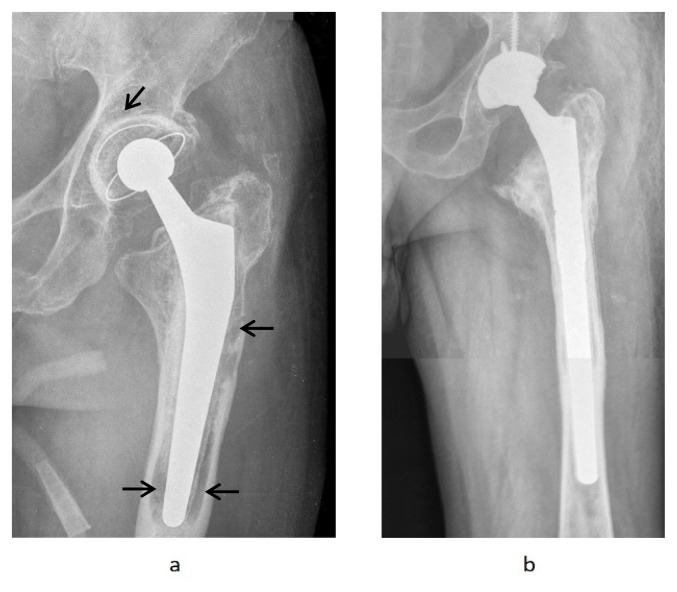
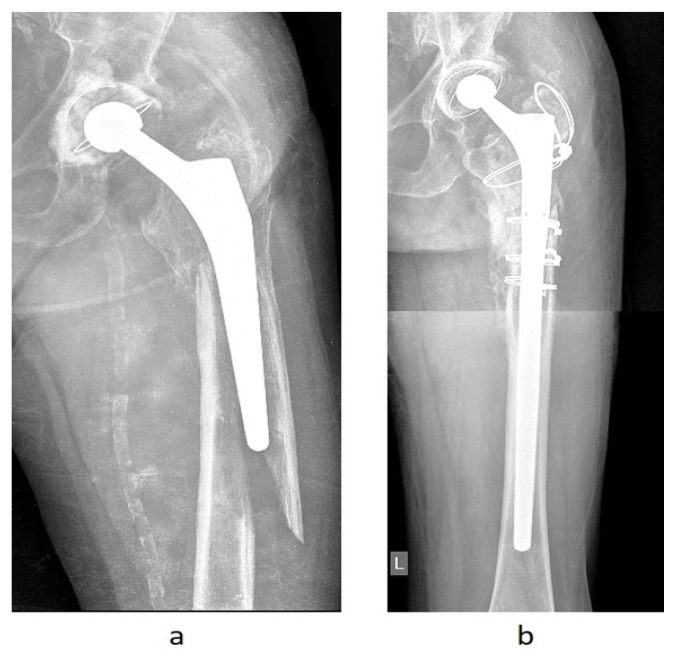
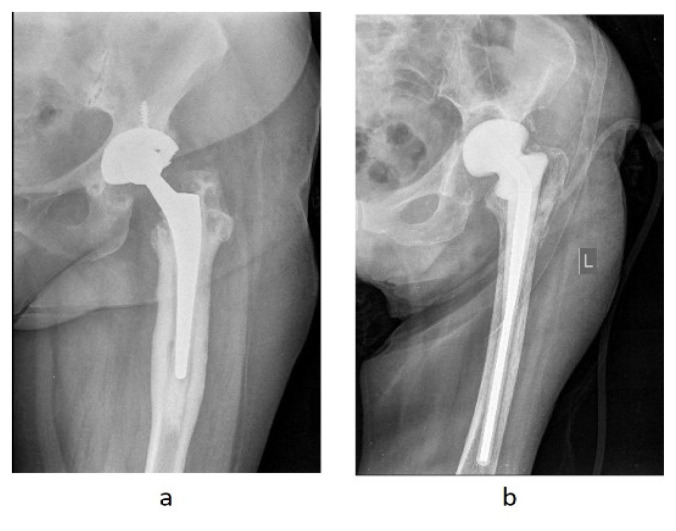
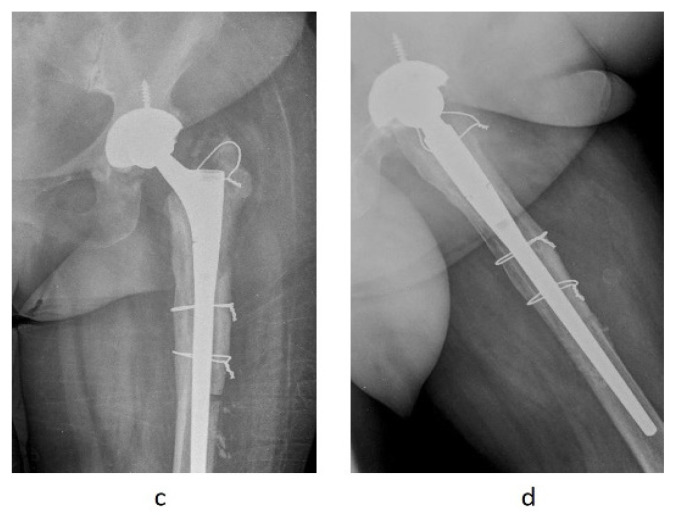
The patients' mean age (82 men/107 women) was 69.59±7.85 years (range 31-92 years). The most frequent revision cause was aseptic loosening (52%), followed by periprosthetic fractures (18%), infection (17%) and persistent hip instability (12%). Patients' age (r=0.43) and BMI (r=-0.4) had low correlation with the time interval between THA and revision.
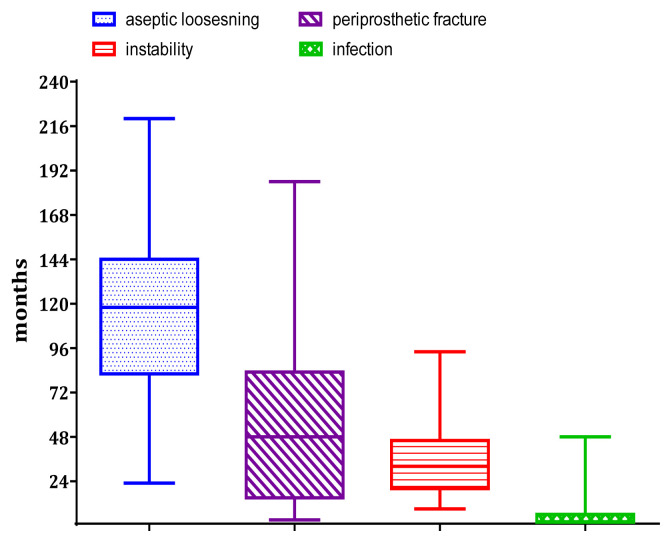
The main causes for revision THA within less than five years are infection and instability, while revision for aseptic loosening is performed especially after five years from the primary THA. Osteonecrosis, post-traumatic osteoarthritis and femoral neck fracture are correlated with a higher incidence of revision at less than five years from the primary THA.
尽管初次全髋关节置换术(THA)取得了巨大成功,但在过去几年中,翻修手术的数量显著增加。本研究的目的是调查导致THA翻修的主要原因、初次THA与翻修之间的时间间隔以及翻修手术的结果。我们还评估了患者的年龄、体重指数(BMI)、初次THA的诊断与失败原因之间是否存在任何相关性。
本文回顾性分析了2015年至2020年六年期间接受THA翻修手术的189例患者。查阅患者病历以收集有关患者人口统计学、初次THA和翻修手术程序以及初次THA与翻修手术之间时间间隔的数据。根据THA与翻修之间的时间间隔将患者分为3组:I组(<5年)、II组(5 - 10年)和III组(>10年)。
患者的平均年龄为69.59±7.85岁(82例男性/107例女性,年龄范围31 - 92岁)。最常见的翻修原因是无菌性松动(52%),其次是假体周围骨折(18%)、感染(17%)和持续性髋关节不稳定(12%)。患者年龄(r = 0.43)和BMI(r = -0.4)与THA和翻修之间的时间间隔相关性较低。
五年内翻修THA的主要原因是感染和不稳定,而无菌性松动的翻修尤其在初次THA五年后进行。骨坏死、创伤后骨关节炎和股骨颈骨折与初次THA后五年内较高的翻修发生率相关。