Olmsted Zachary T, Paluh Janet L
State University of New York Polytechnic Institute, College of Nanoscale Science and Engineering, Nanobioscience, Nanofab East, 257 Fuller Road, Albany, NY 12203, USA.
iScience. 2022 May 30;25(6):104486. doi: 10.1016/j.isci.2022.104486. eCollection 2022 Jun 17.
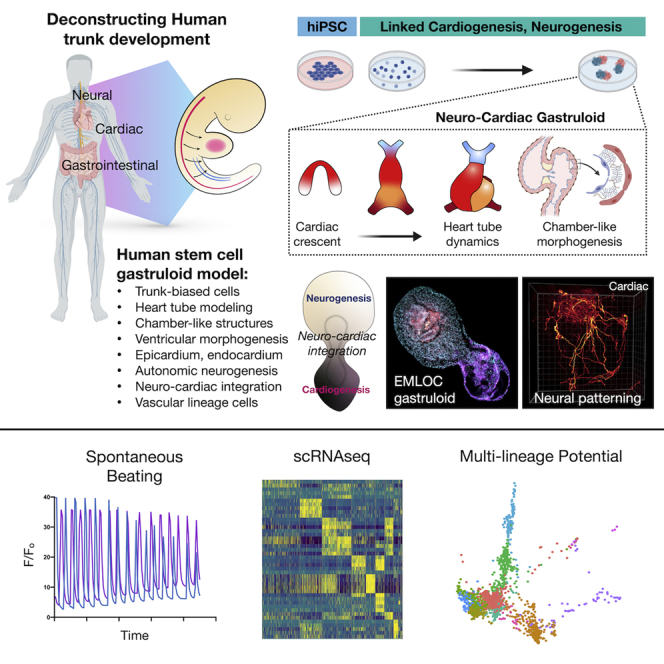
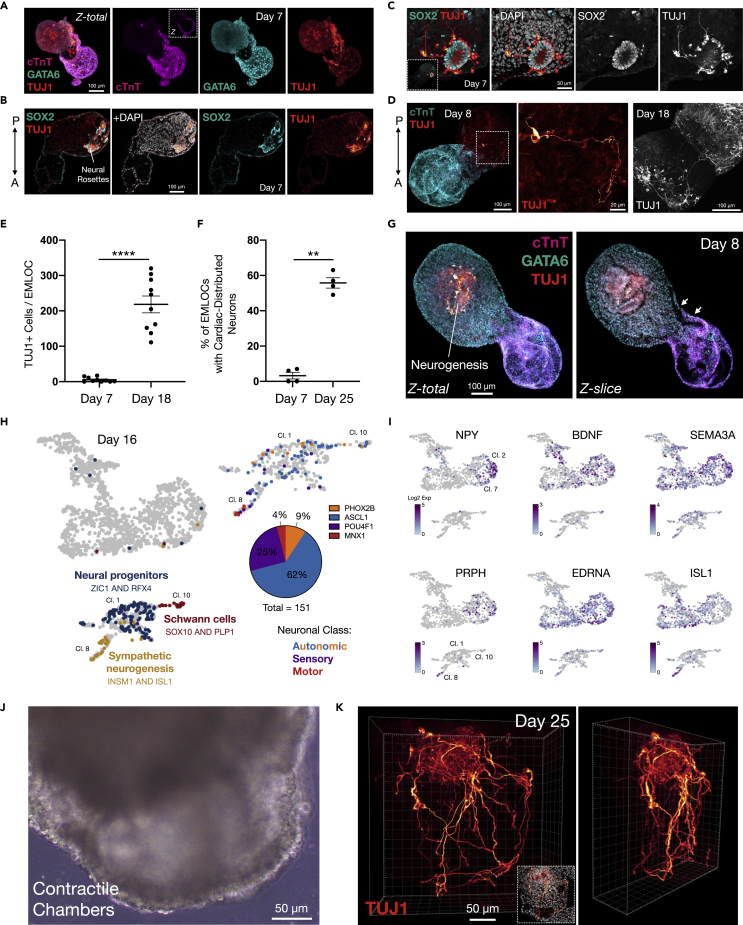
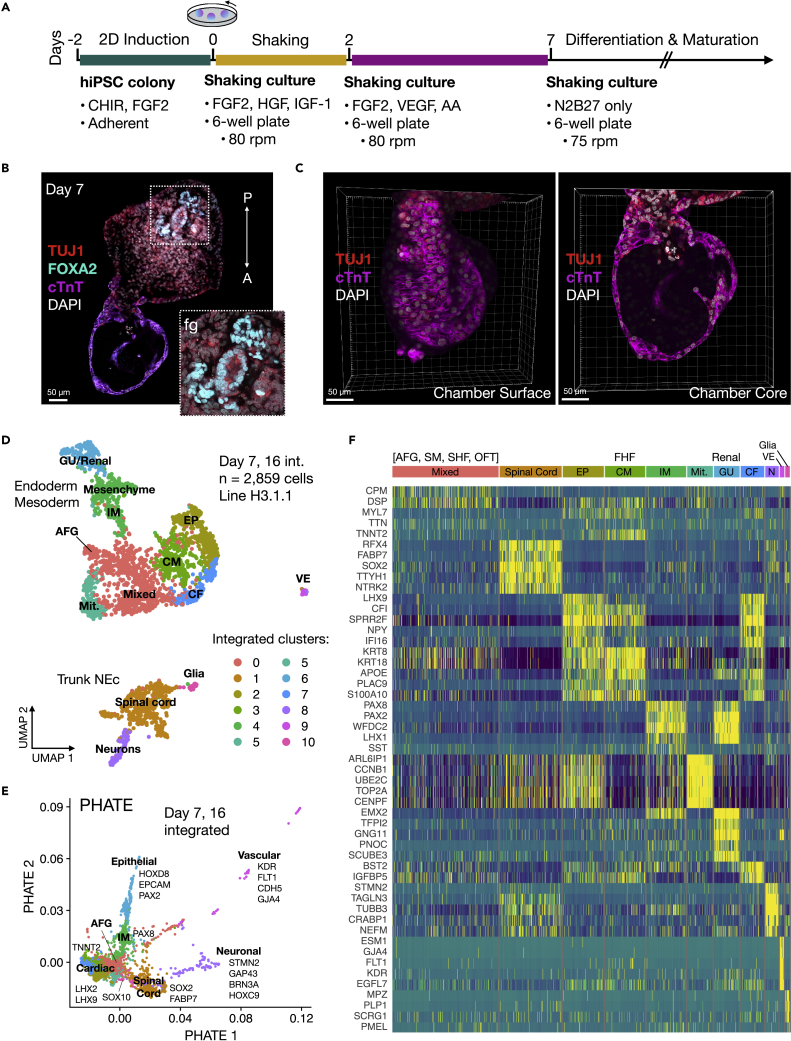
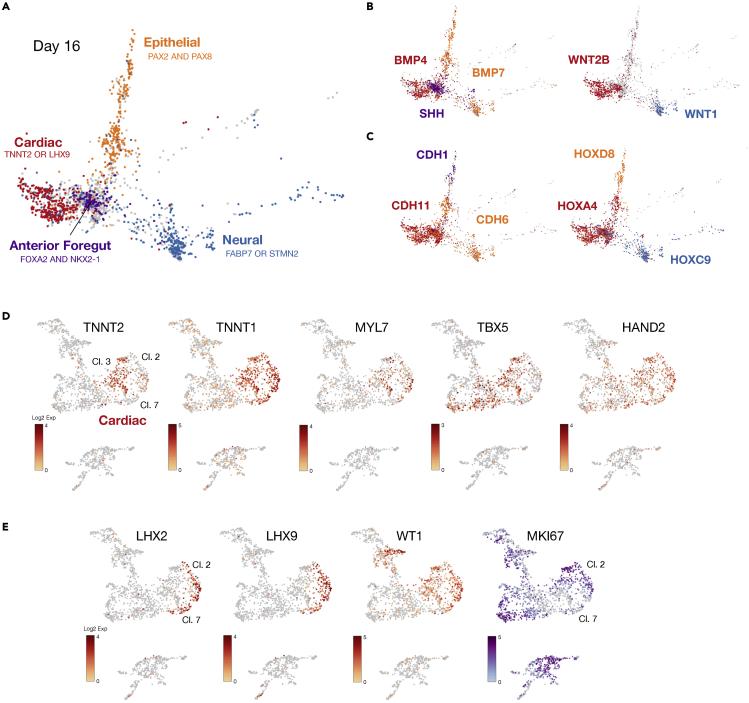
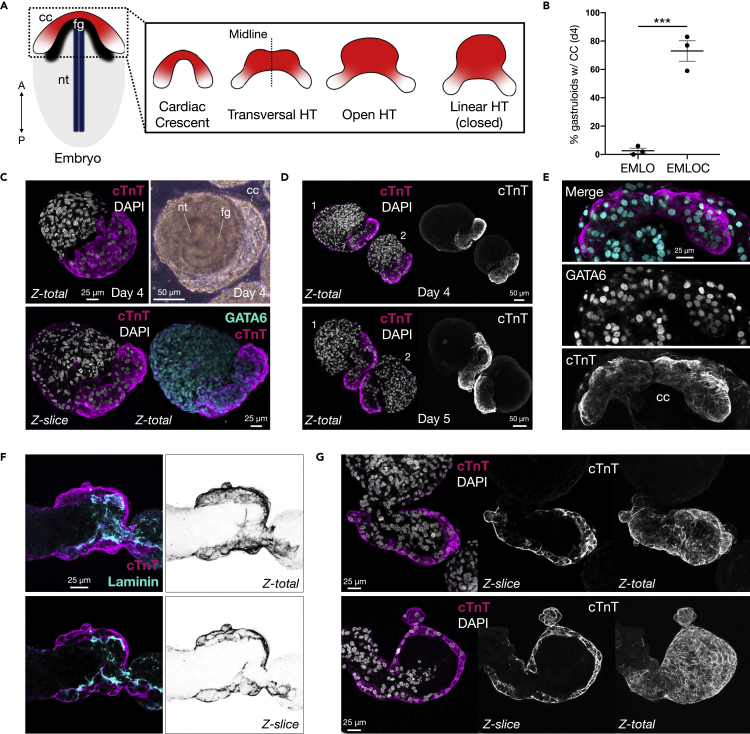
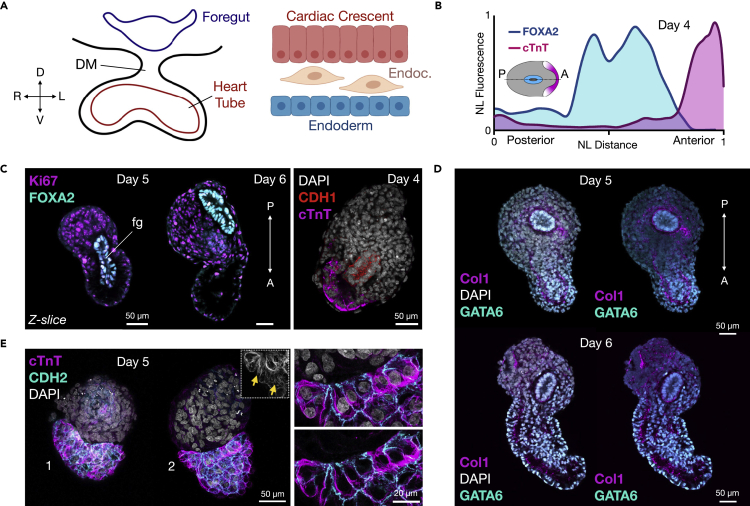
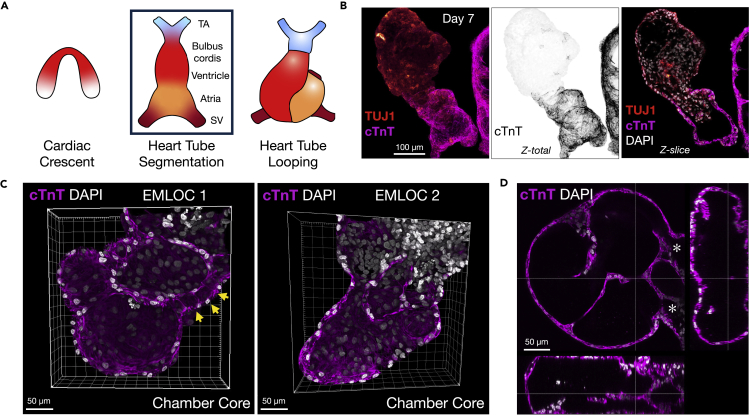
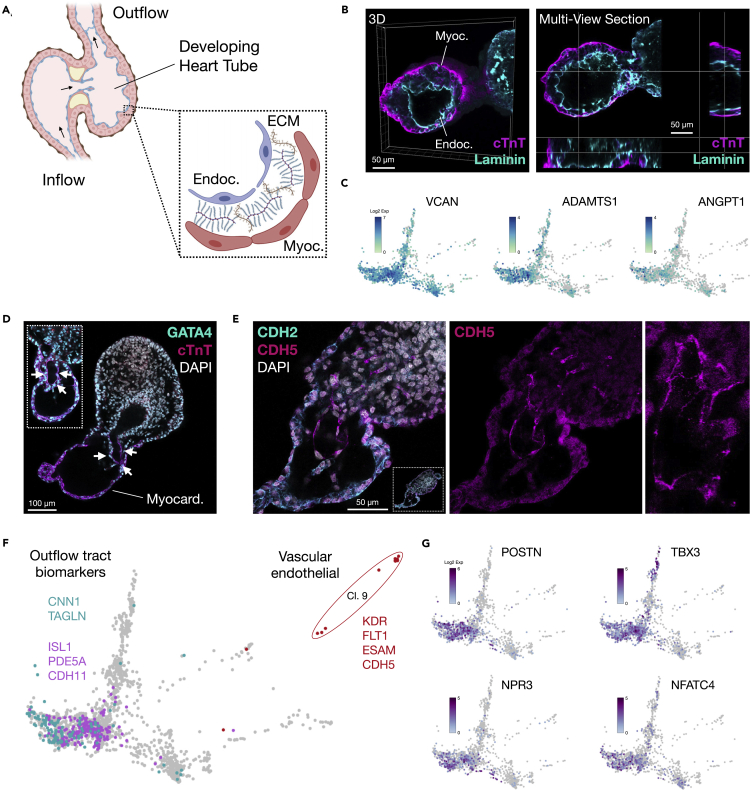
Multi-lineage development from gastruloids is enabling unprecedented opportunities to model and study human embryonic processes and is expected to accelerate strategies in organ development. Reproducing human cardiogenesis with neurogenesis in a multi-lineage context remains challenging, requiring spatiotemporal input of paracrine and mechanical cues. Here we extend elongating multi-lineage organized (EMLO) gastruloids to include cardiogenesis (EMLOC) and describe interconnected neuro-cardiac lineages in a single gastruloid model. Contractile EMLOCs recapitulate numerous interlinked developmental features including heart tube formation and specialization, cardiomyocyte differentiation and remodeling phases, epicardium, ventricular wall morphogenesis, chamber-like structures and formation of a putative outflow tract. The EMLOC cardiac region, which originates anterior to gut tube primordium, is progressively populated by neurons in a spatial pattern mirroring the known distribution of neurons in the innervated human heart. This human EMLOC model represents a multi-lineage advancement for the study of coincident neurogenesis and cardiogenesis.
类原肠胚的多谱系发育为模拟和研究人类胚胎过程带来了前所未有的机遇,有望加速器官发育研究策略。在多谱系背景下重现伴有神经发生的人类心脏发生仍然具有挑战性,需要旁分泌和机械信号的时空输入。在此,我们将伸长的多谱系组织(EMLO)类原肠胚扩展至包含心脏发生(EMLOC),并在单一类原肠胚模型中描述相互关联的神经-心脏谱系。收缩性EMLOC重现了众多相互关联的发育特征,包括心管形成与特化、心肌细胞分化与重塑阶段、心外膜、心室壁形态发生、类似腔室的结构以及假定流出道的形成。EMLOC心脏区域起源于肠管原基前方,逐渐被神经元占据,其空间模式反映了人类心脏中神经分布的已知情况。这种人类EMLOC模型代表了同时研究神经发生和心脏发生的多谱系进展。