Wang Xian, Jiang Ling, Liu Xue-Qi, Huang Yue-Bo, Zhu Wei, Zeng Han-Xu, Gao Li, Ma Li-Juan, Zhang Meng-Ya, Zhu Qi-Jin, Wu Yong-Gui
Department of Nephropathy, The First Affiliated Hospital of Anhui Medical University, Hefei, China.
Center for Scientific Research of Anhui Medical University, Hefei, China.
Front Physiol. 2022 May 26;13:890566. doi: 10.3389/fphys.2022.890566. eCollection 2022.
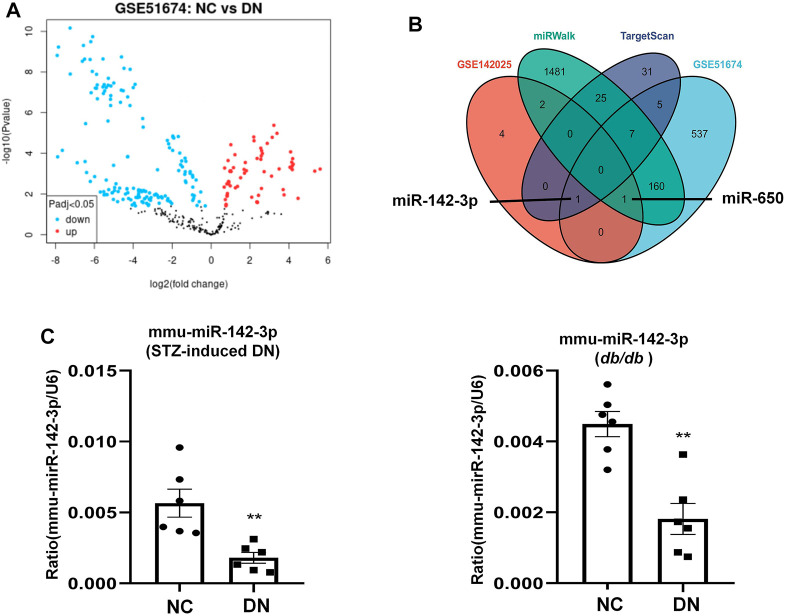
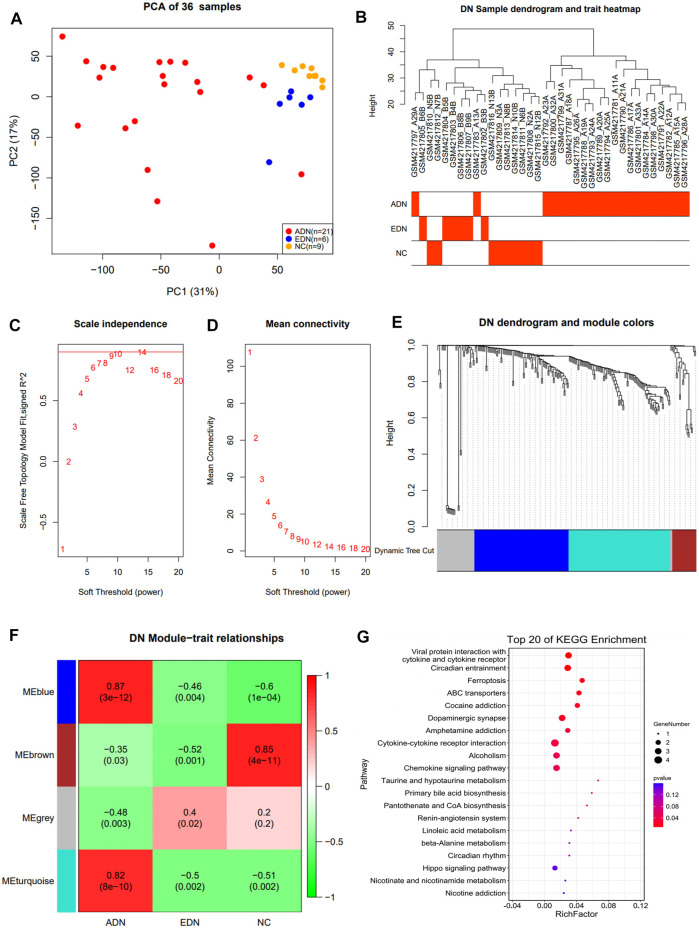
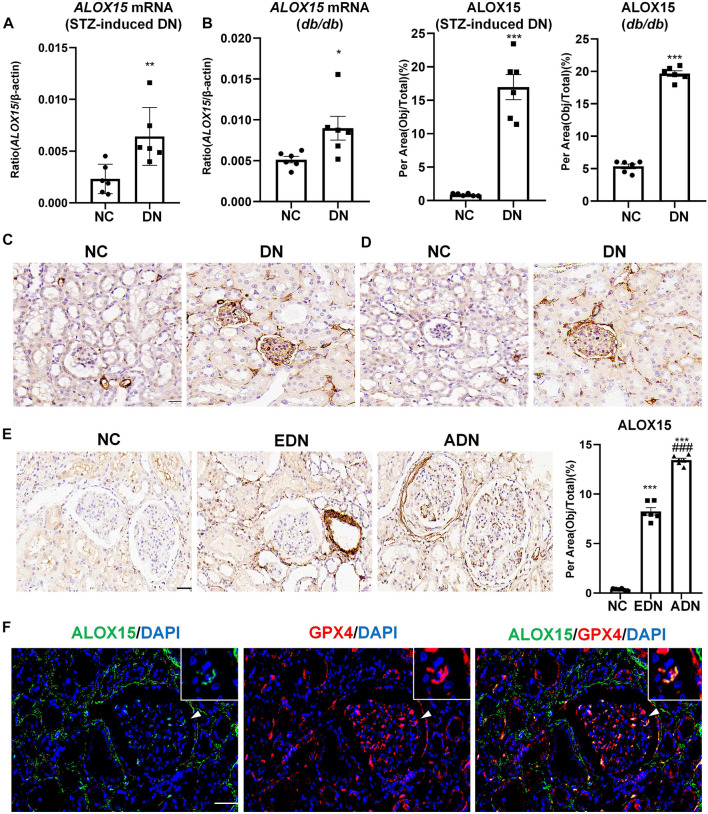
Diabetic nephropathy (DN) is one of the main complications of diabetes. Genomics may reveal the essential pathogenesis of DN. We analyzed datasets to search for key genes to explore pathological mechanisms of DN. In this study, weighted gene co-expression network analysis (WGCNA) was used to divide the differential expression genes (DEGs) from GSE142025 into different modules, and enrichment pathway analysis was conducted for each module to find key genes related to cell death pathway. Then, verification was carried out through network and histopathology. Finally, the regulatory mechanisms of key gene expression, including transcription factors (TFs), miRNA and E3 ligases related to ubiquitination, were predicted through website prediction and then miRNA results were validated using GSE51674 dataset. The results of WGCNA and enrichment pathway analysis indicated that ferroptosis had significantly occurred in advanced DN (AND) group. Analysis of DEGs indicated that the occurrence and development of ferroptosis are mainly through ALOX15-mediated lipid metabolism pathway, which was found in all intrinsic cells of the glomerulus detected by IHC and IF staining. Moreover, network predictions were used for searching ALOX15-related TFs and ubiquitination. Meanwhile, the network predictions combining with other dataset furtherly discovered miRNAs which regulated ALOX15 expression. This study showed that the levels of mmu-miR-142-3p increased in DN mice kidney tissues, compared with the NC group. Ferroptosis existed in glomerular intrinsic cells of ADN group and its potential key candidate gene was ALOX15 which may be regulated by miR-142 and miRNA-650, TFs (CREBBP, EP300, HDAC1, MTA1, SPI1, STAT6) and E3 ligases related to ubiquitination (PML, ZMIZ1, MARCHF1, MARCHF3, MARCHF8, MARCHF11).
糖尿病肾病(DN)是糖尿病的主要并发症之一。基因组学可能揭示DN的本质发病机制。我们分析数据集以寻找关键基因,以探索DN的病理机制。在本研究中,使用加权基因共表达网络分析(WGCNA)将来自GSE142025的差异表达基因(DEG)划分为不同模块,并对每个模块进行富集通路分析,以找到与细胞死亡通路相关的关键基因。然后,通过网络和组织病理学进行验证。最后,通过网站预测预测关键基因表达的调控机制,包括转录因子(TF)、miRNA和与泛素化相关的E3连接酶,然后使用GSE51674数据集验证miRNA结果。WGCNA和富集通路分析结果表明,晚期DN(AND)组显著发生铁死亡。对DEG的分析表明,铁死亡的发生和发展主要通过ALOX15介导的脂质代谢途径,这在通过免疫组化(IHC)和免疫荧光(IF)染色检测的肾小球所有固有细胞中均有发现。此外,使用网络预测来搜索与ALOX15相关的TF和泛素化。同时,结合其他数据集的网络预测进一步发现了调节ALOX15表达的miRNA。本研究表明,与NC组相比,DN小鼠肾组织中mmu-miR-142-3p水平升高。ADN组肾小球固有细胞中存在铁死亡,其潜在的关键候选基因是ALOX15,其可能受miR-142和miRNA-650、TF(CREBBP、EP300、HDAC1、MTA1、SPI1、STAT6)以及与泛素化相关的E3连接酶(PML、ZMIZ1、MARCHF1、MARCHF3、MARCHF8、MARCHF11)调节。