Cellular Biochemistry Lab., Graduate School of Pharmaceutical Sciences, Nagoya University, Tokai National Higher Education and Research System, Furo-cho, Chikusa, Nagoya, 464-8601, Japan.
Department of Molecular Medicine and Metabolism, Research Institute of Environmental Medicine, Nagoya University, Tokai National Higher Education and Research System, Furo-cho, Chikusa, Nagoya, 464-8601, Japan.
Cell Death Dis. 2023 Mar 2;14(2):136. doi: 10.1038/s41419-023-05622-5.
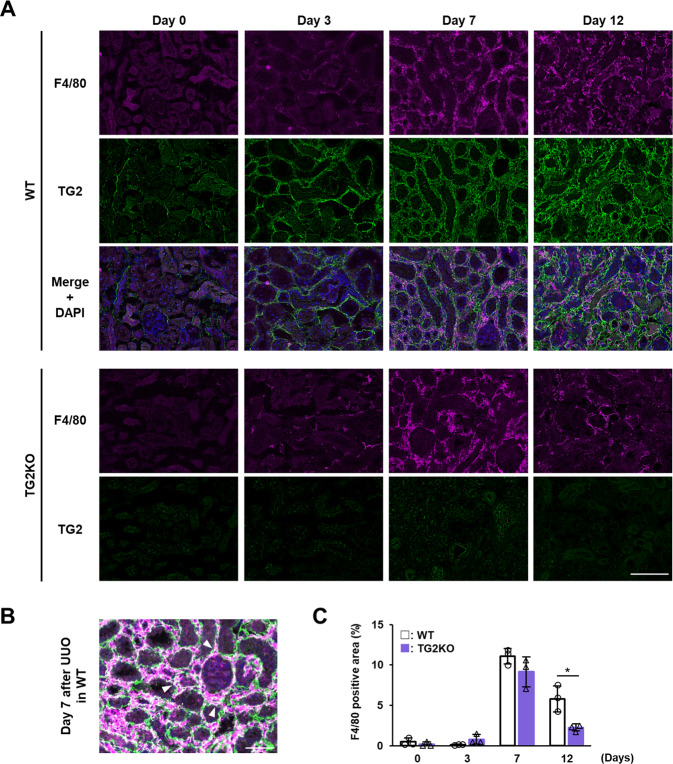
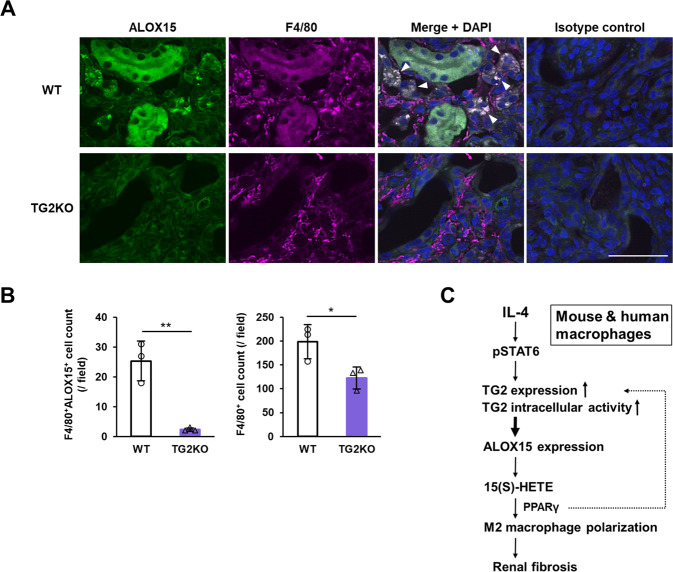
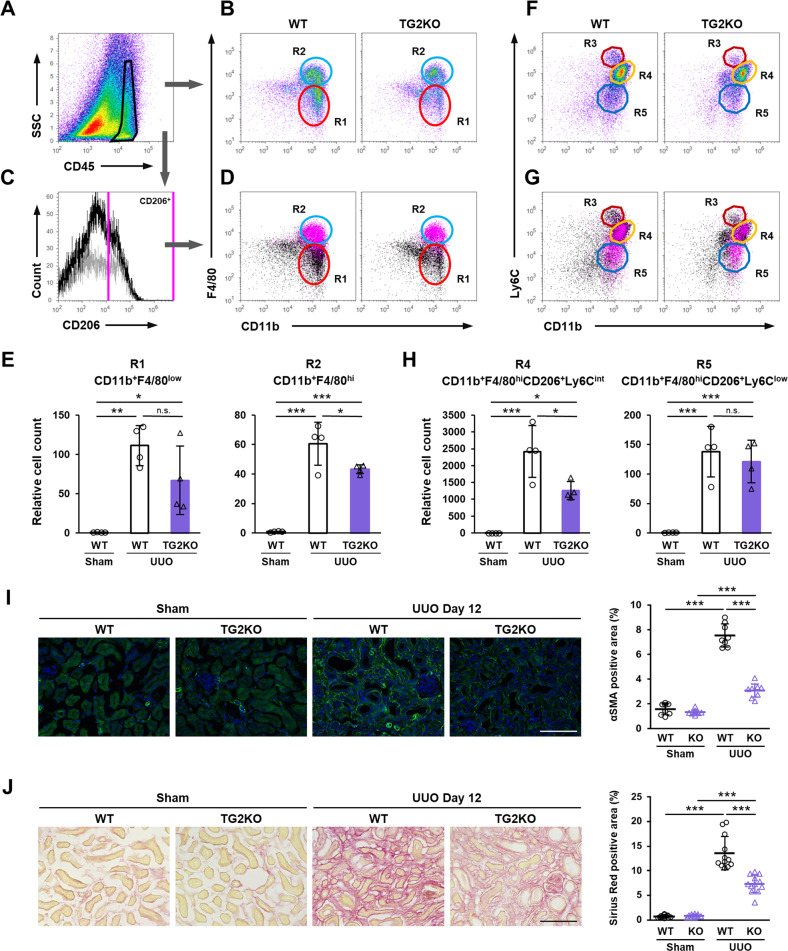
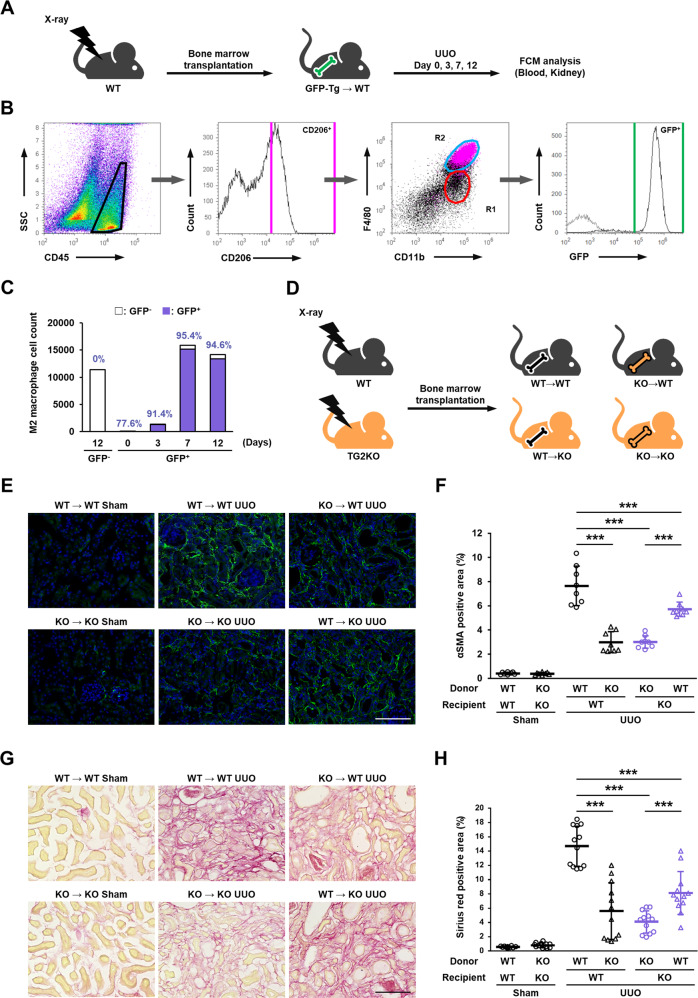
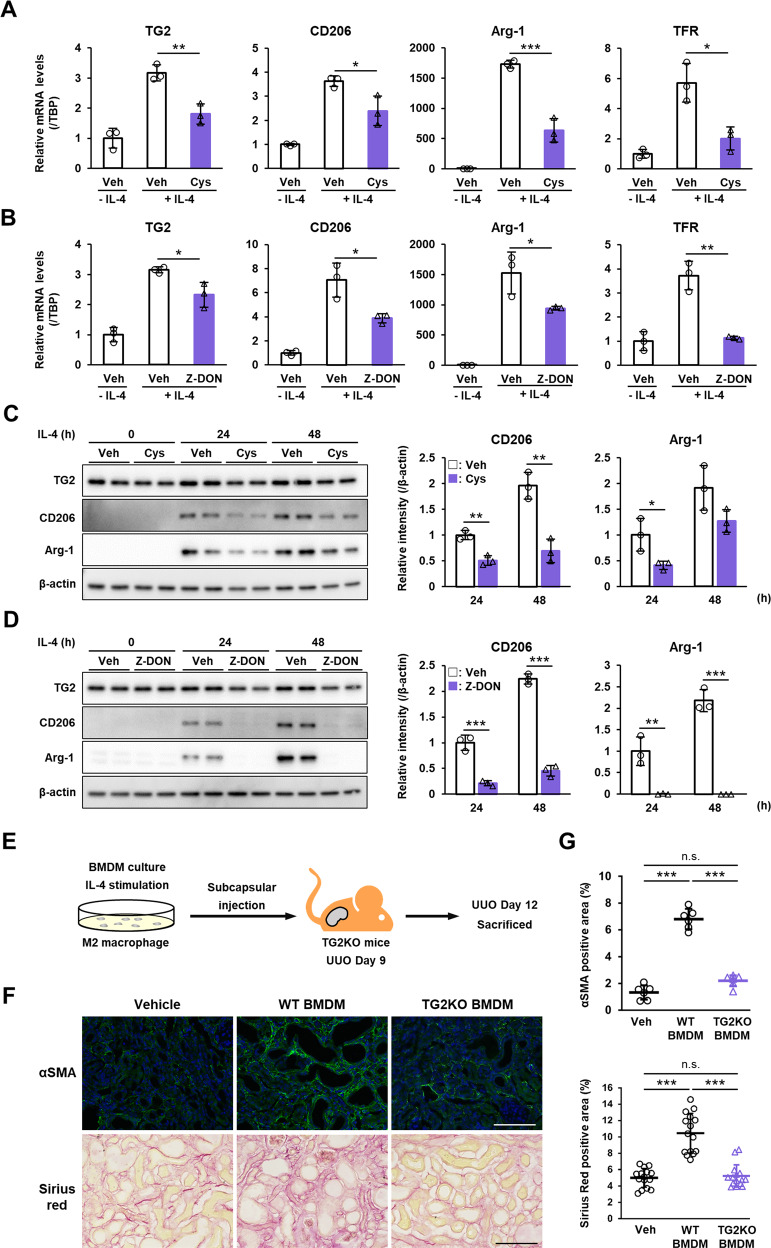
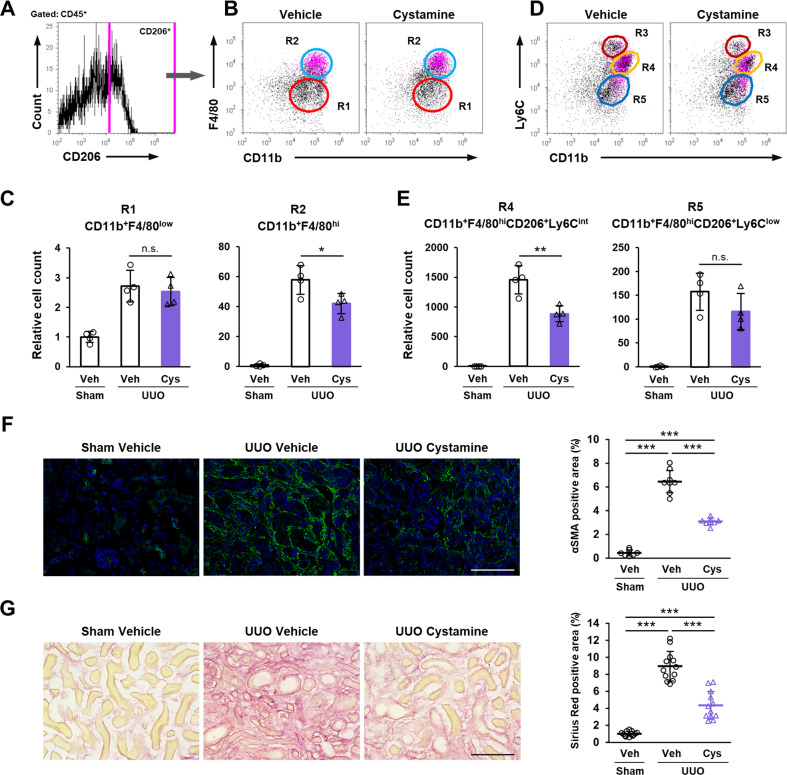
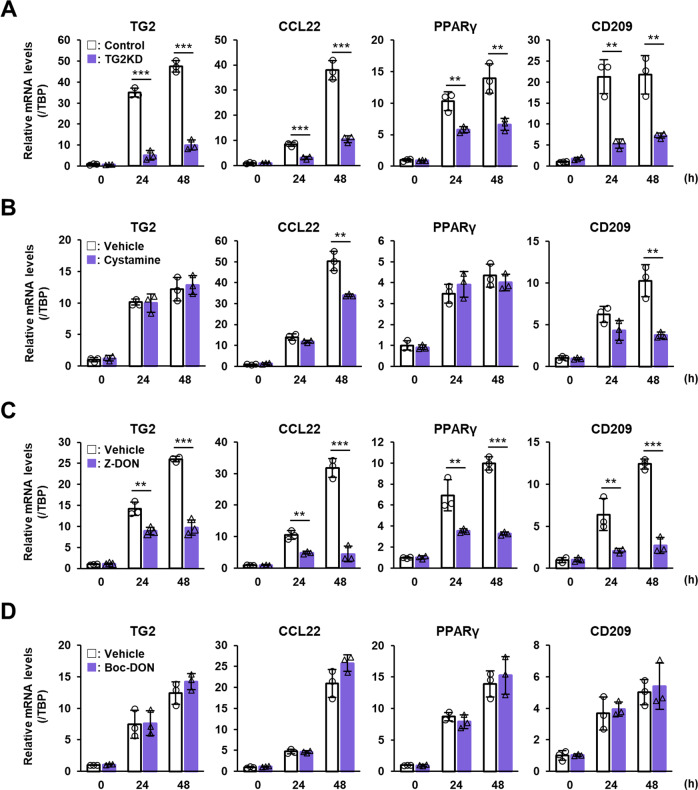
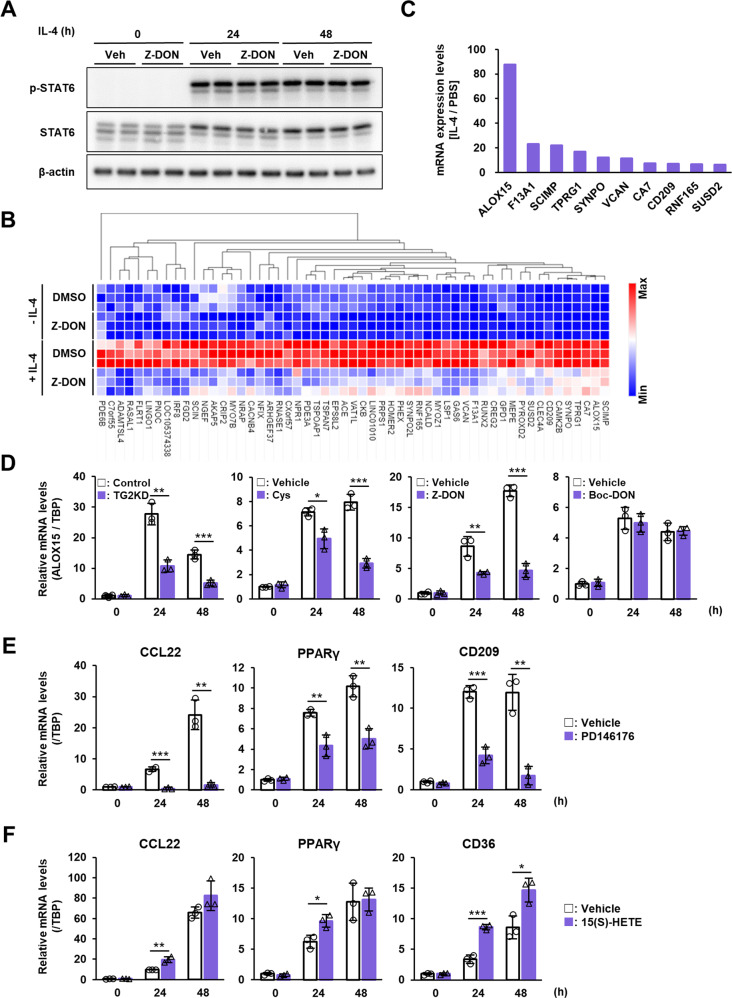
Macrophages are important components in modulating homeostatic and inflammatory responses and are generally categorized into two broad but distinct subsets: classical activated (M1) and alternatively activated (M2) depending on the microenvironment. Fibrosis is a chronic inflammatory disease exacerbated by M2 macrophages, although the detailed mechanism by which M2 macrophage polarization is regulated remains unclear. These polarization mechanisms have little in common between mice and humans, making it difficult to adapt research results obtained in mice to human diseases. Tissue transglutaminase (TG2) is a known marker common to mouse and human M2 macrophages and is a multifunctional enzyme responsible for crosslinking reactions. Here we sought to identify the role of TG2 in macrophage polarization and fibrosis. In IL-4-treated macrophages derived from mouse bone marrow and human monocyte cells, the expression of TG2 was increased with enhancement of M2 macrophage markers, whereas knockout or inhibitor treatment of TG2 markedly suppressed M2 macrophage polarization. In the renal fibrosis model, accumulation of M2 macrophages in fibrotic kidney was significantly reduced in TG2 knockout or inhibitor-administrated mice, along with the resolution of fibrosis. Bone marrow transplantation using TG2-knockout mice revealed that TG2 is involved in M2 polarization of infiltrating macrophages derived from circulating monocytes and exacerbates renal fibrosis. Furthermore, the suppression of renal fibrosis in TG2-knockout mice was abolished by transplantation of wild-type bone marrow or by renal subcapsular injection of IL4-treated macrophages derived from bone marrow of wild-type, but not TG2 knockout. Transcriptome analysis of downstream targets involved in M2 macrophages polarization revealed that ALOX15 expression was enhanced by TG2 activation and promoted M2 macrophage polarization. Furthermore, the increase in the abundance of ALOX15-expressing macrophages in fibrotic kidney was dramatically suppressed in TG2-knockout mice. These findings demonstrated that TG2 activity exacerbates renal fibrosis by polarization of M2 macrophages from monocytes via ALOX15.
巨噬细胞是调节稳态和炎症反应的重要组成部分,通常根据微环境分为两种广泛但不同的亚型:经典激活(M1)和替代激活(M2)。纤维化是一种由 M2 巨噬细胞加剧的慢性炎症性疾病,尽管调节 M2 巨噬细胞极化的详细机制尚不清楚。这些极化机制在小鼠和人类之间几乎没有共同之处,使得难以将在小鼠中获得的研究结果应用于人类疾病。组织转谷氨酰胺酶(TG2)是一种已知的小鼠和人类 M2 巨噬细胞的共同标志物,是一种负责交联反应的多功能酶。在这里,我们试图确定 TG2 在巨噬细胞极化和纤维化中的作用。在 IL-4 处理的来自小鼠骨髓和人单核细胞的巨噬细胞中,TG2 的表达增加,同时增强了 M2 巨噬细胞标志物的表达,而 TG2 的敲除或抑制剂处理则显著抑制了 M2 巨噬细胞的极化。在肾纤维化模型中,TG2 敲除或抑制剂处理的小鼠中,纤维化肾脏中 M2 巨噬细胞的积累明显减少,纤维化也得到了缓解。使用 TG2 敲除小鼠进行骨髓移植表明,TG2 参与了循环单核细胞来源的浸润巨噬细胞的 M2 极化,并加剧了肾纤维化。此外,TG2 敲除小鼠的肾纤维化抑制作用在移植野生型骨髓或肾包膜下注射野生型但不是 TG2 敲除小鼠骨髓来源的 IL4 处理的巨噬细胞后被消除。参与 M2 巨噬细胞极化的下游靶标转录组分析表明,ALOX15 的表达通过 TG2 激活增强,并促进 M2 巨噬细胞的极化。此外,在 TG2 敲除小鼠中,纤维化肾脏中表达 ALOX15 的巨噬细胞的丰度增加明显受到抑制。这些发现表明,TG2 通过 ALOX15 从单核细胞极化 M2 巨噬细胞,加剧了肾纤维化。