Australian Centre for Precision Health, University of South Australia, Adelaide, SA, Australia.
Department of Epidemiology, Faculty of Public Health, Jimma University Institute of Health, Jimma, Ethiopia.
Commun Biol. 2022 Jun 21;5(1):614. doi: 10.1038/s42003-022-03554-y.
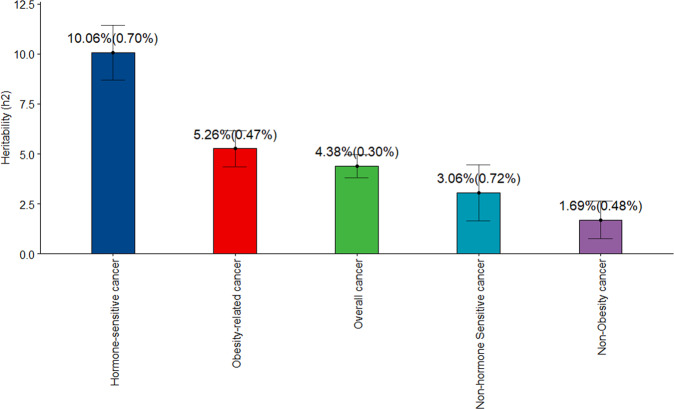
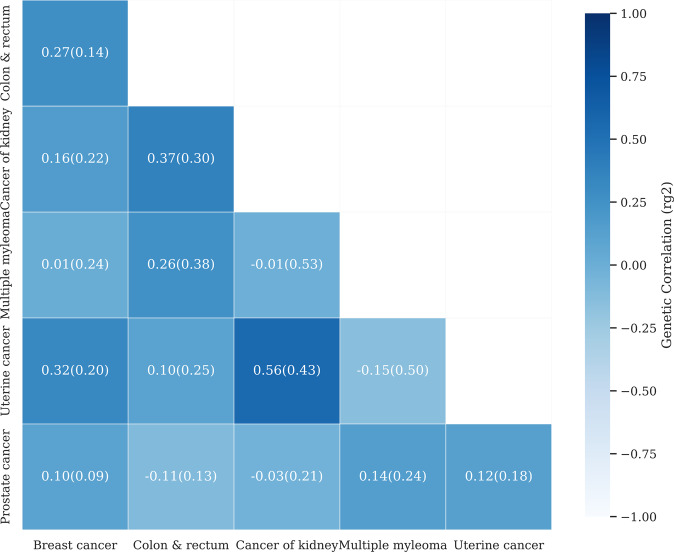
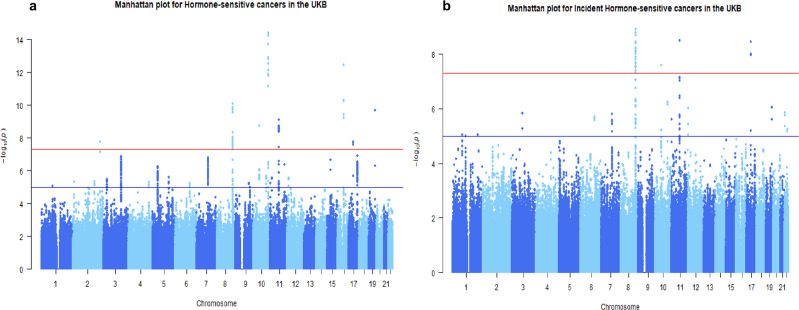
Hormone-related cancers, including cancers of the breast, prostate, ovaries, uterine, and thyroid, globally contribute to the majority of cancer incidence. We hypothesize that hormone-sensitive cancers share common genetic risk factors that have rarely been investigated by previous genomic studies of site-specific cancers. Here, we show that considering hormone-sensitive cancers as a single disease in the UK Biobank reveals shared genetic aetiology. We observe that a significant proportion of variance in disease liability is explained by the genome-wide single nucleotide polymorphisms (SNPs), i.e., SNP-based heritability on the liability scale is estimated as 10.06% (SE 0.70%). Moreover, we find 55 genome-wide significant SNPs for the disease, using a genome-wide association study. Pair-wise analysis also estimates positive genetic correlations between some pairs of hormone-sensitive cancers although they are not statistically significant. Our finding suggests that heritable genetic factors may be a key driver in the mechanism of carcinogenesis shared by hormone-sensitive cancers.
激素相关癌症,包括乳腺癌、前列腺癌、卵巢癌、子宫癌和甲状腺癌,在全球范围内导致了大多数癌症的发生。我们假设激素敏感性癌症具有共同的遗传风险因素,而这些因素很少被以前针对特定部位癌症的基因组研究调查过。在这里,我们表明,将英国生物库中的激素敏感性癌症视为一种单一疾病,可以揭示共同的遗传病因。我们观察到,疾病易感性的很大一部分可以通过全基因组单核苷酸多态性(SNP)来解释,即,基于 SNP 的易感性遗传度估计为 10.06%(SE 0.70%)。此外,我们使用全基因组关联研究发现了 55 个与该疾病相关的全基因组显著 SNP。尽管两两分析还估计了一些激素敏感性癌症之间存在正遗传相关性,但这些相关性没有统计学意义。我们的发现表明,可遗传的遗传因素可能是激素敏感性癌症致癌机制中的一个关键驱动因素。