Department of Histology and Embryology, School of Basic Medical Science, Southern Medical University, Guangzhou, 510515, China.
Guangdong Provincial Key Laboratory of Construction and Detection in Tissue Engineering, Guangzhou, 510515, China.
J Nanobiotechnology. 2022 Jun 21;20(1):291. doi: 10.1186/s12951-022-01504-8.
The use of keratinocytes derived from induced pluripotent stem cells (iPSCs-KCs) may represent a novel cell therapy strategy for burn treatment. There is growing evidence that extracellular vesicles, including exosomes, are primary mediators of the benefits of stem cell therapy. Herein, we thus explored the effects of exosomes produced by iPSCs-derived keratinocytes (iPSCs-KCs-Exos) in a model of deep second-degree burn wound healing and evaluated the mechanistic basis for the observed activity.
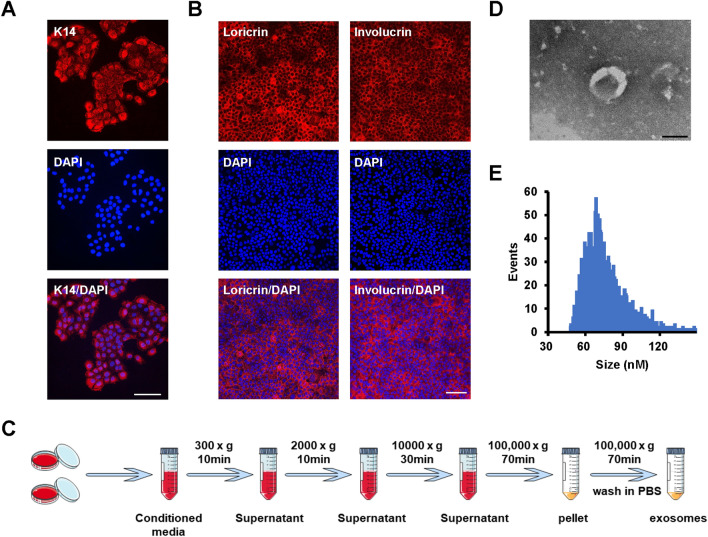
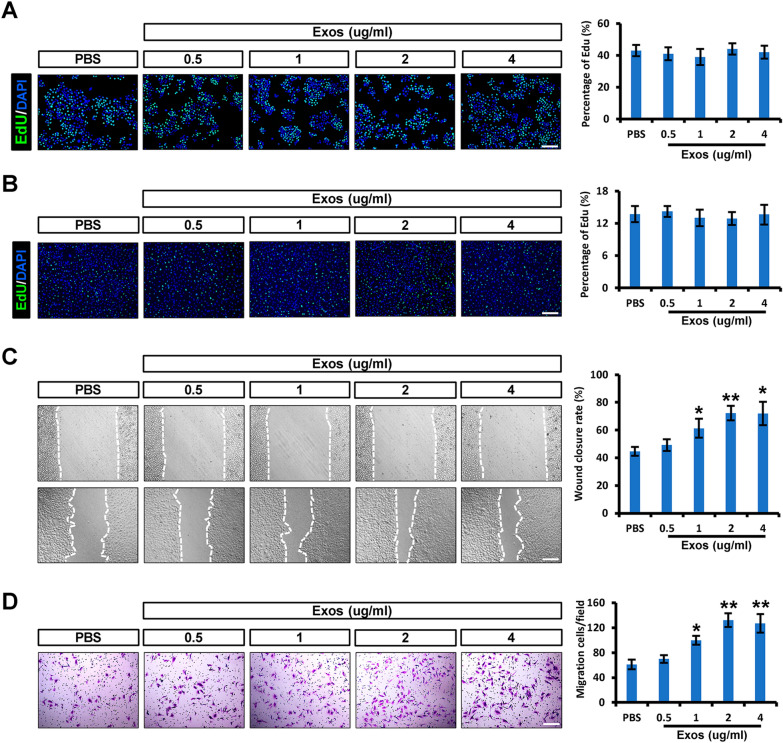
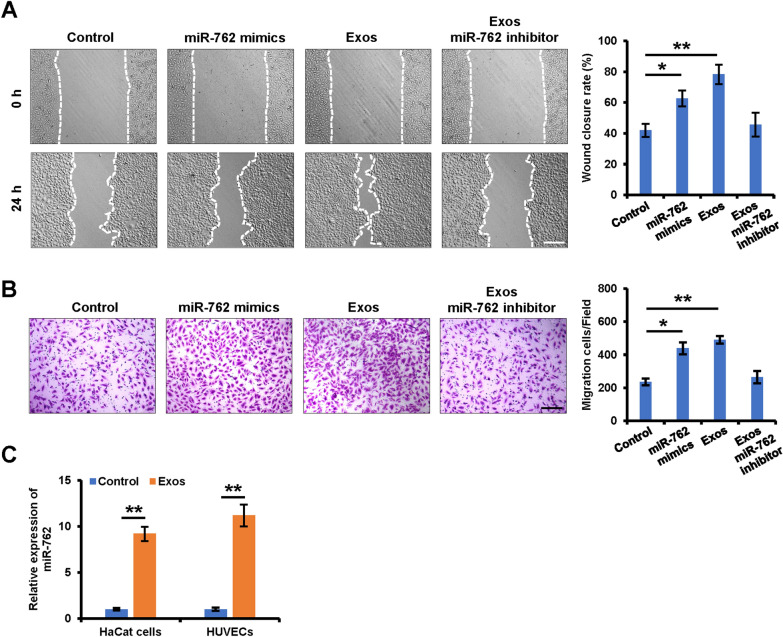
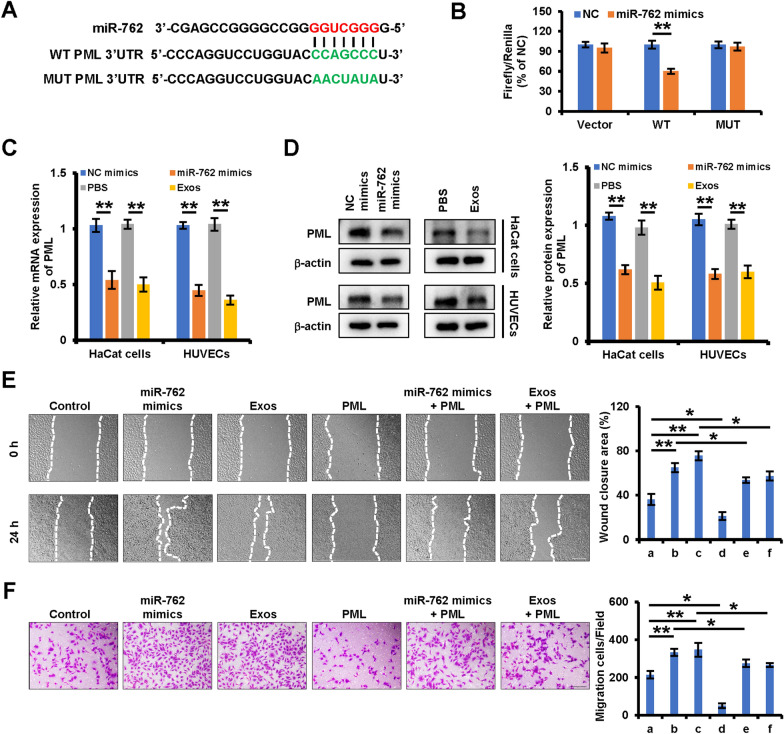
iPSCs-KCs-Exos were isolated from conditioned medium of iPSCs-KCs and verified by electron micrograph and size distribution. Next, iPSCs-KCs-Exos were injected subcutaneously around wound sites, and its efficacy was evaluated by measuring wound closure areas, histological examination, and immunohistochemistry staining. The effects of iPSCs-KCs-Exos on proliferation and migration of keratinocytes and endothelial cells in vitro were assessed by EdU staining, wound healing assays, and transwell assay. Then, high-throughput microRNA sequencing was used to explore the underlying mechanisms. We assessed the roles of miR-762 in iPSCs-KCs-Exos-induced regulation of keratinocytes and endothelial cells migration. Furthermore, the target gene which mediated the biological effects of miR-762 in keratinocytes and endothelial cells was also been detected.
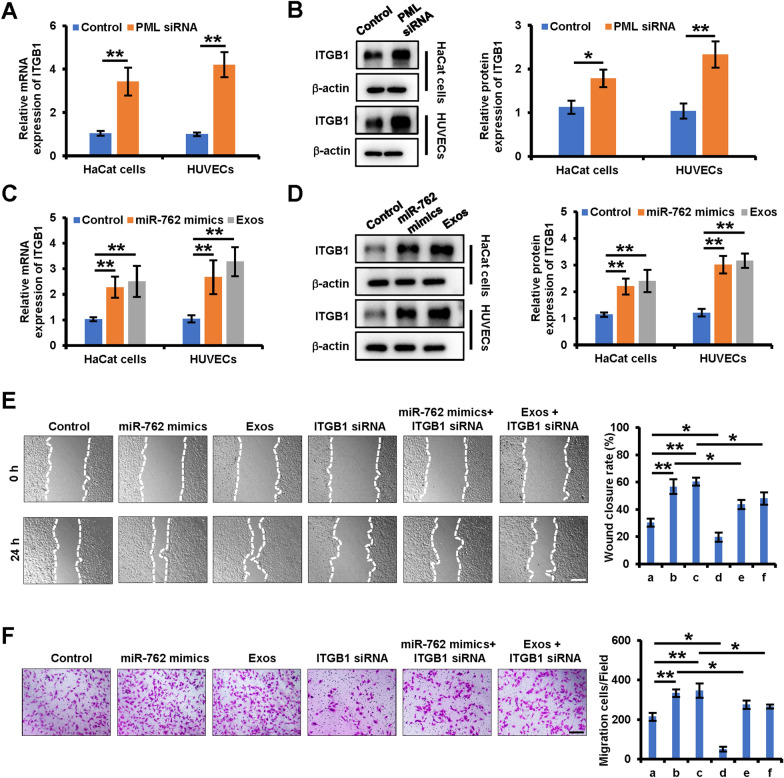
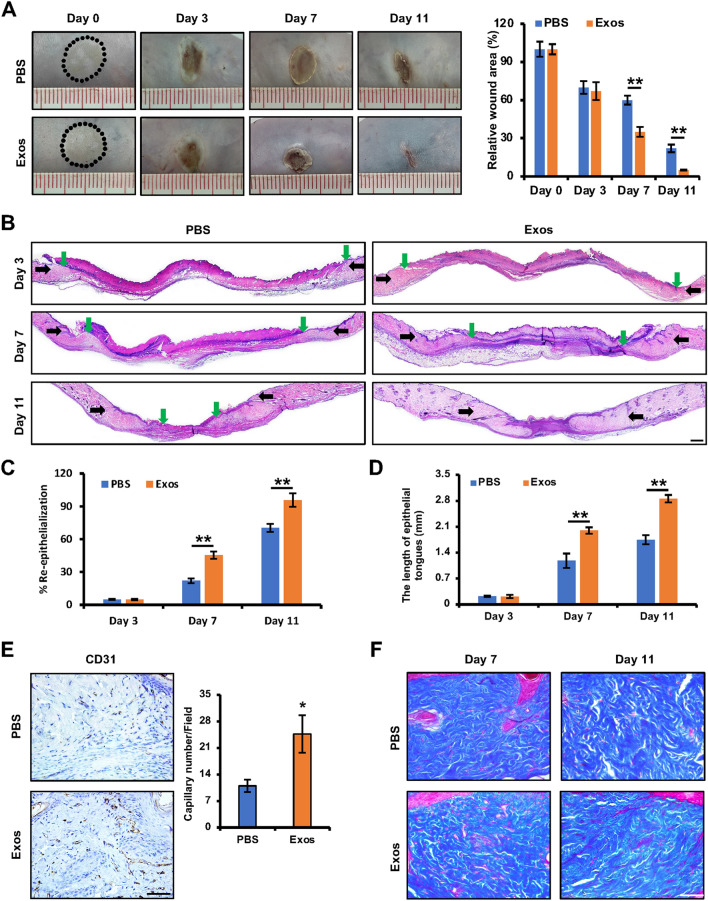
The analysis revealed that iPSCs-KCs-Exos application to the burn wound drove the acceleration of wound closure, with more robust angiogenesis and re-epithelialization being evident. Such iPSCs-KCs-Exos treatment effectively enhanced endothelial cell and keratinocyte migration in vitro. Moreover, the enrichment of miR-762 was detected in iPSCs-KCs-Exos and was found to target promyelocytic leukemia (PML) as a means of regulating cell migration through a mechanism tie to integrin beta1 (ITGB1).
These results thus provide a foundation for the further study of iPSCs-KCs-Exos as novel cell-free treatments for deep second-degree burns.
利用诱导多能干细胞(iPSCs)衍生的角质形成细胞(iPSCs-KCs)可能代表一种用于烧伤治疗的新型细胞治疗策略。越来越多的证据表明,细胞外囊泡(包括外泌体)是干细胞治疗益处的主要介导物。在此,我们探索了 iPSCs 衍生的角质形成细胞(iPSCs-KCs)产生的外泌体(iPSCs-KCs-Exos)在深二度烧伤创面愈合模型中的作用,并评估了观察到的活性的机制基础。
从 iPSCs-KCs 的条件培养基中分离 iPSCs-KCs-Exos,并通过电子显微镜和粒径分布进行验证。接下来,将 iPSCs-KCs-Exos 注射到创面周围的皮下组织中,并通过测量创面闭合面积、组织学检查和免疫组织化学染色来评估其疗效。通过 EdU 染色、划痕愈合实验和 Transwell 实验评估 iPSCs-KCs-Exos 对体外角质形成细胞和内皮细胞增殖和迁移的影响。然后,使用高通量 microRNA 测序来探索潜在机制。我们评估了 miR-762 在 iPSCs-KCs-Exos 诱导的角质形成细胞和内皮细胞迁移中的调节作用。此外,还检测了介导 miR-762 在角质形成细胞和内皮细胞中生物学效应的靶基因。
分析表明,iPSCs-KCs-Exos 应用于烧伤创面可加速创面闭合,明显增强血管生成和再上皮化。这种 iPSCs-KCs-Exos 处理有效增强了体外内皮细胞和角质形成细胞的迁移。此外,在 iPSCs-KCs-Exos 中检测到 miR-762 的富集,并发现其作为一种通过整合素 beta1(ITGB1)调节细胞迁移的机制靶向早幼粒细胞白血病(PML)。
这些结果为进一步研究 iPSCs-KCs-Exos 作为深二度烧伤的新型无细胞治疗方法提供了基础。