Department of Neurosurgery and State Key Laboratory of Trauma, Burn and Combined Injury, Southwest Hospital, Third Military Medical University (Army Medical University), 29 Gaotanyan Street, Shapingba District, Chongqing, 400038, China.
Chongqing Key Laboratory of Precision Neuromedicine and Neuroregenaration, Southwest Hospital, Third Military Medical University (Army Medical University), Chongqing, 400038, China.
J Neuroinflammation. 2022 Jun 21;19(1):163. doi: 10.1186/s12974-022-02530-x.
Hydrocephalus is a severe complication of intracerebral hemorrhage with ventricular extension (ICH-IVH) and causes cerebrospinal fluid (CSF) accumulation. The choroid plexus epithelium plays an important role in CSF secretion and constitutes the blood-CSF barrier within the brain-immune system interface. Although the NLRP3 inflammasome, as a key component of the innate immune system, promotes neuroinflammation, its role in the pathogenesis of hydrocephalus after hemorrhage has not been investigated. Therefore, this study aimed to investigate the potential mechanism of NLRP3 in hydrocephalus to discover a potential marker for targeted therapy.
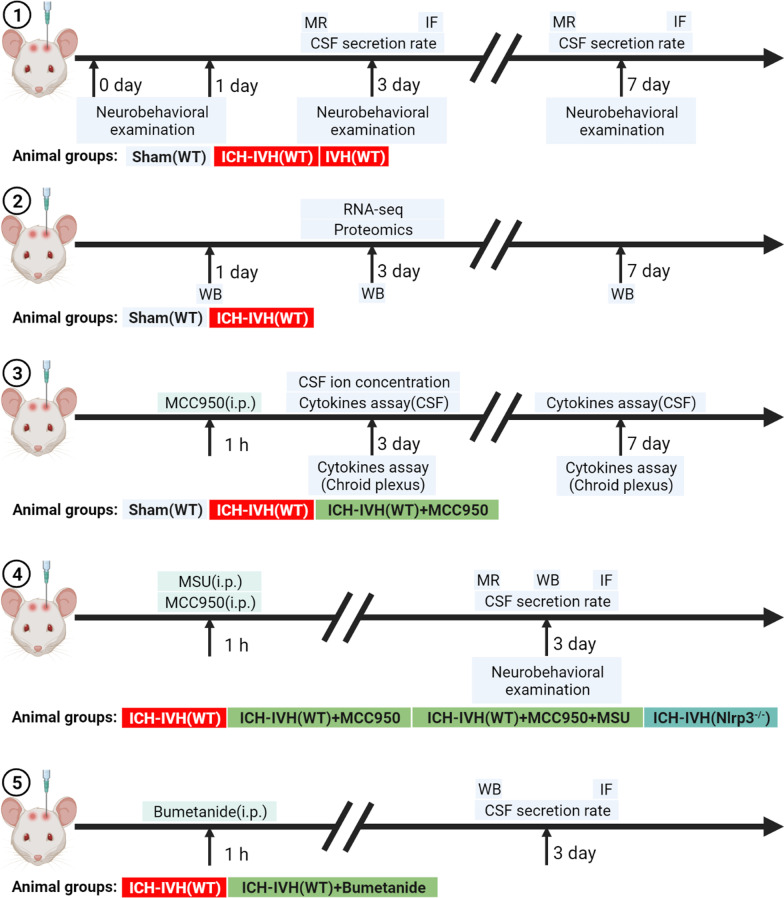
A rat model of hydrocephalus after ICH-IVH was developed through autologous blood infusion in wild-type and Nlrp3 rats. By studying the features and processes of the model, we investigated the relationship between the NLRP3 inflammasome and CSF hypersecretion in the choroid plexus.
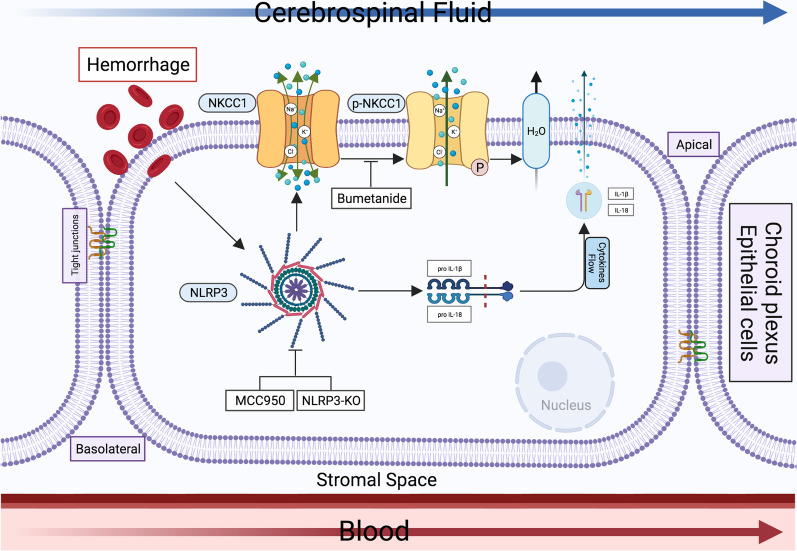
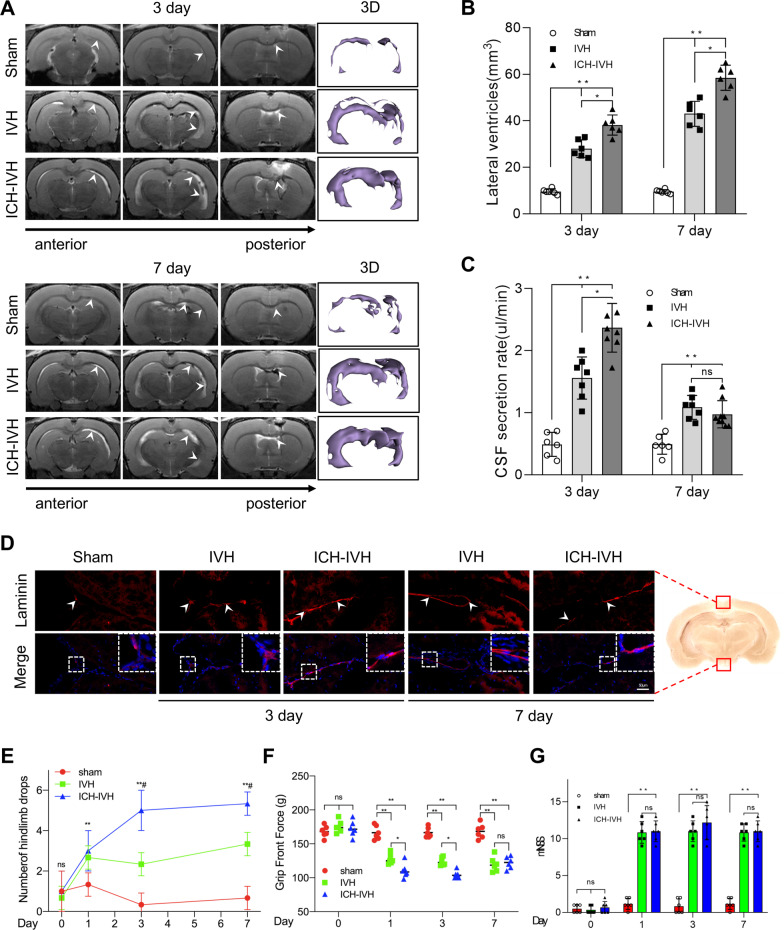
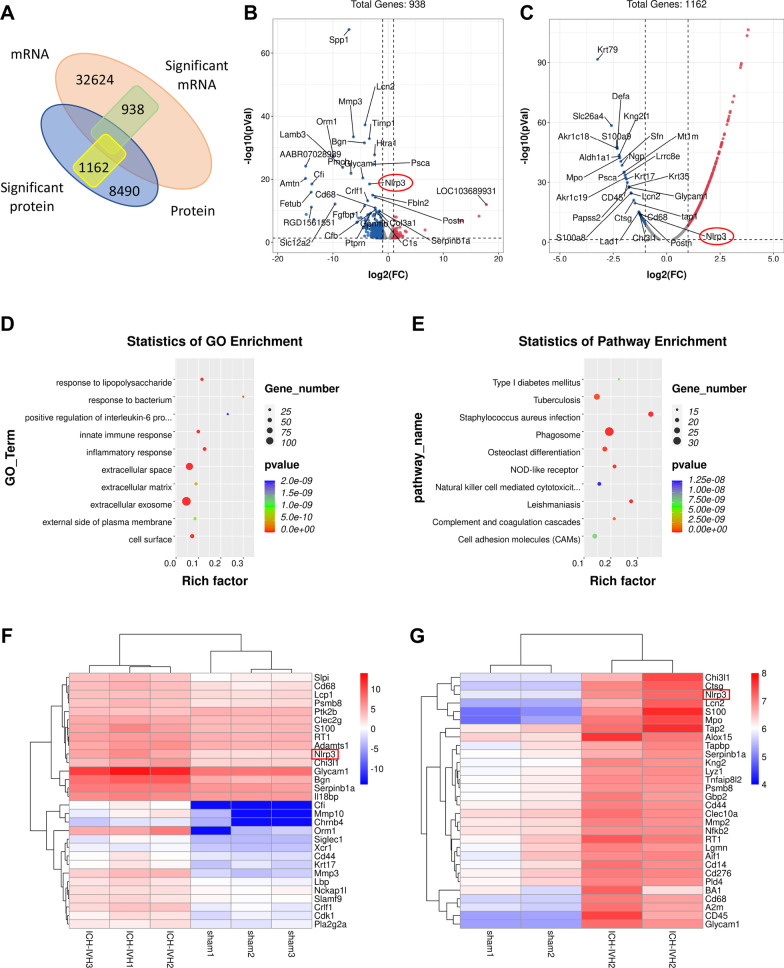
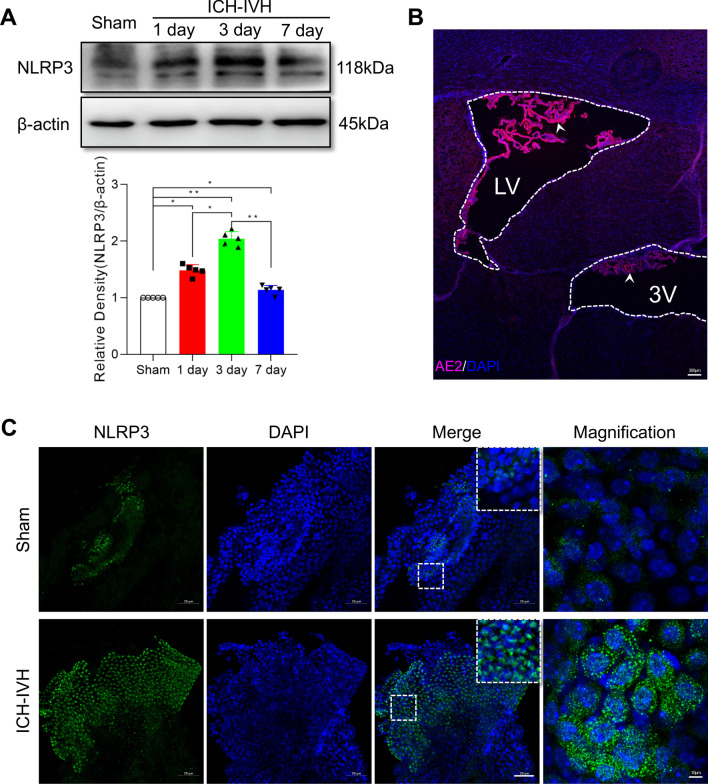
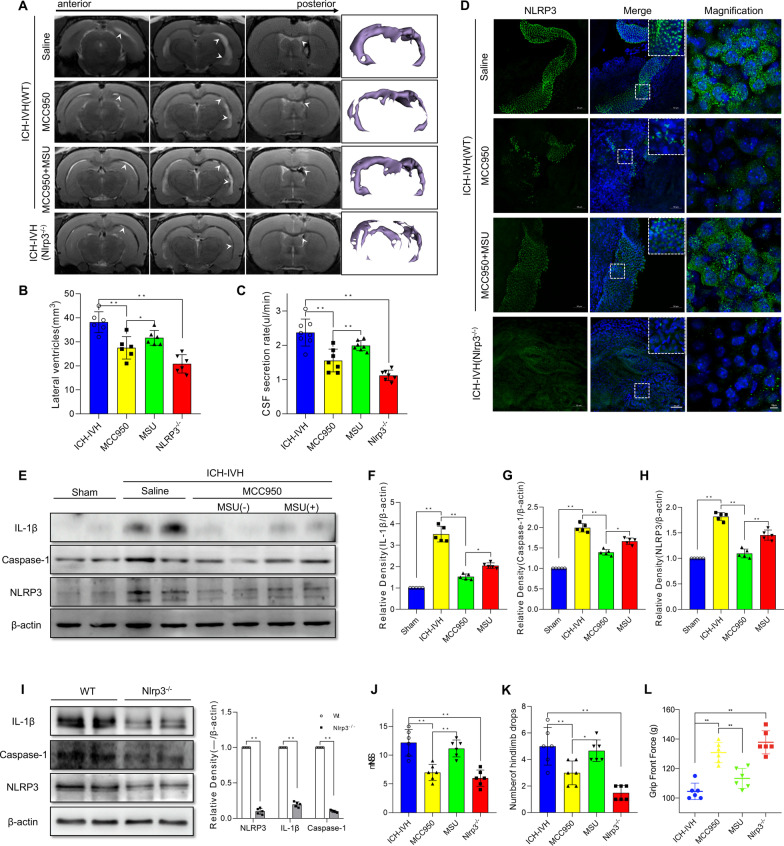
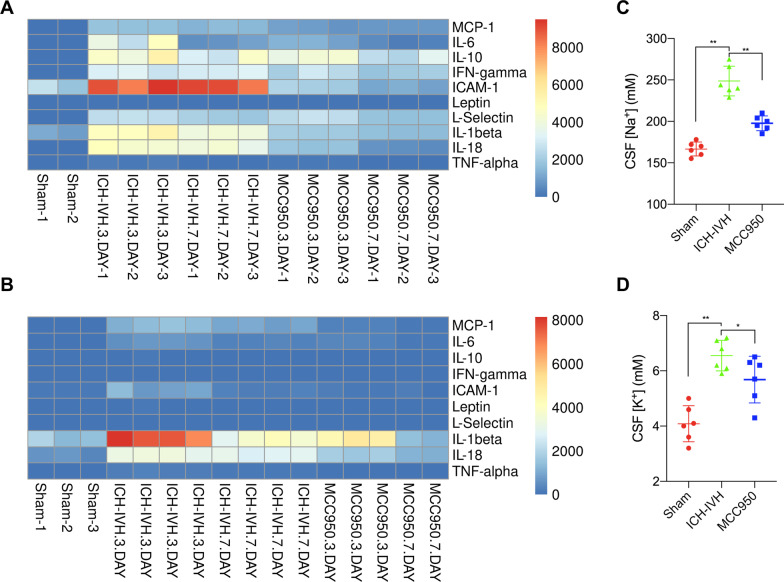
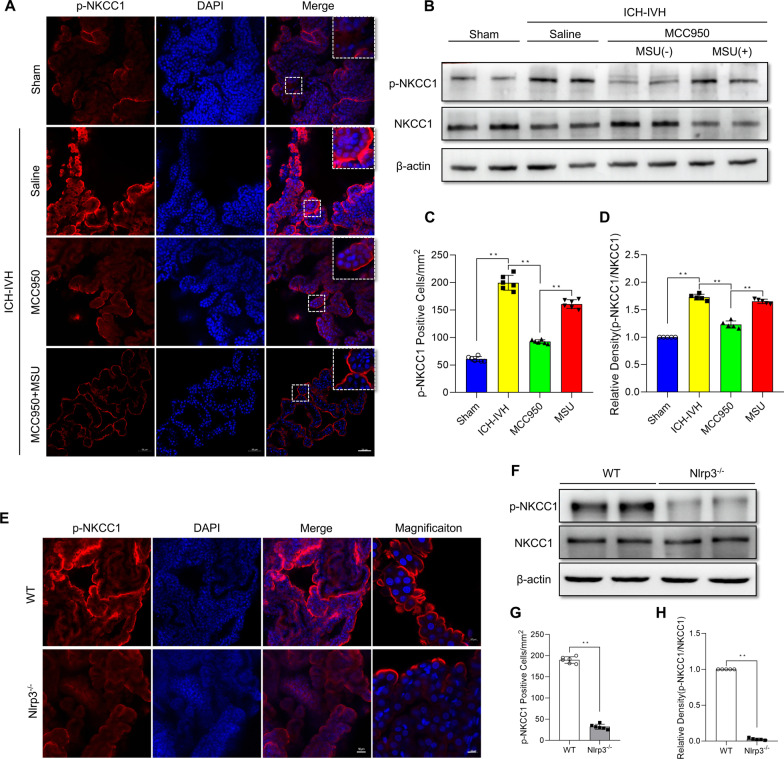
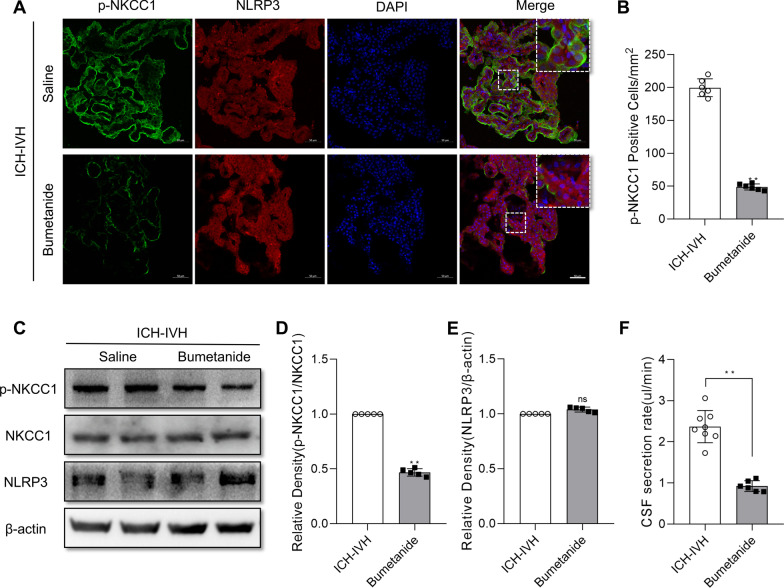
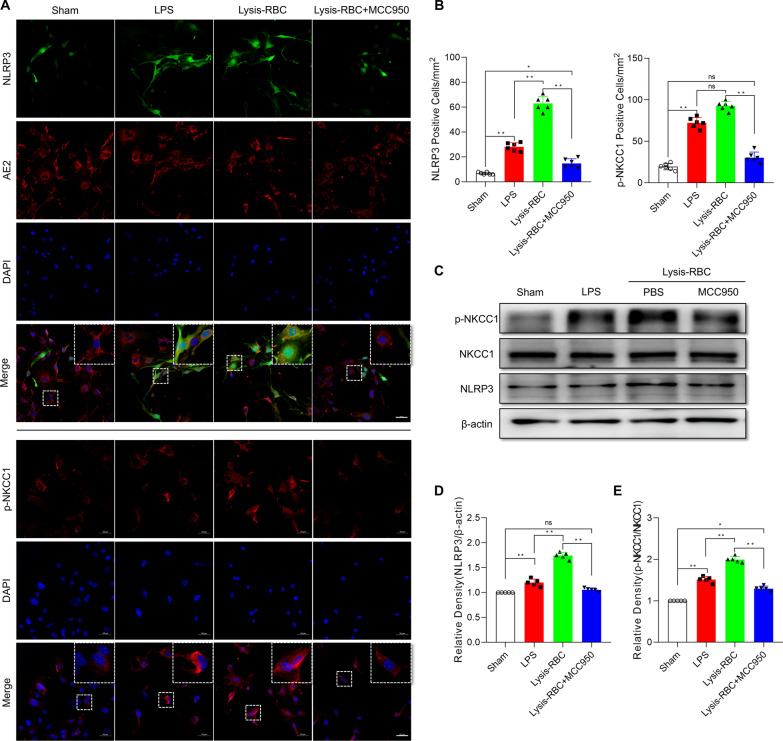
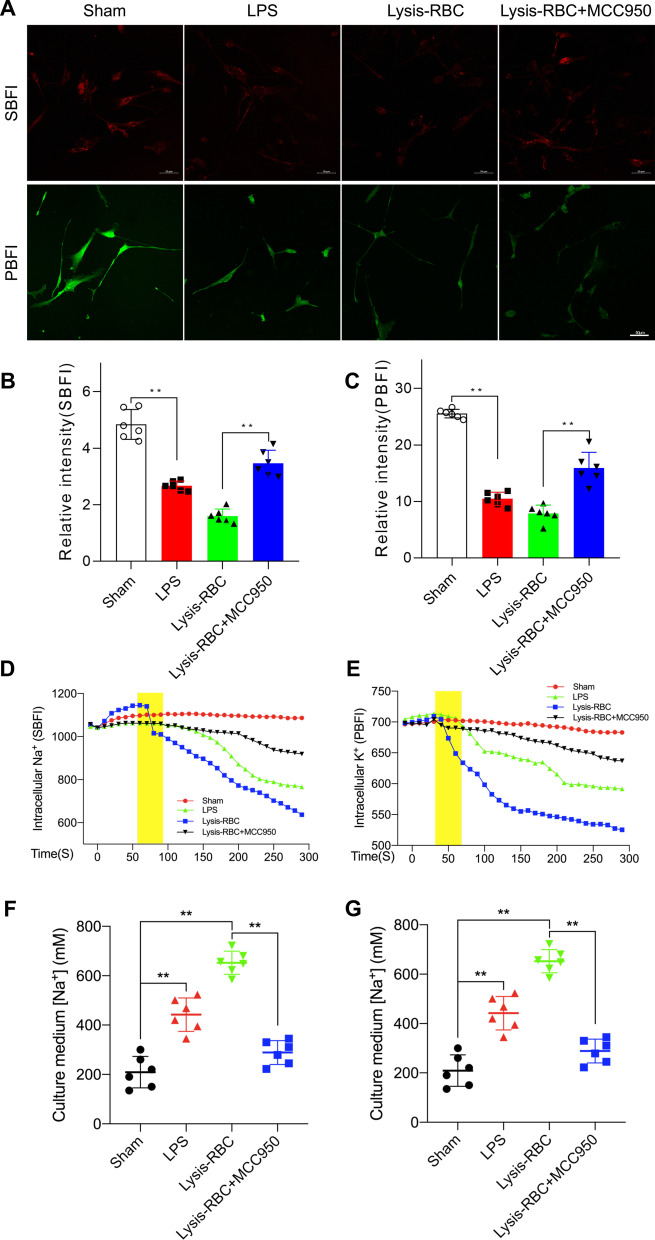
The ICH-IVH model rats showed ventricular dilation accompanied by CSF hypersecretion for 3 days. Based on the choroid plexus RNA-seq and proteomics results, we found that an inflammatory response was activated. The NLRP3 inflammasome was investigated, and the expression levels of NLRP3 inflammasome components reached a peak at 3 days after ICH-IVH. Inhibition of NLRP3 by an MCC950 inflammasome inhibitor or Nlrp3 knockout decreased CSF secretion and ventricular dilation and attenuated neurological deficits after ICH-IVH. The mechanism underlying the neuroprotective effects of NLRP3 inhibition involved decreased phosphorylation of NKCC1, which is a major protein that regulates CSF secretion by altering Na- and K-coupled water transport, via MCC950 or Nlrp3 knockout. In combination with the in vitro experiments, this experiment confirmed the involvement of the NLRP3/p-NKCC1 pathway and Na and K flux.
This study demonstrates that NKCC1 phosphorylation in the choroid plexus epithelium promotes NLRP3 inflammasome-mediated CSF hypersecretion and that NLRP3 plays an important role in the pathogenesis of hydrocephalus after hemorrhage. These findings provide a new therapeutic strategy for treating hydrocephalus.
脑积水是伴有脑室扩张的脑出血(ICH-IVH)的严重并发症,会导致脑脊液(CSF)积聚。脉络丛上皮在 CSF 分泌中起着重要作用,并构成了脑-免疫系统界面内的血-CSF 屏障。尽管 NLRP3 炎性体作为先天免疫系统的关键组成部分,可促进神经炎症,但它在出血后脑积水发病机制中的作用尚未得到研究。因此,本研究旨在探讨 NLRP3 在脑积水发病机制中的潜在作用,以期发现潜在的靶向治疗标志物。
通过自体血输注在野生型和 Nlrp3 大鼠中建立 ICH-IVH 后脑积水大鼠模型。通过研究模型的特征和过程,我们研究了 NLRP3 炎性体与脉络丛 CSF 过度分泌之间的关系。
ICH-IVH 模型大鼠出现脑室扩张,伴有 CSF 过度分泌,持续 3 天。基于脉络丛 RNA-seq 和蛋白质组学结果,我们发现炎症反应被激活。研究了 NLRP3 炎性体,发现 ICH-IVH 后 3 天 NLRP3 炎性体组成成分的表达水平达到峰值。NLRP3 炎性体抑制剂 MCC950 或 Nlrp3 基因敲除抑制 NLRP3 可减少 CSF 分泌和脑室扩张,并减轻 ICH-IVH 后的神经功能缺损。NLRP3 抑制的神经保护作用机制涉及通过 MCC950 或 Nlrp3 基因敲除减少 NKCC1 的磷酸化,NKCC1 是一种主要的蛋白,通过改变 Na+和 K+偶联水转运来调节 CSF 分泌。结合体外实验,本实验证实了 NLRP3/p-NKCC1 通路和 Na+和 K+通量的参与。
本研究表明,脉络丛上皮细胞中 NKCC1 的磷酸化促进 NLRP3 炎性体介导的 CSF 过度分泌,NLRP3 在出血后脑积水的发病机制中起着重要作用。这些发现为治疗脑积水提供了一种新的治疗策略。