Department of Emergency, Critical Care and Disaster Medicine, Showa University School of Medicine, 1-5-8 Hatanodai, Shinagawa-ku, Tokyo, 142-8555, Japan.
Department of Anatomy, Showa University School of Medicine, 1-5-8 Hatanodai, Shinagawa-ku, Tokyo, 142-8555, Japan.
Sci Rep. 2022 Jun 22;12(1):10598. doi: 10.1038/s41598-022-14849-9.
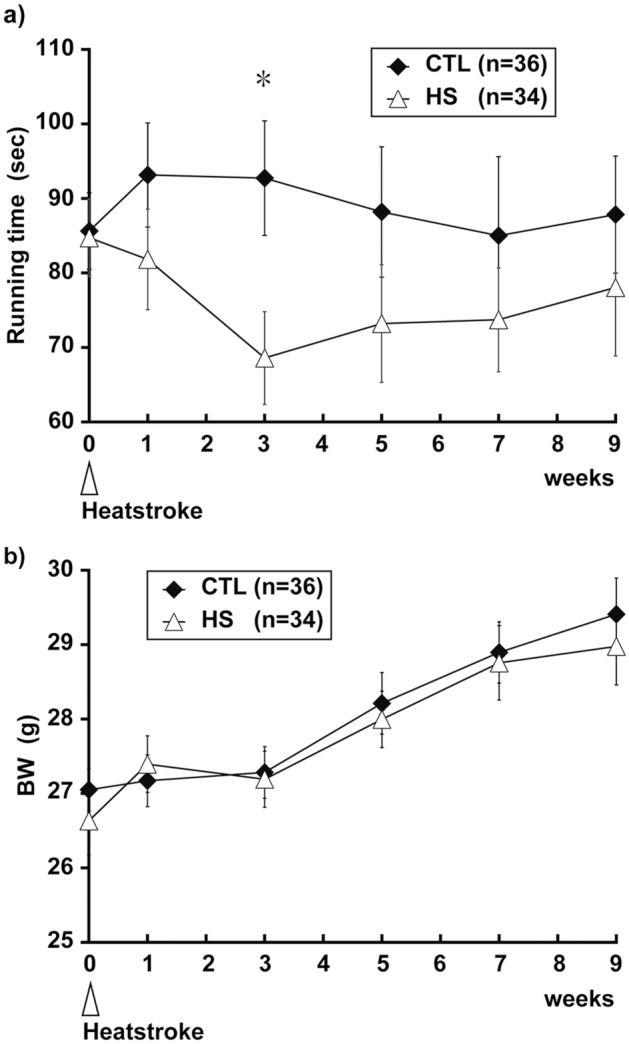
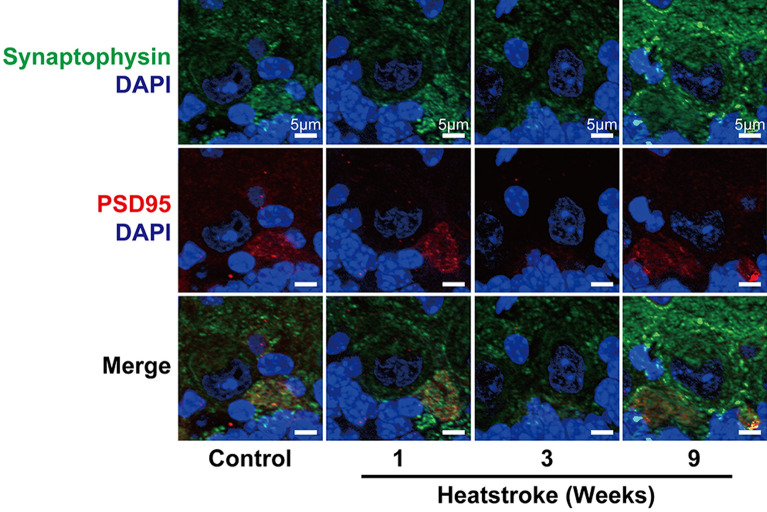
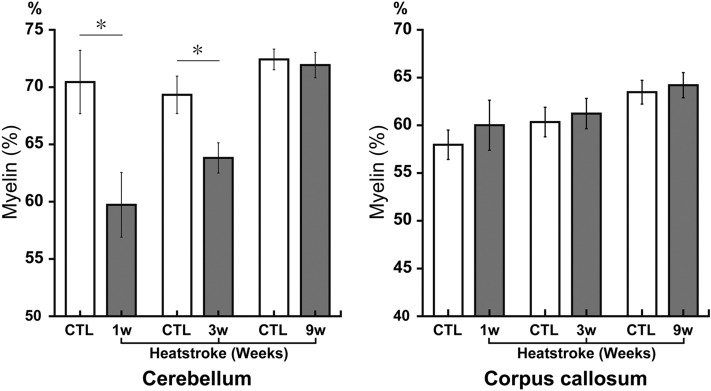
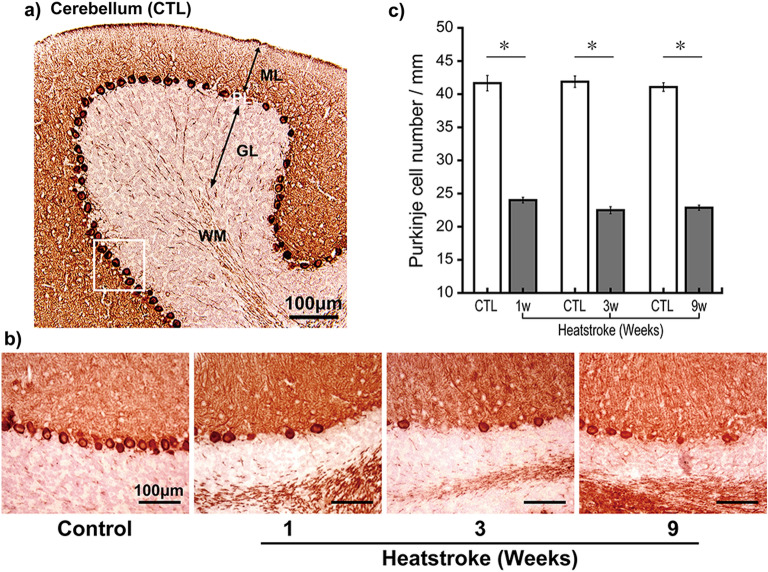
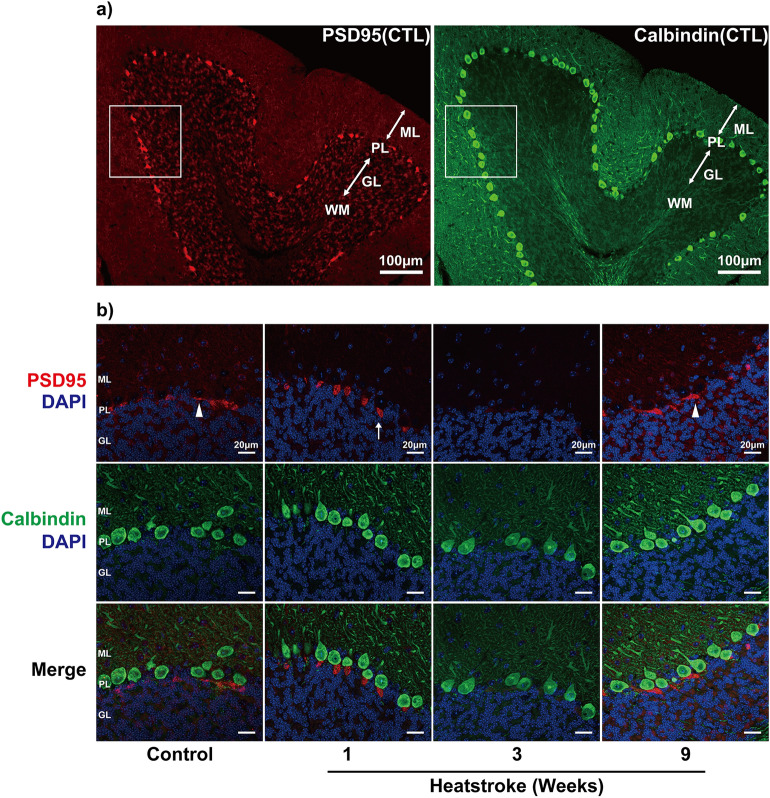
Global warming increases heatstroke incidence. After heatstroke, patients exhibit neurological symptoms, suggesting cerebellar damage. However, the potential long-term adverse outcomes are poorly understood. We studied the cerebellum after heatstroke in mouse heatstroke models. In this study, motor coordination disorder significantly appeared 3 weeks after heatstroke and gradually improved to some extent. Although white matter demyelination was detected at 1 and 3 weeks after heatstroke in the cerebellum, it was not found in the corpus callosum. The Purkinje cell numbers significantly decreased at 1, 3, and 9 weeks after heatstroke. The intensity of synaptophysin and postsynaptic density-95 temporarily appeared to attenuate at 3 weeks after heatstroke; however, both appeared to intensify at 9 weeks after heatstroke. Motor coordination loss occurred a few weeks after heatstroke and recovered to some extent. Late-onset motor impairment was suggested to be caused by cerebellar dysfunctions morphologically assessed by myelin staining of cerebellar white matter and immunostaining of Purkinje cells with pre- and postsynaptic markers. Purkinje cell number did not recover for 9 weeks; other factors, including motor coordination, partially recovered, probably by synaptic reconstruction, residual Purkinje cells, and other cerebellar white matter remyelination. These phenomena were associated with late-onset neurological deficits and recovery after heatstroke.
全球变暖会增加中暑的发病率。中暑后,患者会出现神经系统症状,提示小脑受损。然而,潜在的长期不良后果还不太清楚。我们在小鼠中暑模型中研究了中暑后的小脑。在这项研究中,中暑 3 周后明显出现运动协调障碍,且逐渐在一定程度上有所改善。虽然在中暑后 1 周和 3 周时在小脑发现了白质脱髓鞘,但在胼胝体中未发现。中暑后 1、3 和 9 周时,浦肯野细胞数量明显减少。突触小体蛋白和突触后密度-95 的强度在中暑后 3 周时暂时减弱;然而,在中暑后 9 周时两者似乎都增强了。运动协调丧失在中暑后数周发生,并在一定程度上恢复。迟发性运动障碍的发生提示小脑功能障碍,这可通过小脑白质髓鞘染色和浦肯野细胞突触前和突触后标志物免疫染色来评估。浦肯野细胞数量在 9 周内未恢复;其他因素,包括运动协调,部分恢复,可能通过突触重建、残余浦肯野细胞和其他小脑白质髓鞘再生来实现。这些现象与中暑后迟发性神经功能缺损和恢复有关。