Sultana Mst Farzana, Suzuki Maki, Yamasaki Fumiya, Kubota Wataru, Takahashi Kohta, Abo Hirohito, Kawashima Hiroto
Laboratory of Microbiology and Immunology, Graduate School of Pharmaceutical Sciences, Chiba University, Chiba, Japan.
Department of Pharmacy, Jashore University of Science and Technology, Jashore, Bangladesh.
Front Microbiol. 2022 Jun 6;13:900948. doi: 10.3389/fmicb.2022.900948. eCollection 2022.
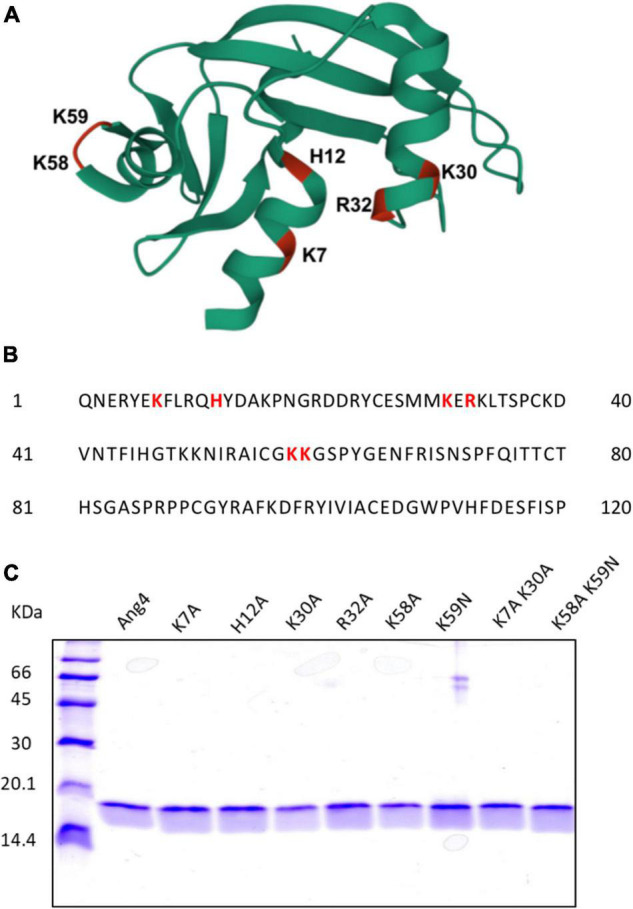
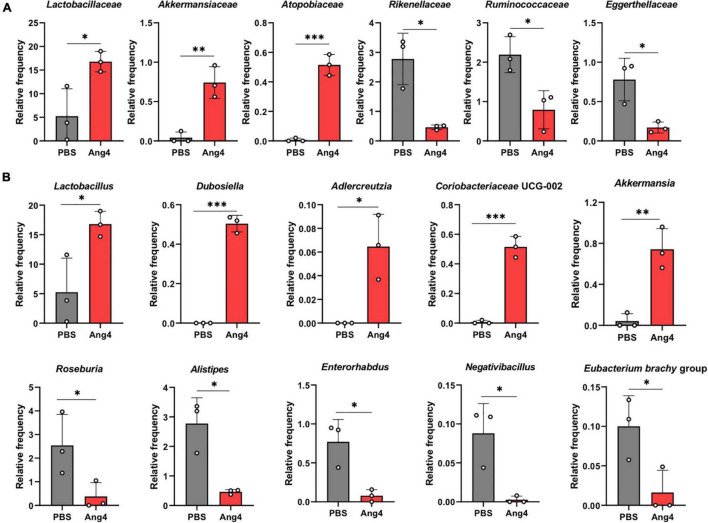
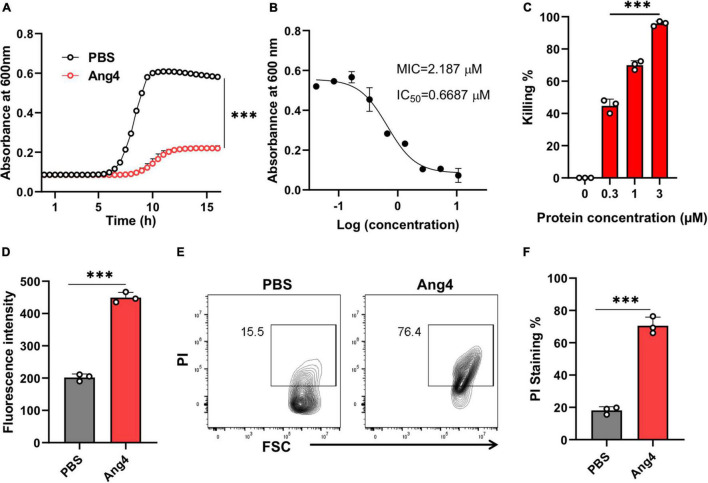
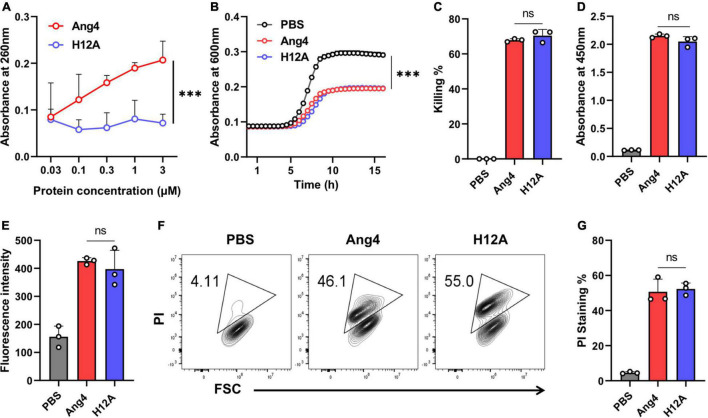
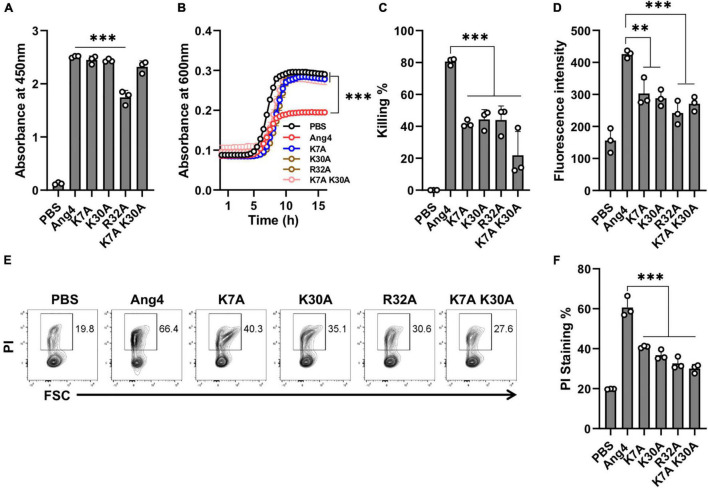
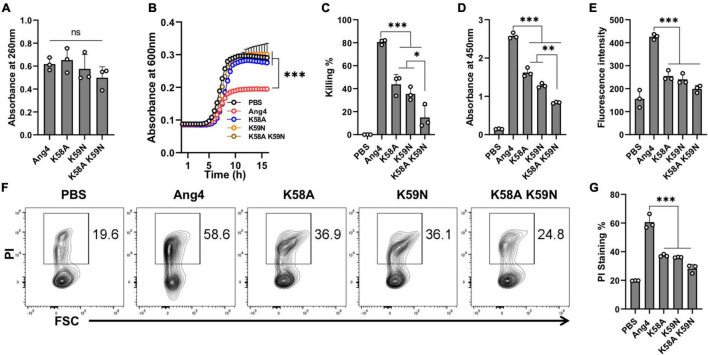
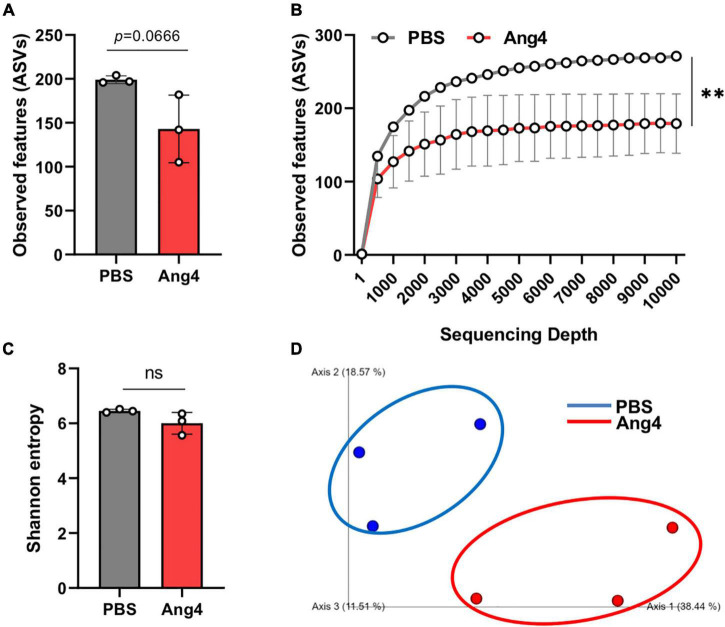
Angiogenin 4 bearing ribonuclease activity is an endogenous antimicrobial protein expressed in small and large intestine. However, the crucial amino acid residues responsible for the antibacterial activity of Ang4 and its impact on gut microbiota remain unknown. Here, we report the contribution of critical amino acid residues in the functional regions of Ang4 to its activity against LT2 and the effect of Ang4 on gut microbiota in mice. We found that Ang4 binds LT2 through two consecutive basic amino acid residues, K58 and K59, in the cell-binding segment and disrupts the bacterial membrane integrity at the N-terminal α-helix containing residues K7 and K30, as evidenced by the specific mutations of cationic residues of Ang4. We also found that the RNase activity of Ang4 was not involved in its bactericidal activity, as shown by the H12 mutant, which lacks RNase activity. administration of Ang4 through the mouse rectum and subsequent bacterial 16S rRNA gene sequencing analyses demonstrated that administration of Ang4 not only increased beneficial bacteria such as , , UCG-002, and , but also decreased certain pathogenic bacteria, including and , indicating that Ang4 regulates the shape of gut microbiota composition. We conclude that Ang4 kills bacteria by disrupting bacterial membrane integrity through critical basic amino acid residues with different functionalities rather than overall electrostatic interactions and potentially maintains gut microflora under physiological and pathophysiological conditions.
具有核糖核酸酶活性的血管生成素4是一种在小肠和大肠中表达的内源性抗菌蛋白。然而,负责血管生成素4抗菌活性的关键氨基酸残基及其对肠道微生物群的影响仍不清楚。在此,我们报告了血管生成素4功能区域中的关键氨基酸残基对其抗LT2活性的贡献以及血管生成素4对小鼠肠道微生物群的影响。我们发现,血管生成素4通过细胞结合片段中两个连续的碱性氨基酸残基K58和K59与LT2结合,并在含有残基K7和K30的N端α螺旋处破坏细菌膜的完整性,血管生成素4阳离子残基的特异性突变证明了这一点。我们还发现,如缺乏核糖核酸酶活性的H12突变体所示,血管生成素4的核糖核酸酶活性不参与其杀菌活性。通过小鼠直肠给予血管生成素4并随后进行细菌16S rRNA基因测序分析表明,给予血管生成素4不仅增加了有益细菌,如、、UCG - 002和,还减少了某些病原菌,包括和,这表明血管生成素4调节肠道微生物群的组成形态。我们得出结论,血管生成素4通过具有不同功能的关键碱性氨基酸残基破坏细菌膜的完整性来杀死细菌,而不是通过整体静电相互作用,并且可能在生理和病理生理条件下维持肠道微生物群。