Department of Pediatric Hematology and Oncology, Cell and Gene Therapy, Bambino Gesù Children's Hospital, IRCCS, Rome, Italy.
Department of Molecular Medicine, Sapienza University of Rome, Rome, Italy.
Front Immunol. 2022 Jun 6;13:920306. doi: 10.3389/fimmu.2022.920306. eCollection 2022.
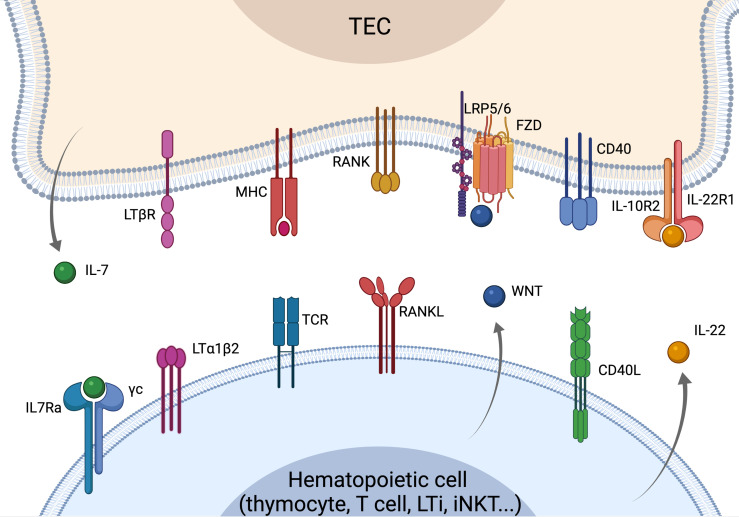
Optimal recovery of immune competence after periods of hematopoietic insults or stress is crucial to re-establish patient response to vaccines, pathogens and tumor antigens. This is particularly relevant for patients receiving high doses of chemotherapy or radiotherapy, who experience prolonged periods of lymphopenia, which can be associated with an increased risk of infections, malignant relapse, and adverse clinical outcome. While the thymus represents the primary organ responsible for the generation of a diverse pool of T cells, its function is profoundly impaired by a range of acute insults (including those caused by cytoreductive chemo/radiation therapy, infections and graft-versus-host disease) and by the chronic physiological deterioration associated with aging. Impaired thymic function increases the risk of infections and tumor antigen escape due to a restriction in T-cell receptor diversity and suboptimal immune response. Therapeutic approaches that can promote the renewal of the thymus have the potential to restore immune competence in patients. Previous work has documented the importance of the crosstalk between thymocytes and thymic epithelial cells in establishing correct architecture and function of thymic epithelium. This crosstalk is relevant not only during thymus organogenesis, but also to promote the recovery of its function after injuries. In this review, we will analyze the signals involved in the crosstalk between TECs and hematopoietic cells. We will focus in particular on how signals from T-cells can regulate TEC function and discuss the relevance of these pathways in restoring thymic function and T-cell immunity in experimental models, as well as in the clinical setting.
在经历造血损伤或应激后,最佳地恢复免疫功能对于重新建立患者对疫苗、病原体和肿瘤抗原的反应至关重要。这对于接受大剂量化疗或放疗的患者尤其重要,他们会经历长时间的淋巴细胞减少,这可能会增加感染、恶性复发和不良临床结果的风险。虽然胸腺是负责生成多样化 T 细胞池的主要器官,但它的功能会受到多种急性损伤(包括细胞毒性化疗/放疗、感染和移植物抗宿主病引起的损伤)以及与衰老相关的慢性生理恶化的严重损害。由于 T 细胞受体多样性受限和免疫反应不佳,胸腺功能受损会增加感染和肿瘤抗原逃逸的风险。能够促进胸腺更新的治疗方法有可能恢复患者的免疫功能。先前的工作已经证明了胸腺细胞和胸腺上皮细胞之间的相互作用对于建立正确的胸腺上皮结构和功能的重要性。这种相互作用不仅在胸腺器官发生过程中很重要,而且对于促进其损伤后的功能恢复也很重要。在这篇综述中,我们将分析参与 TEC 和造血细胞相互作用的信号。我们将特别关注 T 细胞的信号如何调节 TEC 的功能,并讨论这些途径在恢复胸腺功能和 T 细胞免疫方面的相关性,包括在实验模型和临床环境中。