Watanuki Shinya, Akama Hiroyuki
Department of Marketing, Faculty of Commerce, University of Marketing and Distribution Sciences, Kobe, Japan.
Institute of Liberal Arts/School of Life Science and Technology, Tokyo Institute of Technology, Tokyo, Japan.
Heliyon. 2022 Jun 10;8(6):e09702. doi: 10.1016/j.heliyon.2022.e09702. eCollection 2022 Jun.
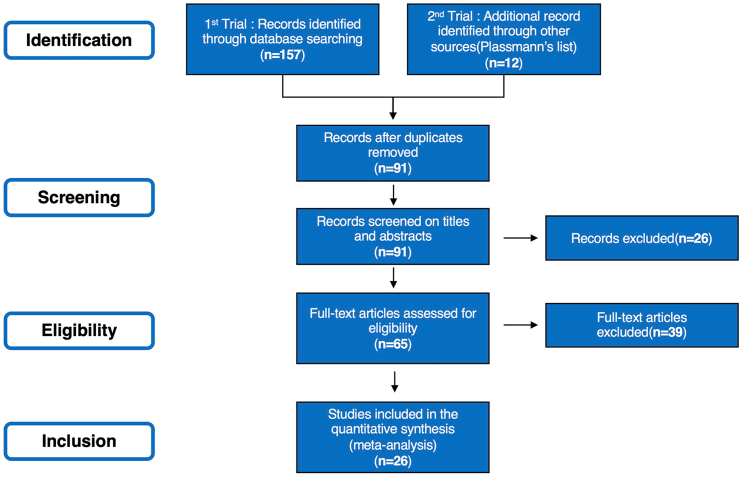
Although the concept of brand equity has been investigated using various approaches, a comprehensive neural basis for brand equity remains unclear. The default mode network (DMN) as a mental process might influence brand equity related consumers' decision-making, as reported in the marketing literature. While studies on the overlapping regions between the DMN and value-based decision-making related brain regions have been reported in neuroscience literature, relationships between the DMN and a neural mechanism of brand equity have not been clarified. The aim of our study is to identify neural substrates of brand equity and examine brand equity-related mental processes by comparing them to the DMN. To determine the neural substrates of brand equity, we first carried out the activation likelihood estimation (ALE) meta-analysis. We examined 26 studies using branded objects as experimental stimuli for the ALE. Next, we set the output regions from ALE as the region of interest for meta-analytic connectivity modeling (MACM). Further, we compared the brand equity-related brain network (BE-RBN) revealed by the MACM with the DMN. We confirmed that the BE-RBN brain regions overlap with the medial temporal lobule (MTL) sub-system, a module composed of the DMN but excluding the retrosplenial cortex. Further, we discovered that several brain regions apart from the DMN are also distinctive BE-RBN brain regions (i.e., the insula, the inferior frontal gyrus, amygdala, ventral striatum, parietal region). We decoded the BE-RBN brain regions using the BrandMap module. The decoded results revealed that the brand equity-related mental processes are complex constructs integrated via multiple mental processes such as self-referential, reward, emotional, memory, and sensorimotor processing. Our study demonstrated that the DMN alone is insufficient to engage in brand equity-related mental processes. Therefore, marketers are required to make strategic plans to integrate the five consumer's multiple mental processes while building brand equity.
尽管品牌资产的概念已通过各种方法进行了研究,但品牌资产全面的神经基础仍不明确。营销文献报道,作为一种心理过程的默认模式网络(DMN)可能会影响与品牌资产相关的消费者决策。虽然神经科学文献中已有关于DMN与基于价值的决策相关脑区重叠区域的研究报道,但DMN与品牌资产神经机制之间的关系尚未明确。我们研究的目的是通过将与品牌资产相关的心理过程与DMN进行比较,来确定品牌资产的神经基础,并检验这些心理过程。为了确定品牌资产的神经基础,我们首先进行了激活可能性估计(ALE)元分析。我们检查了26项以品牌化对象作为ALE实验刺激的研究。接下来,我们将ALE的输出区域设置为元分析连通性建模(MACM)的感兴趣区域。此外,我们将MACM揭示的与品牌资产相关的脑网络(BE-RBN)与DMN进行了比较。我们证实,BE-RBN脑区与内侧颞叶(MTL)子系统重叠,MTL子系统是DMN的一个模块,但不包括压后皮质。此外,我们发现除DMN外,还有几个脑区也是独特的BE-RBN脑区(即岛叶、额下回、杏仁核、腹侧纹状体、顶叶区域)。我们使用BrandMap模块对BE-RBN脑区进行了解码。解码结果表明,与品牌资产相关的心理过程是通过自我参照、奖励、情感、记忆和感觉运动处理等多种心理过程整合而成的复杂结构。我们的研究表明,仅DMN不足以参与与品牌资产相关的心理过程。因此,营销人员在建立品牌资产时需要制定战略计划,整合消费者的这五种多重心理过程。