Department of Biomedical Technologies, Graduate School of Natural and Applied Sciences, Izmir Katip Çelebi University, Izmir, Turkey.
Department of Biomedical Engineering, Faculty of Engineering and Architecture, Izmir Katip Çelebi University, Izmir, Turkey.
J Biomed Mater Res B Appl Biomater. 2022 Nov;110(11):2506-2520. doi: 10.1002/jbm.b.35108. Epub 2022 Jun 23.
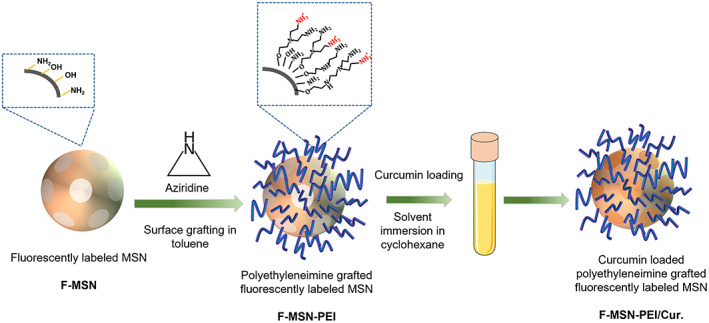
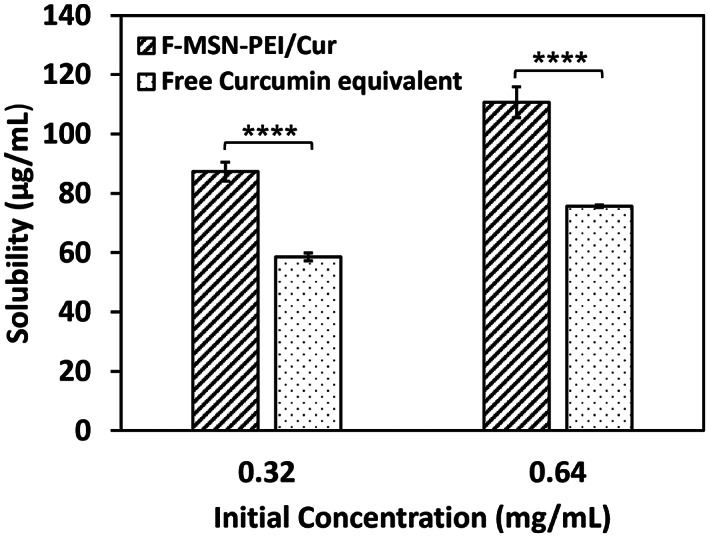
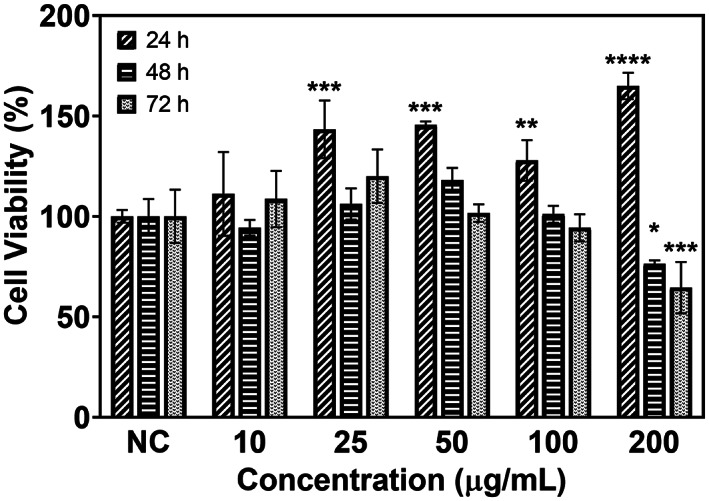
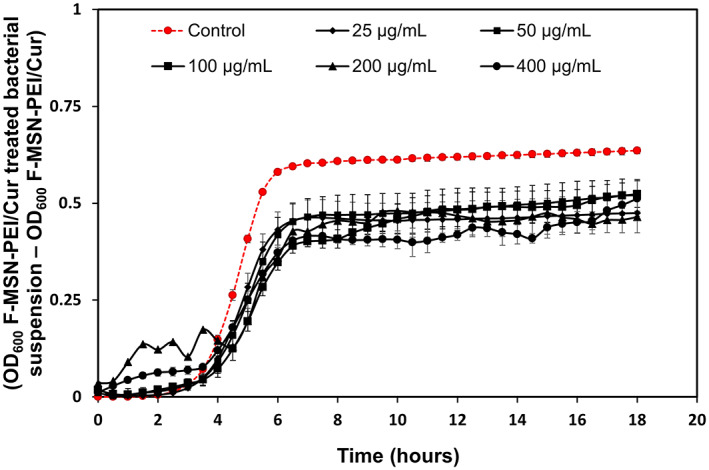
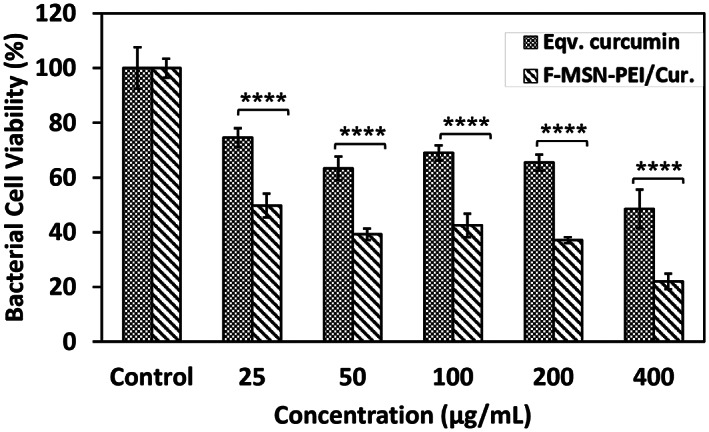
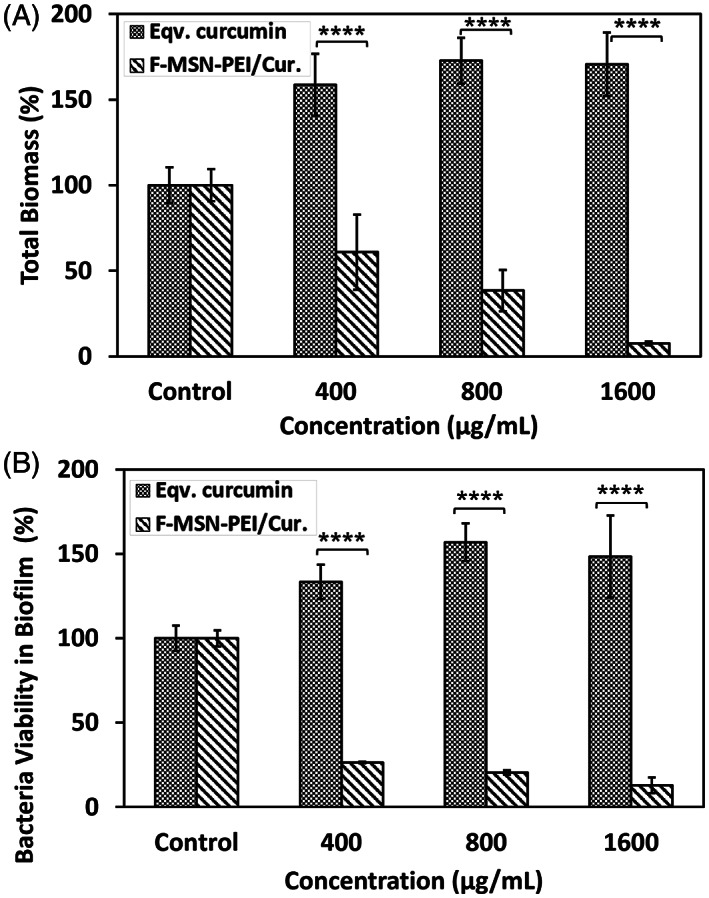
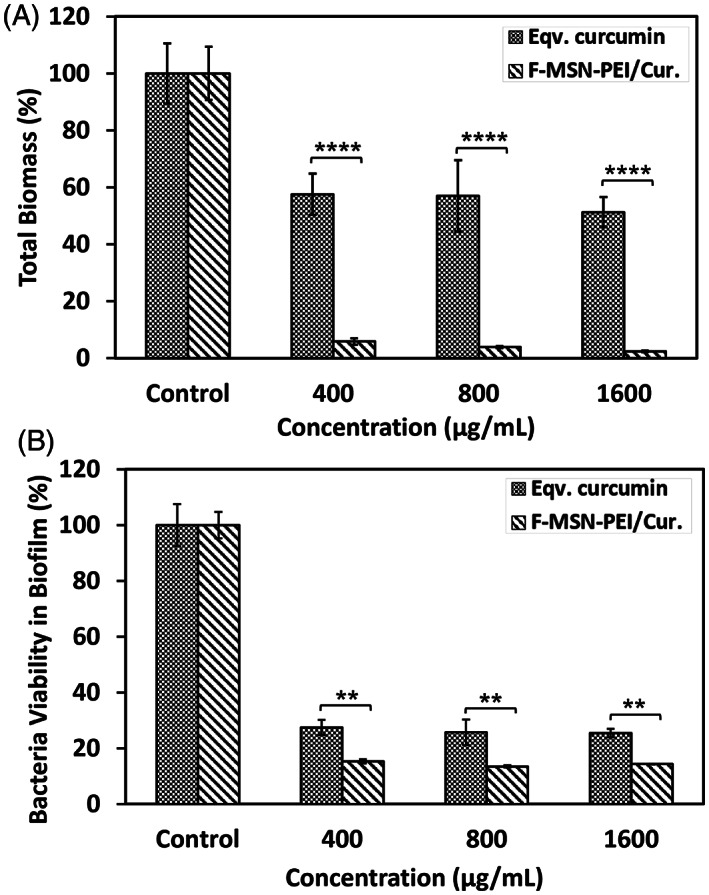
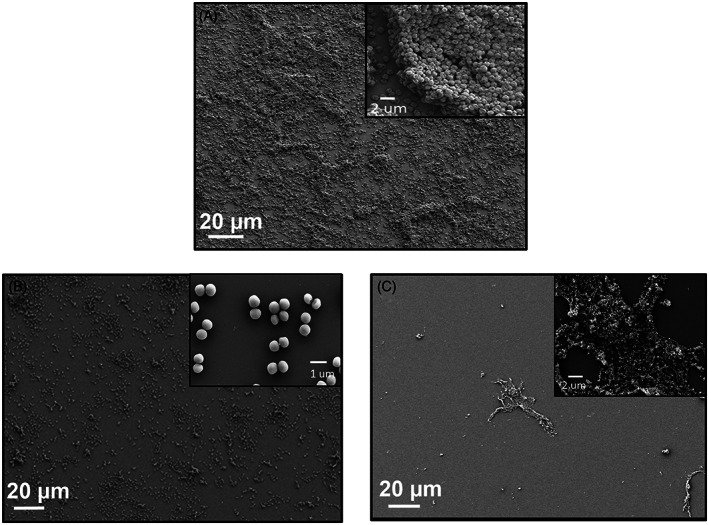
The recalcitrant nature of biofilms makes biofilm-associated infections difficult to treat in modern medicine. Biofilms have a high vulnerability to antibiotics and a limited repertoire of antibiotics could act on matured biofilms. This issue has resulted in a gradual paradigm shift in drug discovery and therapy, with anti-biofilm compounds being sought alongside new drug carriers. A potential solution to biofilm-associated infections is to employ antibiofilm treatments, which can attack biofilms from many fronts. Nanocarriers are promising in this regard because they can be entrapped within biofilm matrix, target biofilm matrix, and provide local drug delivery to inhibit biofilm formation. In this study, curcumin as an herbal extract was loaded onto hyperbranched polyethylenimine-grafted mesoporous silica nanoparticles (F-MSN-PEI/Cur) and antibiofilm investigations were performed. The F-MSN-PEI/Cur design has the potential to repurpose curcumin as an antibiofilm agent by increasing its solubility and lowering the required doses for the destruction of matured biofilms as well as suppressing biofilm development. Using imaging and spectroscopic techniques, we assessed the interaction of F-MSN-PEI/Cur with Staphylococcus aureus bacterial cells and determined the impact of F-MSN-PEI/Cur on eradicating matured biofilms and suppressing biofilm development. The F-MSN-PEI/Cur design is highly cytocompatible, as observed by the cytotoxicity screening investigations on L929 mouse fibroblast cell line. Our findings show that F-MSN-PEI/Cur design reduces the bacterial cell viability, inhibits biofilm formation, and induces biofilm eradication, which is attributed to F-MSN-PEI/Cur design having the potential to repurpose the antibiofilm activity of curcumin-herbal extract.
生物膜的顽固特性使得生物膜相关感染在现代医学中难以治疗。生物膜对抗生素的敏感性较低,而成熟的生物膜可能只能被有限的抗生素作用。这一问题导致药物发现和治疗的范式逐渐转变,人们开始寻找抗生物膜化合物和新的药物载体。解决生物膜相关感染的一个潜在方法是使用抗生物膜疗法,这种疗法可以从多个方面攻击生物膜。纳米载体在这方面很有前景,因为它们可以被困在生物膜基质中,靶向生物膜基质,并提供局部药物输送以抑制生物膜形成。在这项研究中,姜黄素作为一种草药提取物被负载到超支化聚乙烯亚胺接枝介孔硅纳米粒子(F-MSN-PEI/Cur)上,并进行了抗生物膜研究。F-MSN-PEI/Cur 的设计有可能通过增加姜黄素的溶解度并降低破坏成熟生物膜所需的剂量,以及抑制生物膜的形成,将姜黄素重新用作抗生物膜剂。我们使用成像和光谱技术评估了 F-MSN-PEI/Cur 与金黄色葡萄球菌细菌细胞的相互作用,并确定了 F-MSN-PEI/Cur 对根除成熟生物膜和抑制生物膜形成的影响。通过对 L929 小鼠成纤维细胞系进行细胞毒性筛选研究,我们发现 F-MSN-PEI/Cur 的设计具有高度的细胞相容性。我们的研究结果表明,F-MSN-PEI/Cur 的设计降低了细菌细胞的活力,抑制了生物膜的形成,并诱导了生物膜的消除,这归因于 F-MSN-PEI/Cur 的设计有可能重新利用姜黄素-草药提取物的抗生物膜活性。