Winsou Jeannette K, Tepa-Yotto Ghislain T, Thunes Karl H, Meadow Richard, Tamò Manuele, Sæthre May-Guri
Faculty of Biosciences (BIOVIT), Norwegian University of Life Sciences (NMBU), NO-1432 Ås, Norway.
Department for Invertebrate Pests and Weeds in Forestry, Horticulture and Agriculture, Norwegian Institute of Bioeconomy Research (NIBIO), NO-1431 Ås, Norway.
Insects. 2022 May 24;13(6):491. doi: 10.3390/insects13060491.
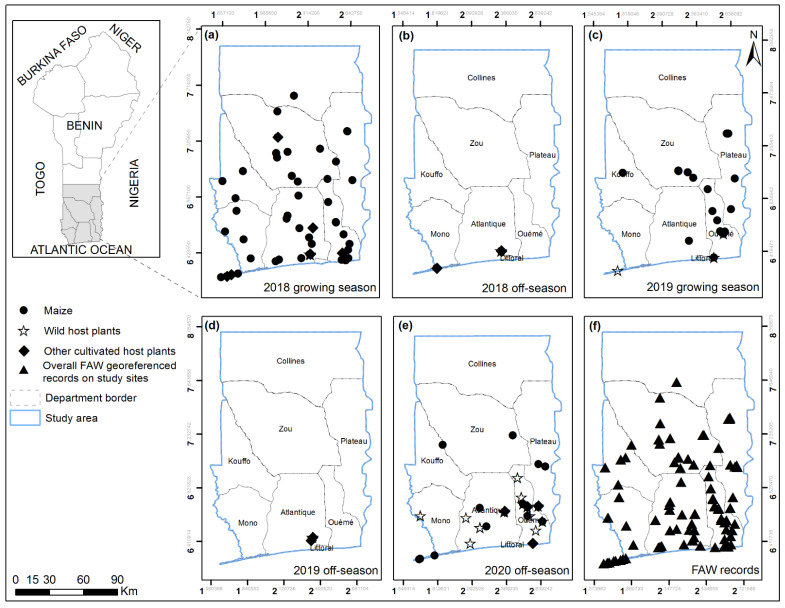
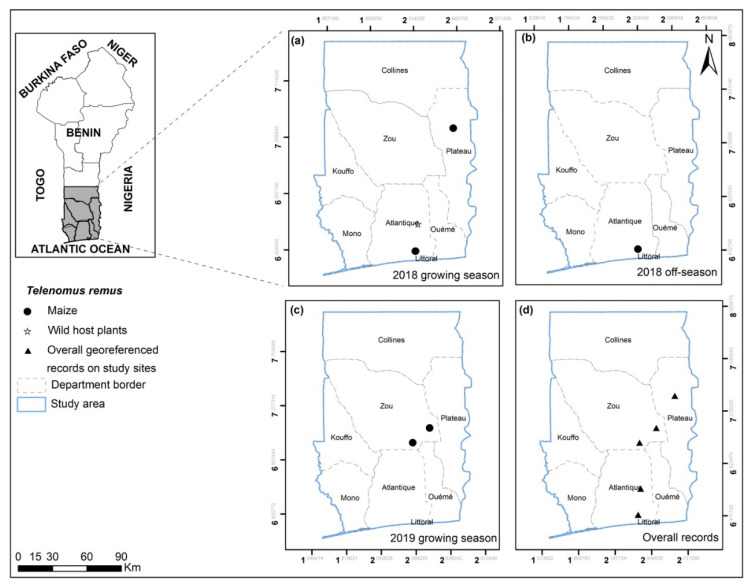
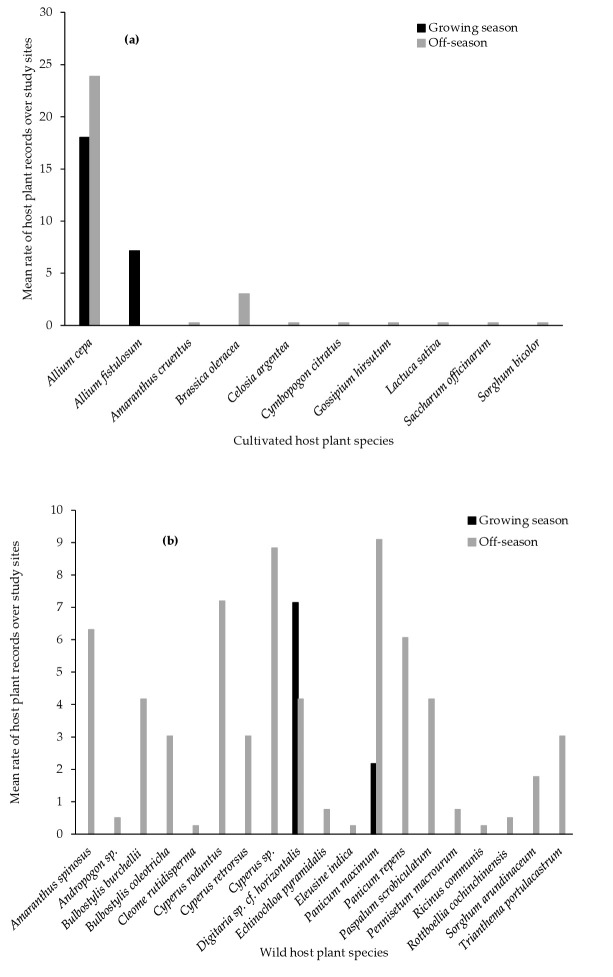
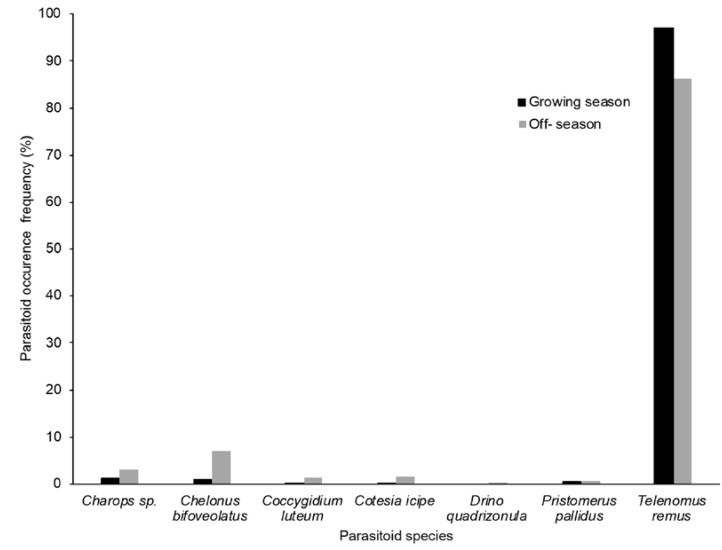
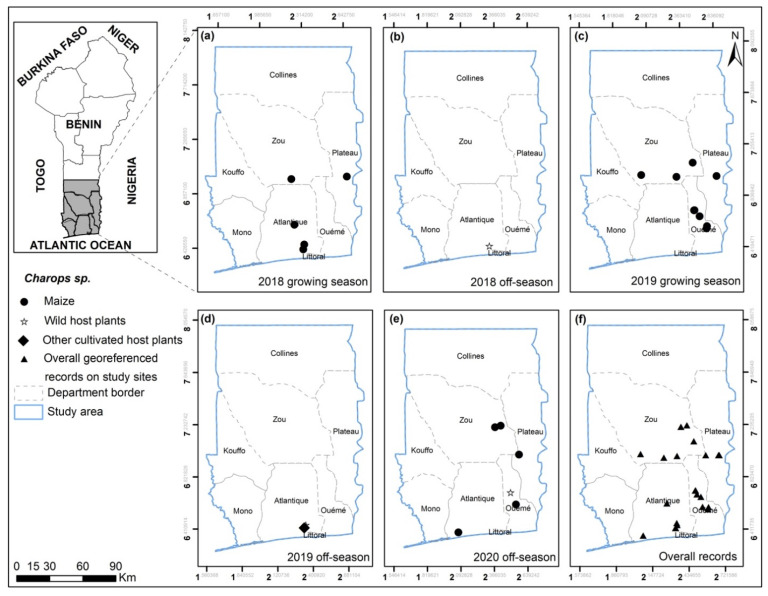
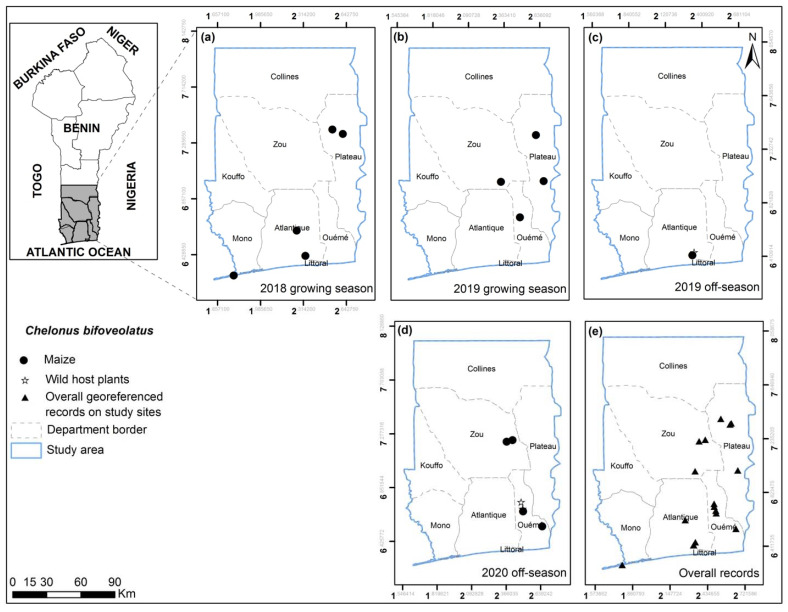
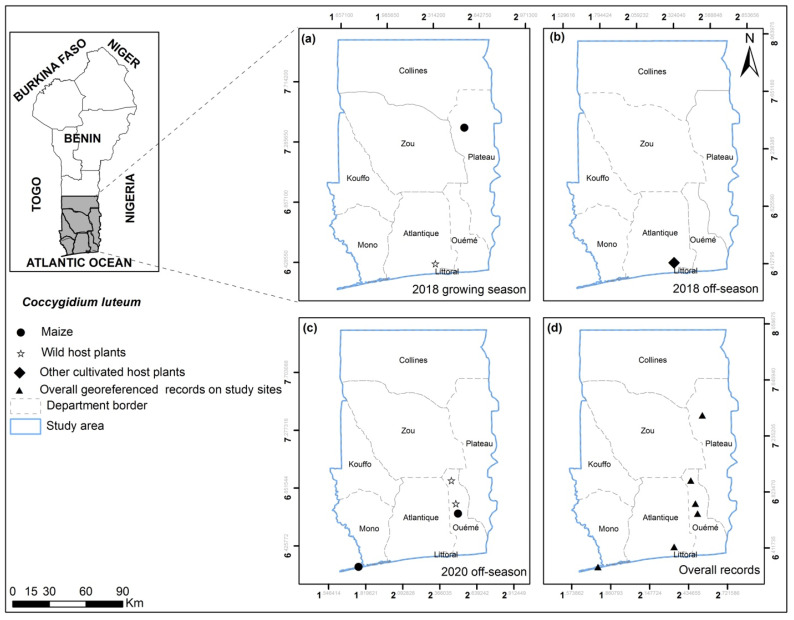
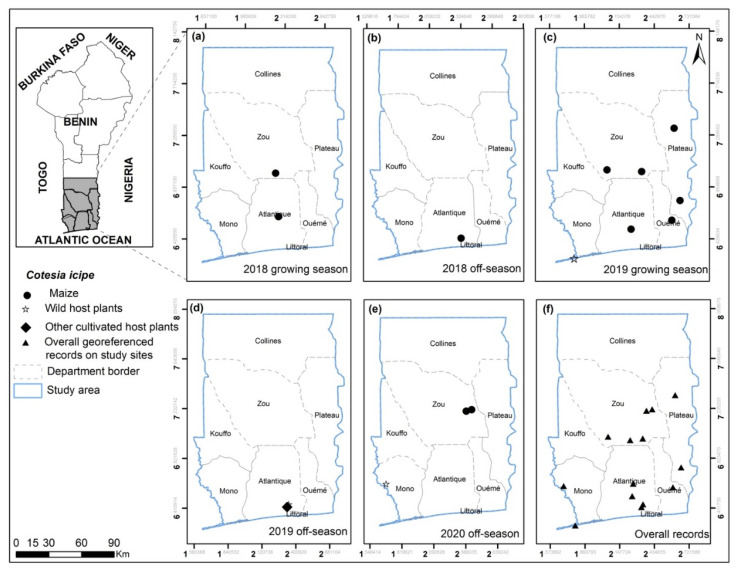
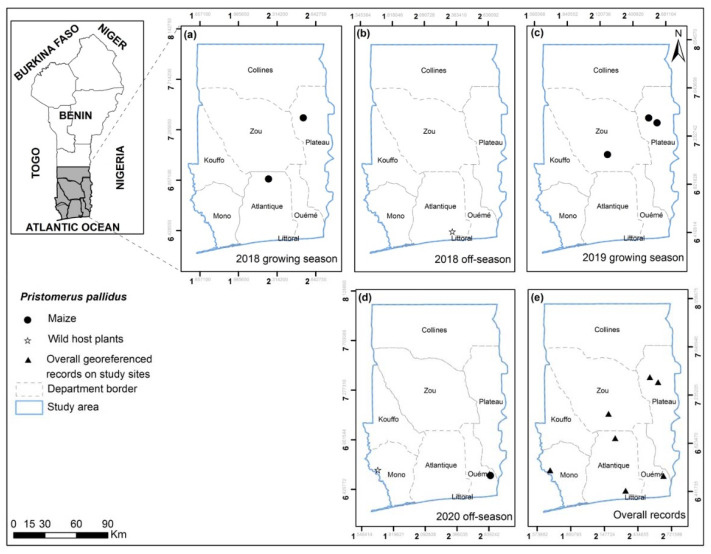
Fall armyworm (FAW) (J.E. Smith, 1797) (Lepidoptera: Noctuidae) was recorded for the first time in 2016 attacking maize fields in central and west Africa. Soon after, several other regions and countries have reported the pest in almost the entire sub-Saharan Africa. In the present study, we assumed that (i) a variety of alternative plant species host FAW, especially during maize off-season, (ii) a wide range of local parasitoids have adapted to FAW and (iii) parasitoid species composition and abundance vary across seasons. During a two-year survey (from June 2018 to January 2020), parasitoids and alternative host plants were identified from maize and vegetable production sites, along streams and lowlands, on garbage dumps and old maize fields in southern and partly in the central part of Benin during both maize growing- and off-season. A total of eleven new host plant species were reported for the first time, including (de Candolle) Stapf (cultivated lemon grass), (A. Richard) Clarke and von Trinius (wild). The survey revealed seven parasitoid species belonging to four families, namely Platygastridae, Braconidae, Ichneumonidae, and Tachinidae associated with FAW on maize and alternative host plants. The most abundant parasitoid species across seasons was the egg parasitoid (Nixon) (Hymenoptera: Platygastridae). These findings demonstrate FAW capability to be active during the maize off-season in the selected agro-ecologies and provide baseline information for classical and augmentative biocontrol efforts.
草地贪夜蛾(J.E. Smith,1797年)(鳞翅目:夜蛾科)于2016年首次被记录到侵袭了非洲中部和西部的玉米田。此后不久,其他几个地区和国家几乎在整个撒哈拉以南非洲都报告了这种害虫。在本研究中,我们假设:(i)多种替代植物物种是草地贪夜蛾的寄主,尤其是在玉米淡季;(ii)多种本地寄生蜂已经适应了草地贪夜蛾;(iii)寄生蜂的物种组成和丰度随季节变化。在为期两年的调查(2018年6月至2020年1月)中,在贝宁南部和部分中部地区玉米生长季和淡季期间,从玉米和蔬菜生产地、溪流和低地、垃圾场以及旧玉米田识别出了寄生蜂和替代寄主植物。首次共报告了11种新的寄主植物物种,包括(德堪多)斯塔夫(栽培柠檬草)、(A. 理查德)克拉克和冯·特里尼乌斯(野生)。调查发现与玉米和替代寄主植物上的草地贪夜蛾相关的寄生蜂有7种,分属于4个科,即扁股小蜂科、茧蜂科、姬蜂科和寄蝇科。整个季节中最丰富的寄生蜂物种是卵寄生蜂(尼克松)(膜翅目:扁股小蜂科)。这些发现表明草地贪夜蛾有能力在选定农业生态环境的玉米淡季保持活跃,并为经典生物防治和增殖生物防治工作提供了基线信息。