Alsoud Leen Oyoun, Soares Nelson C, Al-Hroub Hamza M, Mousa Muath, Kasabri Violet, Bulatova Nailya, Suyagh Maysa, Alzoubi Karem H, El-Huneidi Waseem, Abu-Irmaileh Bashaer, Bustanji Yasser, Semreen Mohammad H
College of Pharmacy, University of Sharjah, Sharjah P.O. Box 27272, United Arab Emirates.
Sharjah Institute for Medical Research, University of Sharjah, Sharjah P.O. Box 27272, United Arab Emirates.
Metabolites. 2022 Jun 1;12(6):508. doi: 10.3390/metabo12060508.
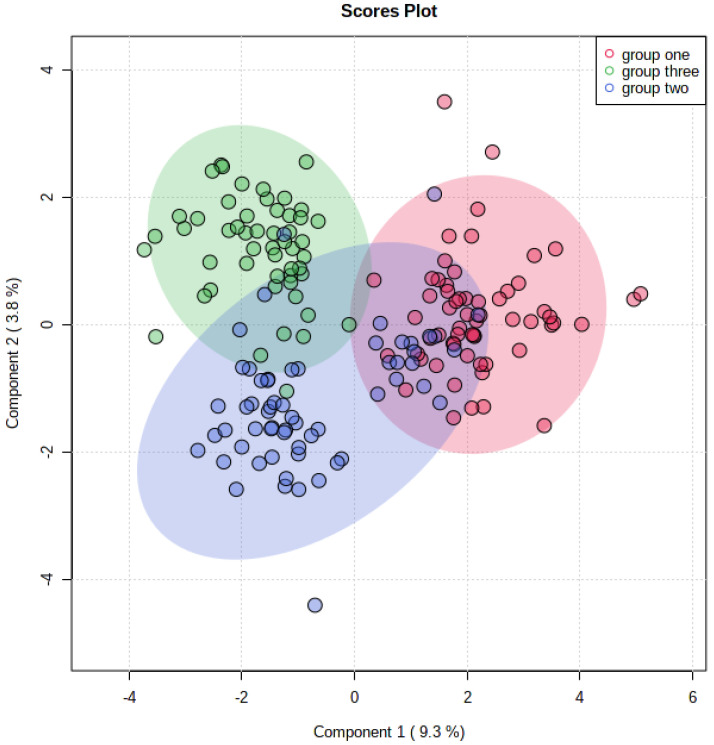
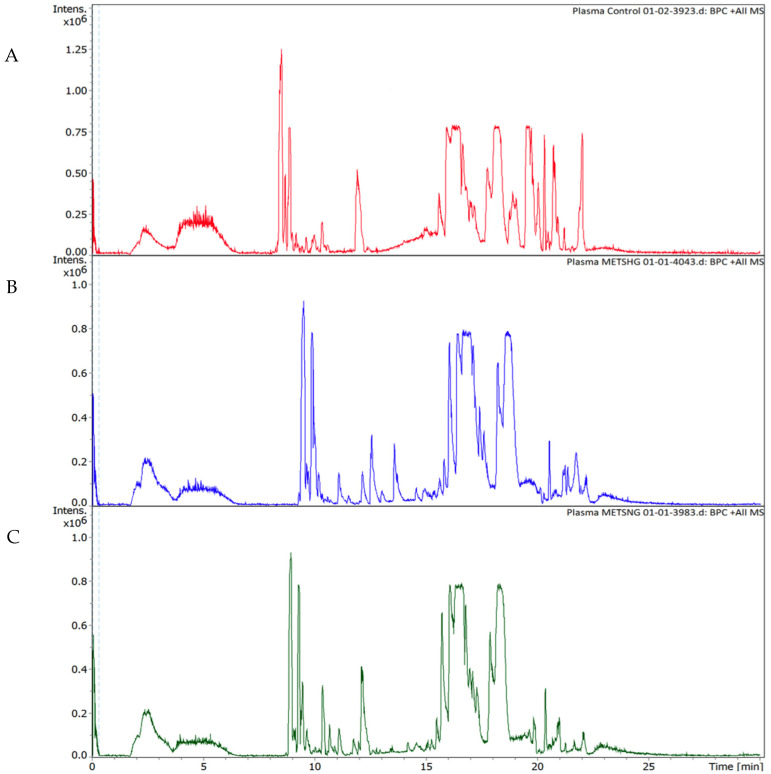
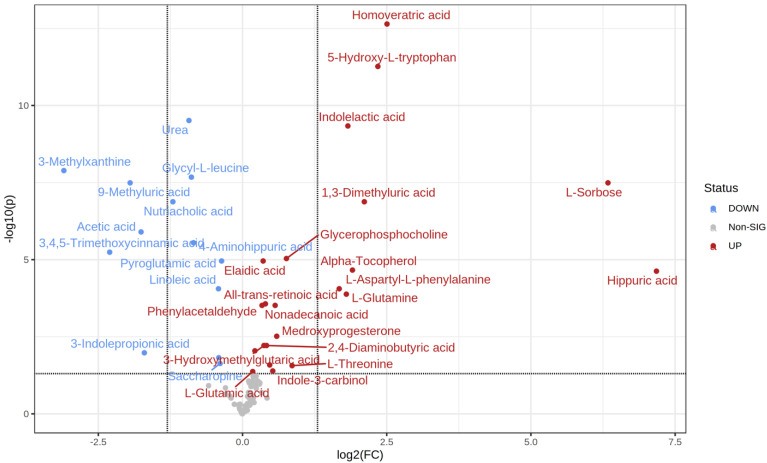
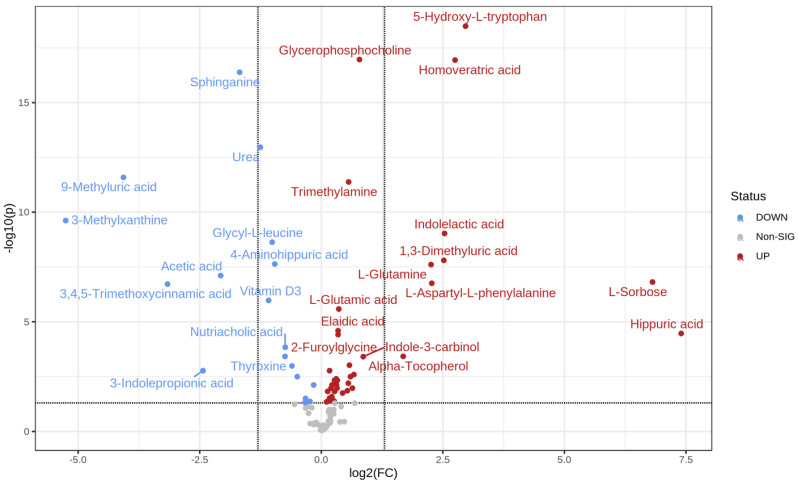
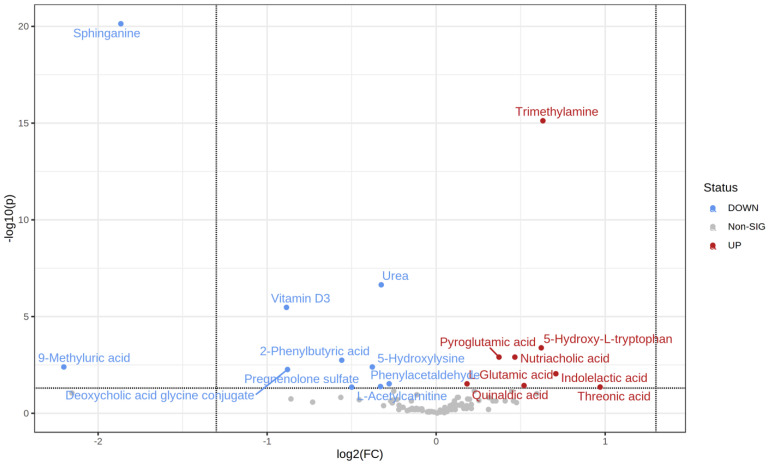
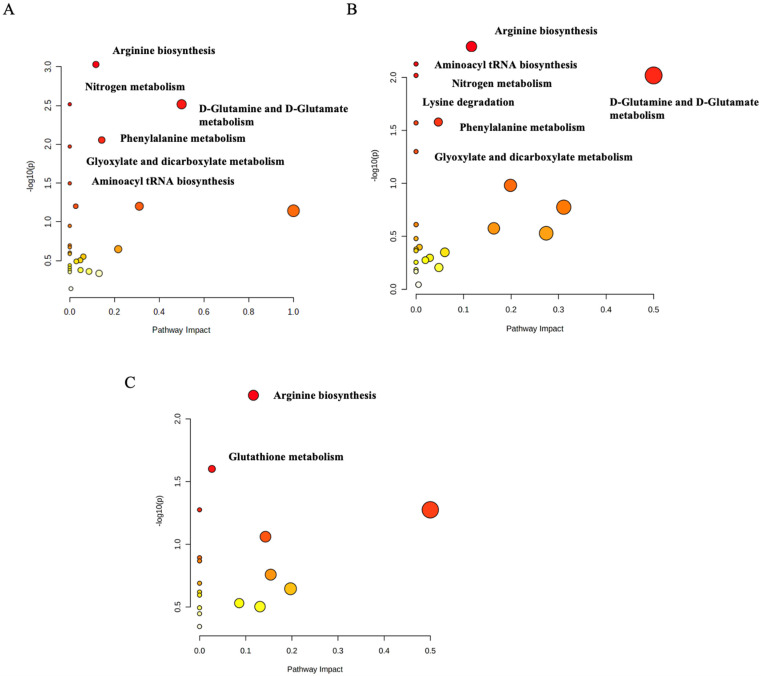
Metabolic syndrome (MetS) is a disorder characterized by a group of factors that can increase the risk of chronic diseases, including cardiovascular diseases and type 2 diabetes mellitus (T2D). Metabolomics has provided new insight into disease diagnosis and biomarker identification. This cross-sectional investigation used an untargeted metabolomics-based technique to uncover metabolomic alterations and their relationship to pathways in normoglycemic and prediabetic MetS participants to improve disease diagnosis. Plasma samples were collected from drug-naive prediabetic MetS patients (n = 26), normoglycemic MetS patients (n = 30), and healthy (normoglycemic lean) subjects (n = 30) who met the inclusion criteria for the study. The plasma samples were analyzed using highly sensitive ultra-high-performance liquid chromatography electrospray ionization quadrupole time-of-flight mass spectrometry (UHPLC-ESI-QTOF-MS). One-way ANOVA analysis revealed that 59 metabolites differed significantly among the three groups (p < 0.05). Glutamine, 5-hydroxy-L-tryptophan, L-sorbose, and hippurate were highly associated with MetS. However, 9-methyluric acid, sphinganine, and threonic acid were highly associated with prediabetes/MetS. Metabolic pathway analysis showed that arginine biosynthesis and glutathione metabolism were associated with MetS/prediabetes, while phenylalanine, D-glutamine and D-glutamate, and lysine degradation were highly impacted in MetS. The current study sheds light on the potential diagnostic value of some metabolites in metabolic syndrome and the role of their alteration on some of the metabolic pathways. More studies are needed in larger cohorts in order to verify the implication of the above metabolites on MetS and their diagnostic value.
代谢综合征(MetS)是一种由一组可增加包括心血管疾病和2型糖尿病(T2D)在内的慢性疾病风险的因素所表征的病症。代谢组学为疾病诊断和生物标志物鉴定提供了新的见解。这项横断面研究采用基于非靶向代谢组学的技术,以揭示血糖正常和糖尿病前期MetS参与者的代谢组学改变及其与代谢途径的关系,从而改善疾病诊断。从符合研究纳入标准的未接受过药物治疗的糖尿病前期MetS患者(n = 26)、血糖正常的MetS患者(n = 30)和健康(血糖正常且体型瘦)受试者(n = 30)中采集血浆样本。使用高灵敏度超高效液相色谱电喷雾电离四极杆飞行时间质谱(UHPLC-ESI-QTOF-MS)对血浆样本进行分析。单因素方差分析显示,三组之间有59种代谢物存在显著差异(p < 0.05)。谷氨酰胺、5-羟基-L-色氨酸、L-山梨糖和马尿酸与MetS高度相关。然而,9-甲基尿酸、鞘氨醇和苏糖酸与糖尿病前期/MetS高度相关。代谢途径分析表明,精氨酸生物合成和谷胱甘肽代谢与MetS/糖尿病前期相关,而苯丙氨酸、D-谷氨酰胺和D-谷氨酸以及赖氨酸降解在MetS中受到的影响很大。本研究揭示了某些代谢物在代谢综合征中的潜在诊断价值及其改变对某些代谢途径的作用。需要在更大的队列中进行更多研究,以验证上述代谢物对MetS的影响及其诊断价值。