Qahtan Ahmed A, Faisal Mohammad, Alatar Abdulrahman A, Abdel-Salam Eslam M
Department of Botany and Microbiology, College of Science, King Saud University, P.O. Box 2455, Riyadh 11451, Saudi Arabia.
Plant Molecular Biology, Faculty of Biology, Ludwig-Maximilians-University Munich, 82152 Planegg, Germany.
Plants (Basel). 2022 Jun 20;11(12):1614. doi: 10.3390/plants11121614.
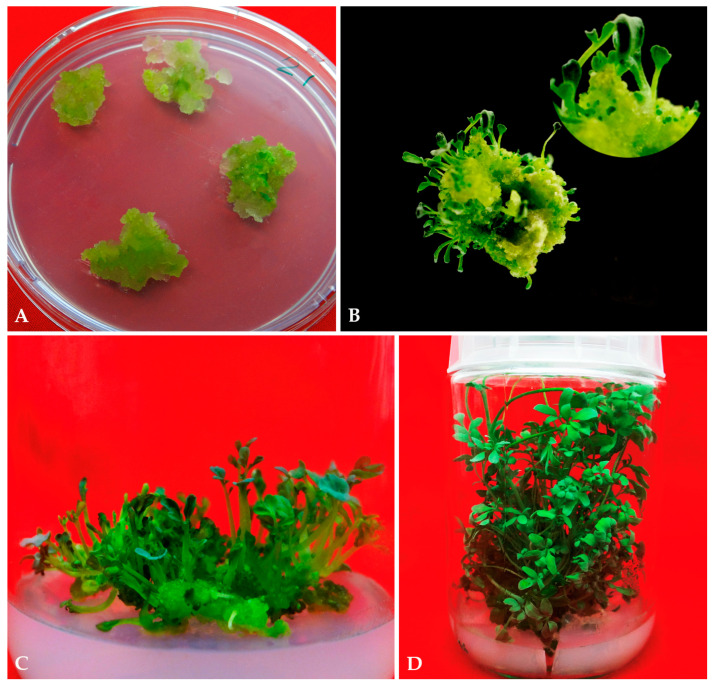
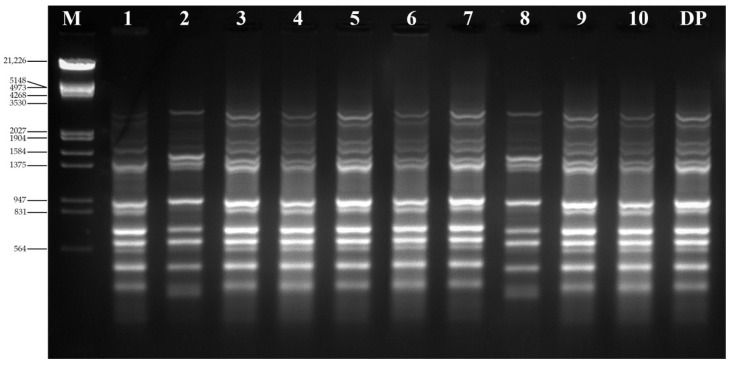
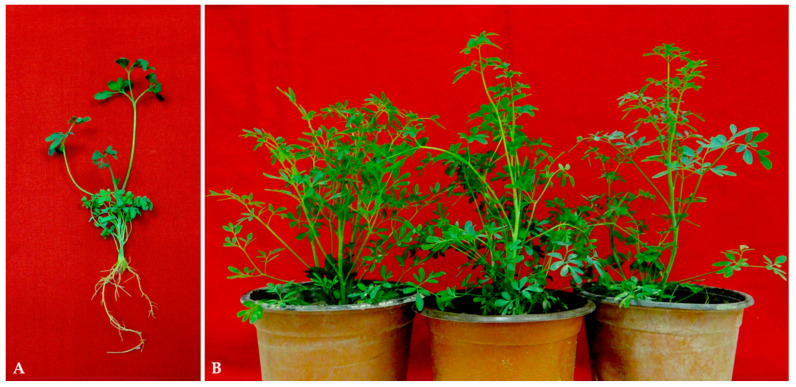
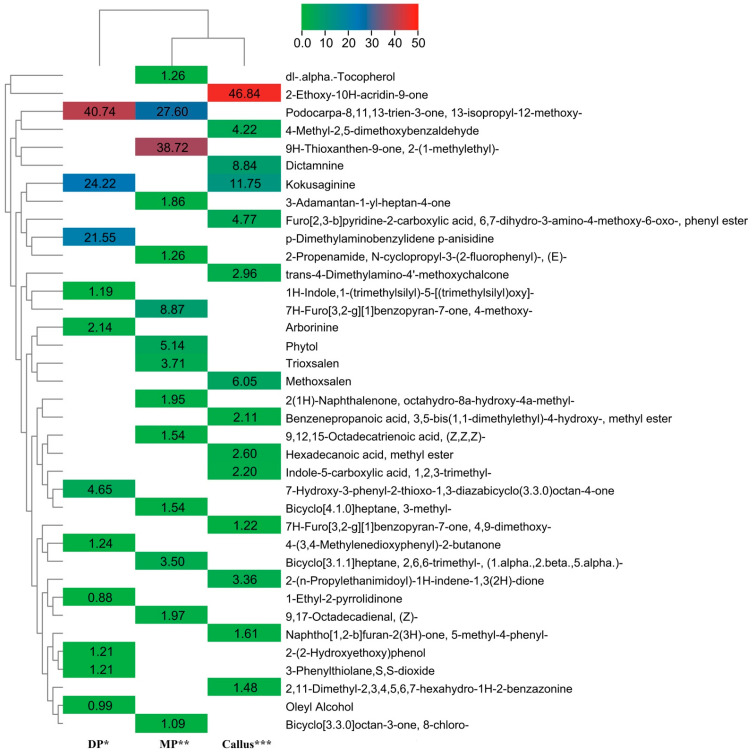
Efficient methods for callus induction and the high-frequency plant regeneration of L. were established, and the phytochemical potential and antioxidant activity of a donor plant, ex-vitro-established micropropagated plants, and callus were also studied. Yellowish-green callus was induced with a frequency of 97.8% from internode shoot segments of the donor plant growing in soil in the botanical garden cultured on Murashige and Skoog (MS) medium containing 10 μM 2,4-D (2,4-dichlorophenoxyacetic acid) and 1 μM BA (6-benzyladenine). Adventitious shoots were regenerated from the yellowish-green callus on MS medium containing 5.0 μM (BA) and 1.0 μM 1-naphthaleneacetic acid (NAA), with a regeneration frequency of 98.4% and a maximum of 54.6 shoots with an average length of 4.5 cm after 8 weeks. The regenerated shoots were rooted in a medium containing 1.0 μM IBA (indole-3-butyric acid) and successfully transferred to ex vitro conditions in pots containing normal garden soil, with a 95% survival rate. The amounts of alkaloids, phenolics, flavonoids, tannins, and antioxidant activity of the ex-vitro-established micropropagated plants were higher than in the donor plant and callus. The highest contents of hesperidin and rutin (93.3 and 55.9 µg/mg, respectively) were found in the ex-vitro-established micropropagated plants compared to those obtained from the donor plant (91.4 and 31.0 µg/mg, respectively) and callus (59.1 and 21.6 µg/mg, respectively). The genetic uniformity of the ex-vitro-established micropropagated plants was appraised by the ISSR markers and compared with the donor plant. This is the first report describing the callus-mediated plant regeneration, as well as the production of phenolic compounds and antioxidant activities in , which might be a potential alternative technique for the mass propagation and synthesis of bioactive compounds such as hesperidin and rutin.
建立了高效的愈伤组织诱导方法和L.的高频植株再生体系,并对供体植株、离体培养的微繁殖植株和愈伤组织的植物化学潜力及抗氧化活性进行了研究。在含有10 μM 2,4 - D(2,4 - 二氯苯氧乙酸)和1 μM BA(6 - 苄基腺嘌呤)的Murashige和Skoog(MS)培养基上培养植物园土壤中生长的供体植株的节间茎段,诱导出黄绿色愈伤组织,诱导频率为97.8%。在含有5.0 μM(BA)和1.0 μM 1 - 萘乙酸(NAA)的MS培养基上,从黄绿色愈伤组织再生不定芽,再生频率为98.4%,8周后最多可产生54.6个芽,平均长度为4.5 cm。再生芽在含有1.0 μM IBA(吲哚 - 3 - 丁酸)的培养基中生根,并成功转移到装有普通园土的花盆中进行离体培养,成活率为95%。离体培养的微繁殖植株中生物碱、酚类、黄酮类、单宁类的含量及抗氧化活性均高于供体植株和愈伤组织。与供体植株(分别为91.4和31.0 μg/mg)和愈伤组织(分别为59.1和21.6 μg/mg)相比,离体培养的微繁殖植株中橙皮苷和芦丁含量最高(分别为93.3和55.9 μg/mg)。通过ISSR标记评估离体培养的微繁殖植株的遗传一致性,并与供体植株进行比较。这是首次报道描述愈伤组织介导的植株再生以及在L.中酚类化合物的产生和抗氧化活性,这可能是一种用于大规模繁殖和合成生物活性化合物如橙皮苷和芦丁的潜在替代技术。