Jarosova Jana, Macinga Peter, Krupickova Lenka, Fialova Martina, Hujova Alzbeta, Mares Jan, Urban Ondrej, Hajer Jan, Spicak Julius, Striz Ilja, Hucl Tomas
Department of Gastroenterology and Hepatology, Institute for Clinical and Experimental Medicine, Videnska 1958, 140 21 Prague, Czech Republic.
Department of Clinical and Transplant Immunology, Institute for Clinical and Experimental Medicine, Videnska 1958, 140 21 Prague, Czech Republic.
Biomedicines. 2022 Jun 6;10(6):1331. doi: 10.3390/biomedicines10061331.
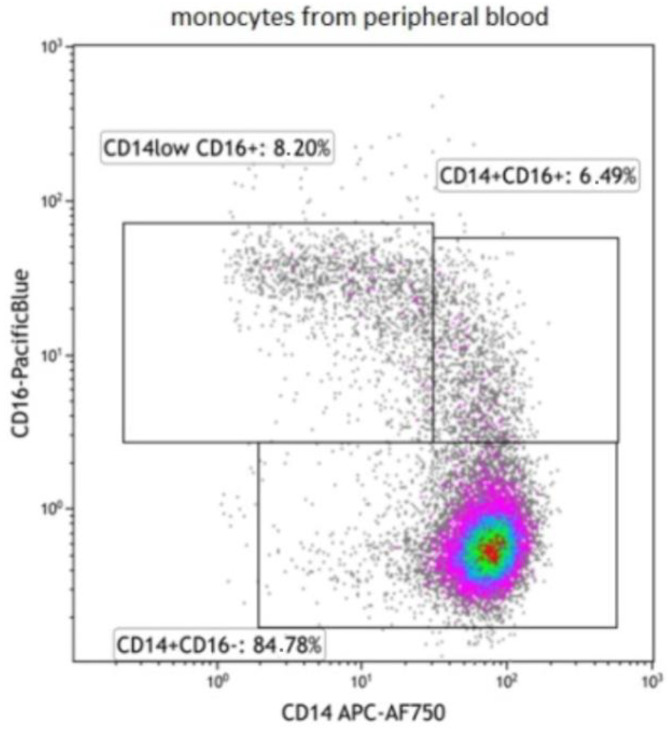
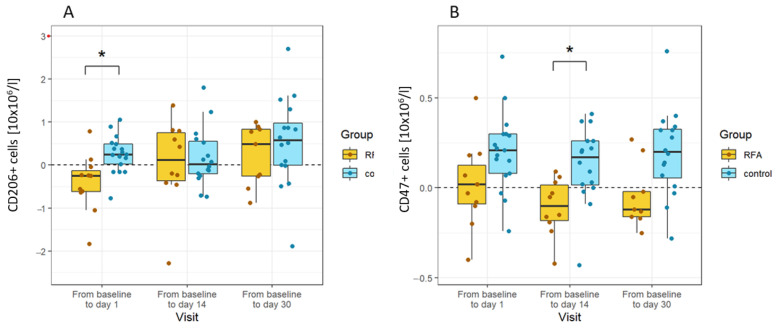
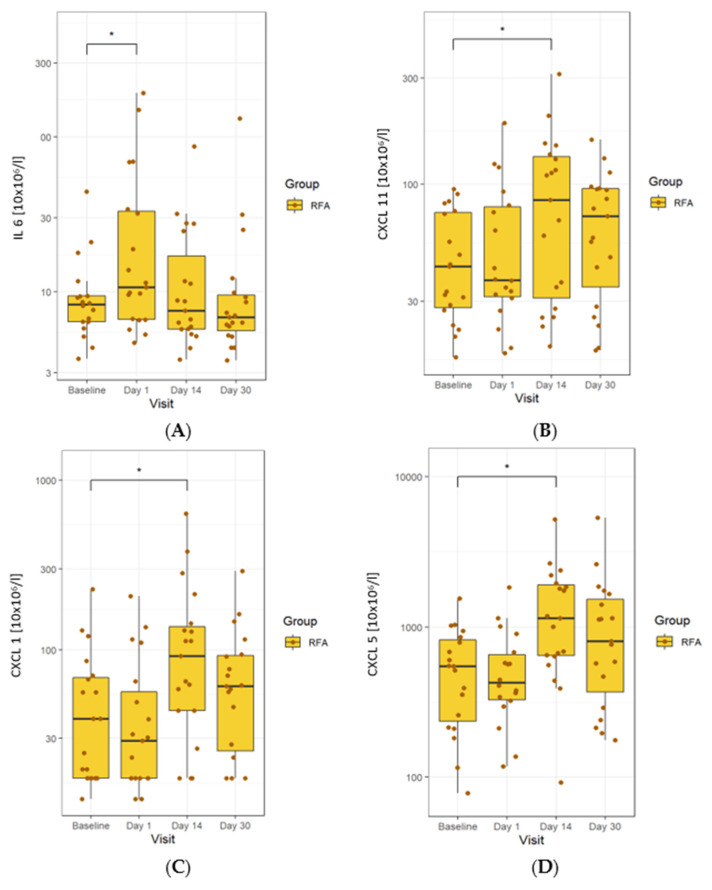
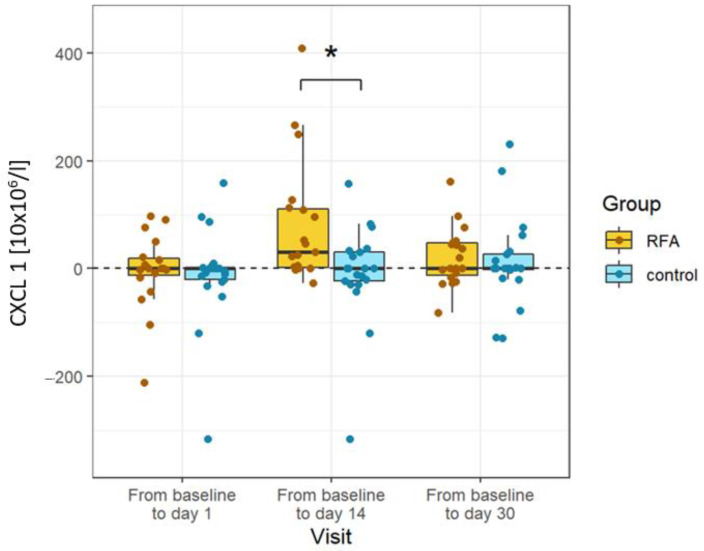
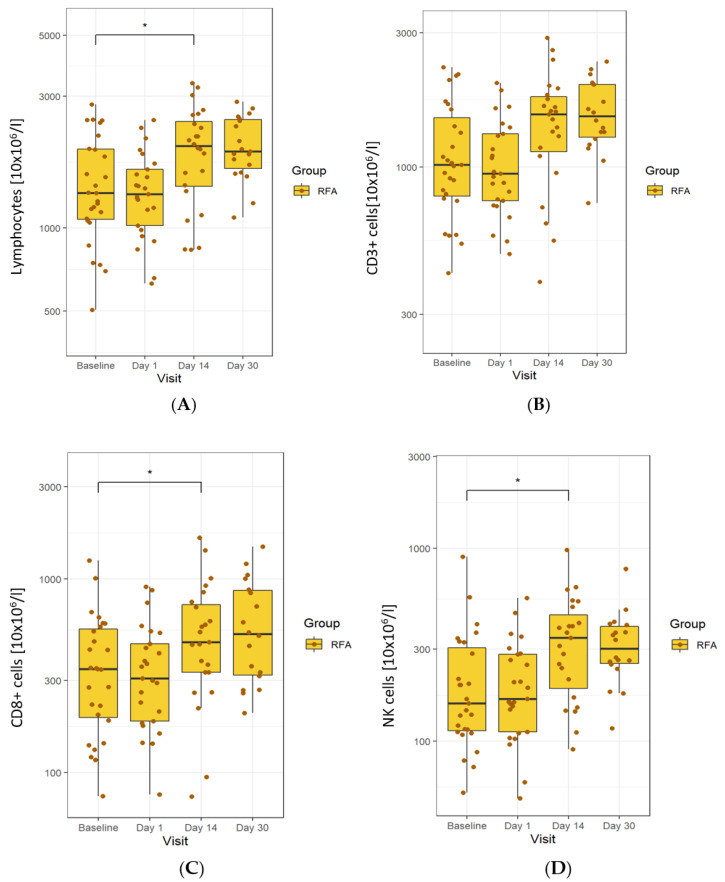
Radiofrequency ablation (RFA) is a mini-invasive loco-regional ablation technique that is increasingly being used as a palliative treatment for pancreatic cancer and cholangiocarcinoma. Ablation-triggered immune system stimulation has been proposed as a mechanism behind the systemic effects of RFA. The aim of our study was to investigate the immune response to endoluminal biliary RFA. Peripheral blood samples were collected from patients with pancreatic cancer and cholangiocarcinoma randomised to receive endoluminal biliary radiofrequency ablation + stent (19 patients) or stent only (21 patients). We observed an early increase in IL-6 levels and a delayed increase in CXCL1, CXCL5, and CXCL11 levels as well as an increase in CD8+ and NK cells. However, these changes were not specific to RFA treatment. Explicitly in response to RFA, we observed a delayed increase in serum CXCL1 levels and an early decrease in the number of anti-inflammatory CD206+ blood monocytes. Our study provides the first evidence of endoluminal biliary RFA-based regulation of the systemic immune response in patients with pancreatic cancer and cholangiocarcinoma. These changes were characterised by a general inflammatory response. RFA-specific activation of the adaptive immune system was not confirmed.
射频消融(RFA)是一种微创局部消融技术,越来越多地被用作胰腺癌和胆管癌的姑息治疗方法。消融引发的免疫系统刺激已被提出作为RFA全身效应背后的一种机制。我们研究的目的是调查腔内胆管RFA后的免疫反应。从随机接受腔内胆管射频消融+支架置入术的胰腺癌和胆管癌患者(19例)以及仅接受支架置入术的患者(21例)中采集外周血样本。我们观察到白细胞介素-6(IL-6)水平早期升高,CXC趋化因子配体1(CXCL1)、CXC趋化因子配体5(CXCL5)和CXC趋化因子配体11(CXCL11)水平延迟升高,以及CD8 +和自然杀伤(NK)细胞增加。然而,这些变化并非RFA治疗所特有。明确针对RFA,我们观察到血清CXCL1水平延迟升高,以及抗炎性CD206 +血液单核细胞数量早期减少。我们的研究首次提供了腔内胆管RFA对胰腺癌和胆管癌患者全身免疫反应进行调节的证据。这些变化的特征是一般性炎症反应。未证实适应性免疫系统的RFA特异性激活。