NHC Key Lab of Reproduction Regulation, Shanghai Institute of Planned Parenthood Research, Hospital of Obstetrics and Gynecology, Fudan University, Shanghai 200080, China.
Laboratory for Reproductive Immunology, Institute of Obstetrics and Gynecology, Hospital of Obstetrics and Gynecology, Fudan University, Shanghai 200080, China.
Biomolecules. 2022 Jun 19;12(6):849. doi: 10.3390/biom12060849.
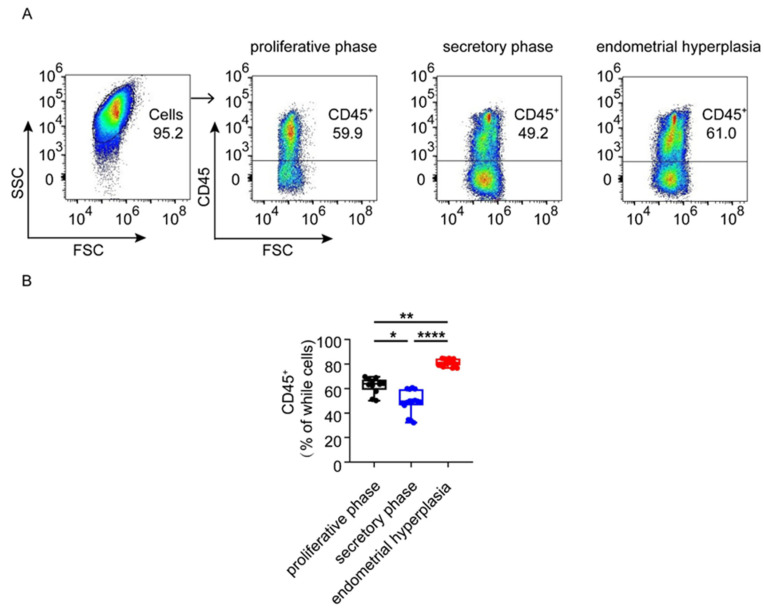
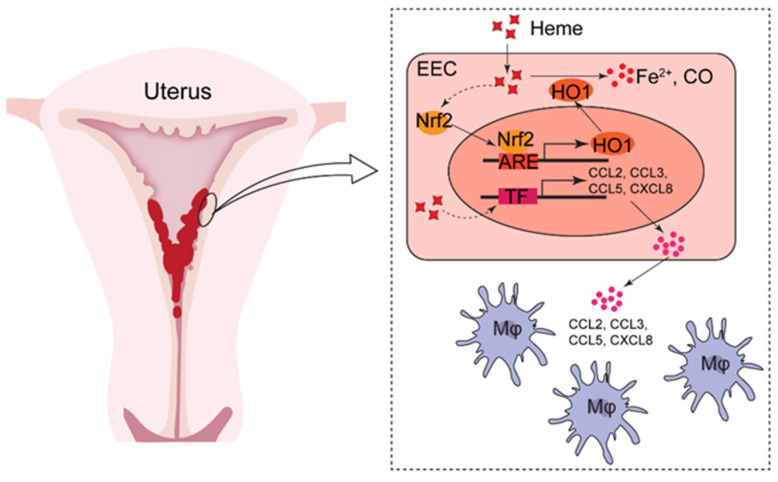
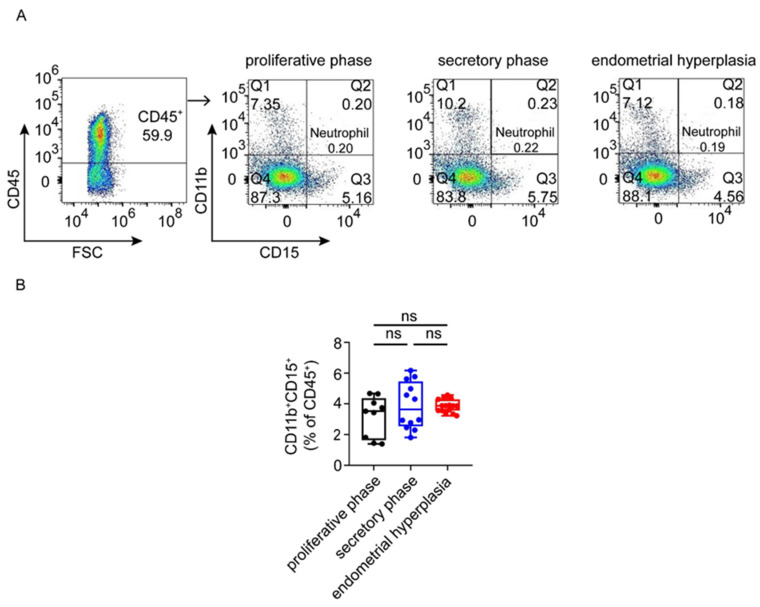
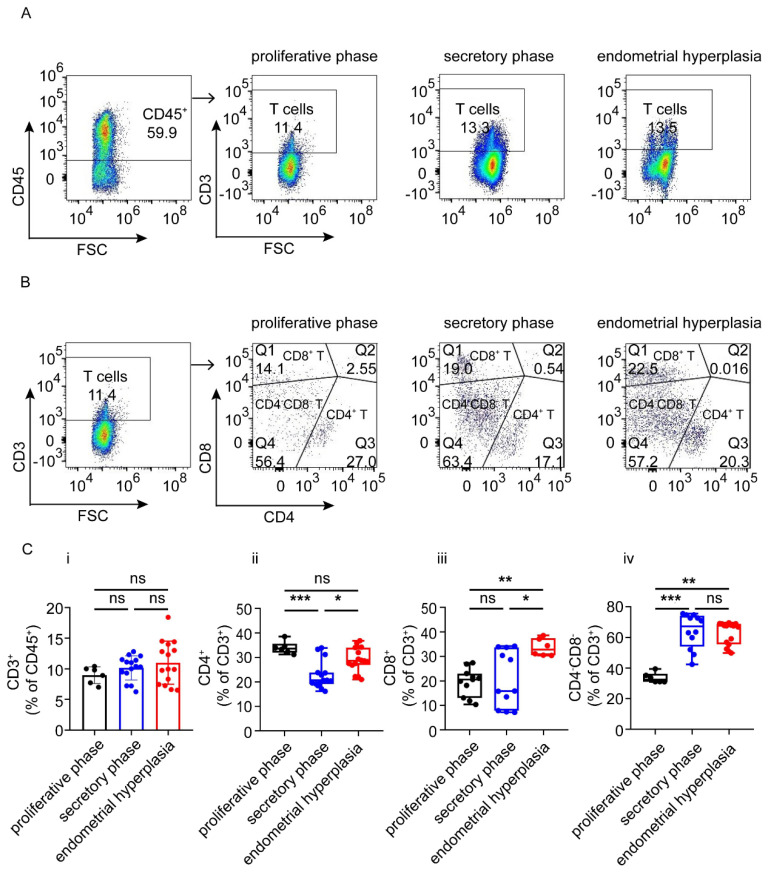
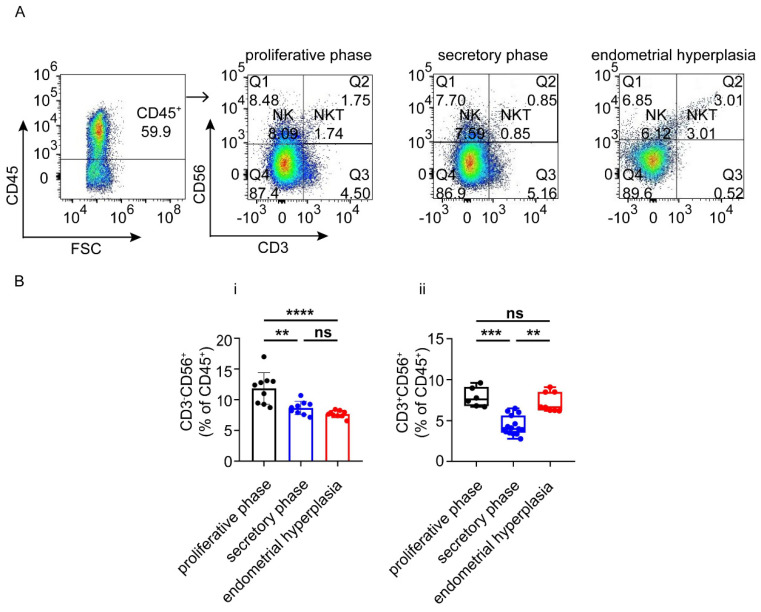
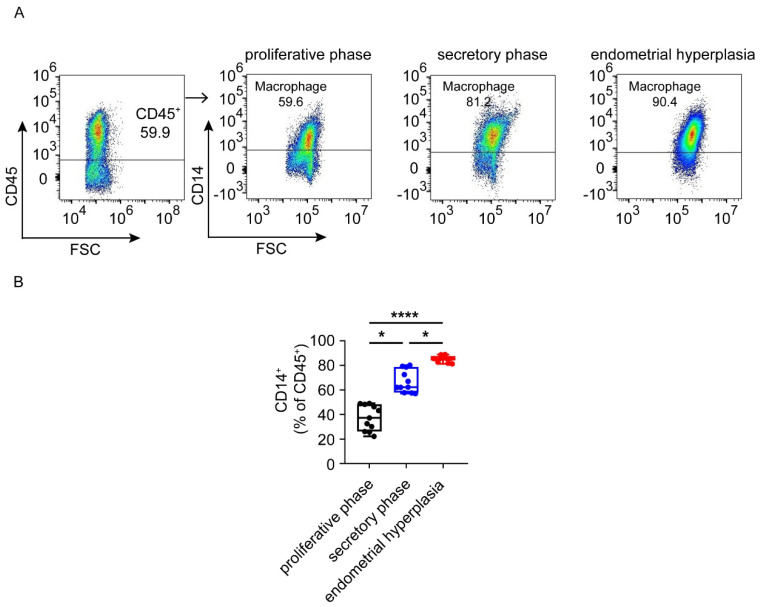
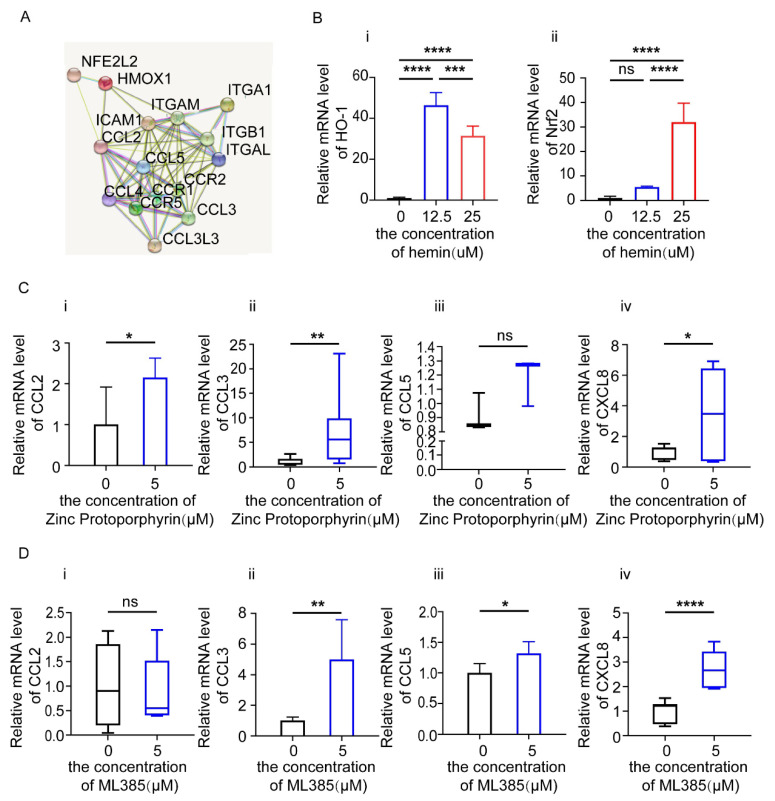
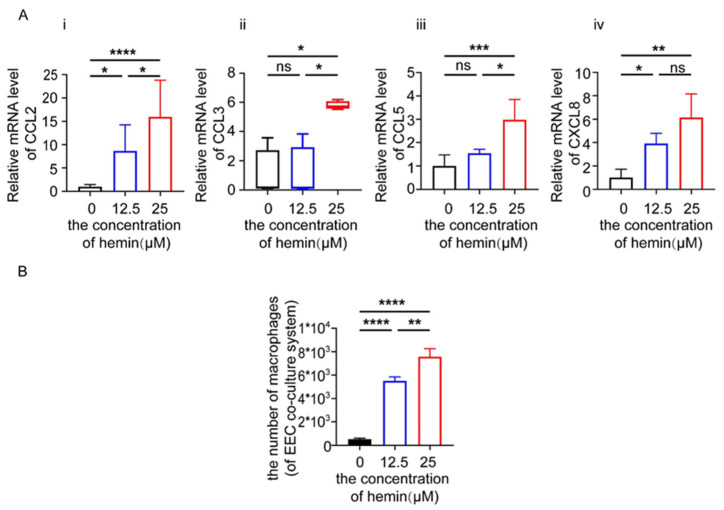
In patients, endometrial hyperplasia (EH) is often accompanied by abnormal uterine bleeding (AUB), which is prone to release large amounts of heme. However, the role of excess heme in the migration and infiltration of immune cells in EH complicated by AUB remains unknown. In this study, 45 patients with AUB were divided into three groups: a proliferative phase group (n = 15), a secretory phase group (n = 15) and EH (n = 15). We observed that immune cell subpopulations were significantly different among the three groups, as demonstrated by flow cytometry analysis. Of note, there was a higher infiltration of total immune cells and macrophages in the endometrium of patients with EH. Heme up-regulated the expression of heme oxygenase-1 (HO-1) and nuclear factor erythroid-2-related factor 2 (Nrf2) in endometrial epithelial cells (EECs) in vitro, as well as chemokine (e.g., CCL2, CCL3, CCL5, CXCL8) levels. Additionally, stimulation with heme led to the increased recruitment of THP-1 cells in an indirect EEC-THP-1 co-culture unit. These data suggest that sustained and excessive heme in patients with AUB may recruit macrophages by increasing the levels of several chemokines, contributing to the accumulation and infiltration of macrophages in the endometrium of EH patients, and the key molecules of heme metabolism, HO-1 and Nrf2, are also involved in this regulatory process.
在患者中,子宫内膜增生(EH)常伴有异常子宫出血(AUB),这容易释放大量的血红素。然而,EH 合并 AUB 中过量血红素在免疫细胞迁移和浸润中的作用尚不清楚。在这项研究中,45 名 AUB 患者被分为三组:增生期组(n = 15)、分泌期组(n = 15)和 EH 组(n = 15)。我们通过流式细胞术分析观察到三组之间免疫细胞亚群存在显著差异。值得注意的是,EH 患者的子宫内膜中总免疫细胞和巨噬细胞浸润更高。血红素在体外上调子宫内膜上皮细胞(EEC)中血红素加氧酶-1(HO-1)和核因子红细胞 2 相关因子 2(Nrf2)的表达,以及趋化因子(如 CCL2、CCL3、CCL5、CXCL8)水平。此外,血红素刺激导致在间接 EEC-THP-1 共培养单元中 THP-1 细胞的募集增加。这些数据表明,AUB 患者中持续和过量的血红素可能通过增加几种趋化因子的水平招募巨噬细胞,导致巨噬细胞在 EH 患者的子宫内膜中积累和浸润,血红素代谢的关键分子 HO-1 和 Nrf2 也参与了这一调节过程。