• 文献检索
  • 文档翻译
  • 深度研究
  • 学术资讯
  • Suppr Zotero 插件Zotero 插件
  • 邀请有礼
  • 套餐&价格
  • 历史记录
应用&插件
Suppr Zotero 插件Zotero 插件浏览器插件Mac 客户端Windows 客户端微信小程序
定价
高级版会员购买积分包购买API积分包
服务
文献检索文档翻译深度研究API 文档MCP 服务
关于我们
关于 Suppr公司介绍联系我们用户协议隐私条款
关注我们

Suppr 超能文献

核心技术专利:CN118964589B侵权必究
粤ICP备2023148730 号-1Suppr @ 2026

文献检索

告别复杂PubMed语法,用中文像聊天一样搜索,搜遍4000万医学文献。AI智能推荐,让科研检索更轻松。

立即免费搜索

文件翻译

保留排版,准确专业,支持PDF/Word/PPT等文件格式,支持 12+语言互译。

免费翻译文档

深度研究

AI帮你快速写综述,25分钟生成高质量综述,智能提取关键信息,辅助科研写作。

立即免费体验

精准肿瘤学深度学习综述

A Survey on Deep Learning for Precision Oncology.

作者信息

Wang Ching-Wei, Khalil Muhammad-Adil, Firdi Nabila Puspita

机构信息

Graduate Institute of Biomedical Engineering, National Taiwan University of Science and Technology, Taipei 106335, Taiwan.

Graduate Institute of Applied Science and Technology, National Taiwan University of Science and Technology, Taipei 106335, Taiwan.

出版信息

Diagnostics (Basel). 2022 Jun 17;12(6):1489. doi: 10.3390/diagnostics12061489.

DOI:10.3390/diagnostics12061489
PMID:35741298
原文链接:https://pmc.ncbi.nlm.nih.gov/articles/PMC9222056/
Abstract

Precision oncology, which ensures optimized cancer treatment tailored to the unique biology of a patient's disease, has rapidly developed and is of great clinical importance. Deep learning has become the main method for precision oncology. This paper summarizes the recent deep-learning approaches relevant to precision oncology and reviews over 150 articles within the last six years. First, we survey the deep-learning approaches categorized by various precision oncology tasks, including the estimation of dose distribution for treatment planning, survival analysis and risk estimation after treatment, prediction of treatment response, and patient selection for treatment planning. Secondly, we provide an overview of the studies per anatomical area, including the brain, bladder, breast, bone, cervix, esophagus, gastric, head and neck, kidneys, liver, lung, pancreas, pelvis, prostate, and rectum. Finally, we highlight the challenges and discuss potential solutions for future research directions.

摘要

精准肿瘤学能够确保根据患者疾病的独特生物学特性量身定制优化的癌症治疗方案,发展迅速且具有重大临床意义。深度学习已成为精准肿瘤学的主要方法。本文总结了近期与精准肿瘤学相关的深度学习方法,并回顾了过去六年内的150多篇文章。首先,我们调查了按各种精准肿瘤学任务分类的深度学习方法,包括治疗计划的剂量分布估计、治疗后的生存分析和风险估计、治疗反应预测以及治疗计划的患者选择。其次,我们概述了各解剖区域的研究,包括脑、膀胱、乳腺、骨、宫颈、食管、胃、头颈部、肾脏、肝脏、肺、胰腺、骨盆、前列腺和直肠。最后,我们强调了挑战并讨论了未来研究方向的潜在解决方案。
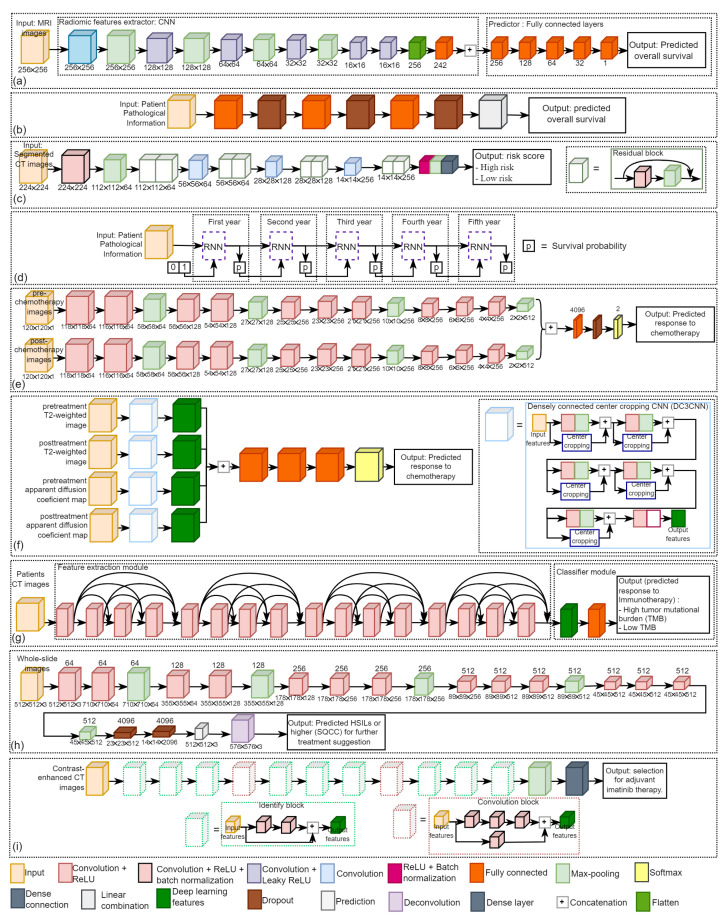
https://cdn.ncbi.nlm.nih.gov/pmc/blobs/3e83/9222056/e51e96789b26/diagnostics-12-01489-g004.jpg
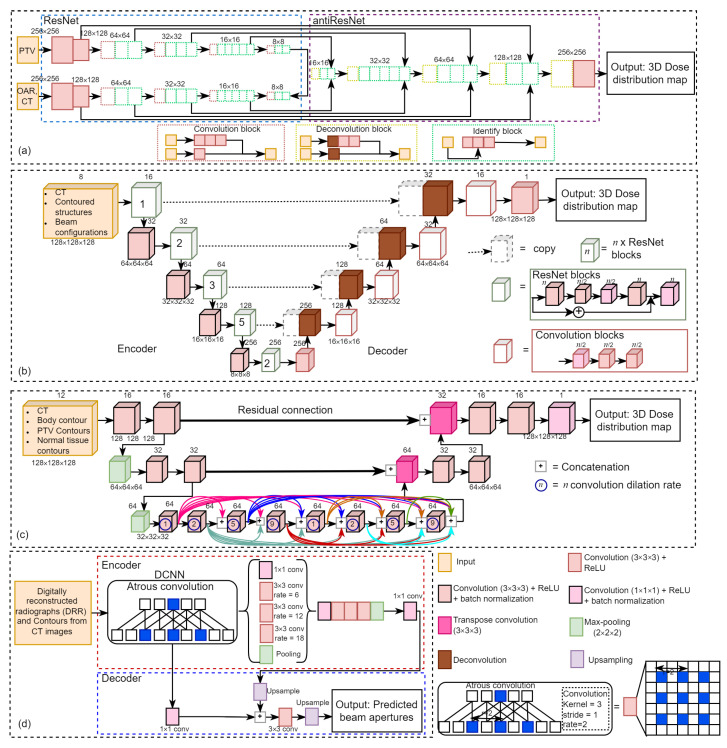
https://cdn.ncbi.nlm.nih.gov/pmc/blobs/3e83/9222056/53e87df5bfd3/diagnostics-12-01489-g001.jpg
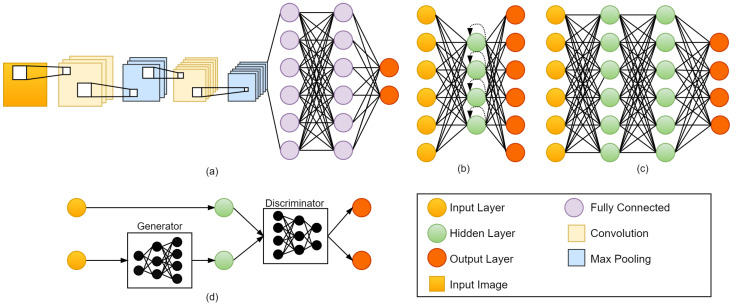
https://cdn.ncbi.nlm.nih.gov/pmc/blobs/3e83/9222056/45c0f1c5142a/diagnostics-12-01489-g002.jpg
https://cdn.ncbi.nlm.nih.gov/pmc/blobs/3e83/9222056/169fe5390459/diagnostics-12-01489-g003.jpg
https://cdn.ncbi.nlm.nih.gov/pmc/blobs/3e83/9222056/e51e96789b26/diagnostics-12-01489-g004.jpg
https://cdn.ncbi.nlm.nih.gov/pmc/blobs/3e83/9222056/53e87df5bfd3/diagnostics-12-01489-g001.jpg
https://cdn.ncbi.nlm.nih.gov/pmc/blobs/3e83/9222056/45c0f1c5142a/diagnostics-12-01489-g002.jpg
https://cdn.ncbi.nlm.nih.gov/pmc/blobs/3e83/9222056/169fe5390459/diagnostics-12-01489-g003.jpg
https://cdn.ncbi.nlm.nih.gov/pmc/blobs/3e83/9222056/e51e96789b26/diagnostics-12-01489-g004.jpg

相似文献

1
A Survey on Deep Learning for Precision Oncology.精准肿瘤学深度学习综述
Diagnostics (Basel). 2022 Jun 17;12(6):1489. doi: 10.3390/diagnostics12061489.
2
Opportunities and challenges in interpretable deep learning for drug sensitivity prediction of cancer cells.用于癌细胞药物敏感性预测的可解释深度学习中的机遇与挑战。
Front Bioinform. 2022 Nov 17;2:1036963. doi: 10.3389/fbinf.2022.1036963. eCollection 2022.
3
Artificial Intelligence for Precision Oncology.人工智能在精准肿瘤学中的应用。
Adv Exp Med Biol. 2022;1361:249-268. doi: 10.1007/978-3-030-91836-1_14.
4
Robotic-assisted minimally invasive surgery for gynecologic and urologic oncology: an evidence-based analysis.机器人辅助微创手术在妇科和泌尿外科肿瘤学中的应用:一项基于证据的分析。
Ont Health Technol Assess Ser. 2010;10(27):1-118. Epub 2010 Dec 1.
5
Deep learning-based CAD schemes for the detection and classification of lung nodules from CT images: A survey.基于深度学习的 CT 图像肺结节检测和分类 CAD 方案:综述。
J Xray Sci Technol. 2020;28(4):591-617. doi: 10.3233/XST-200660.
6
Volume and health outcomes: evidence from systematic reviews and from evaluation of Italian hospital data.医疗服务量与健康结果:来自系统评价及意大利医院数据评估的证据
Epidemiol Prev. 2017 Sep-Dec;41(5-6 (Suppl 2)):1-128. doi: 10.19191/EP17.5-6S2.P001.100.
7
A survey on deep learning in medical image analysis.深度学习在医学图像分析中的应用研究综述。
Med Image Anal. 2017 Dec;42:60-88. doi: 10.1016/j.media.2017.07.005. Epub 2017 Jul 26.
8
Application of deep learning to auto-delineation of target volumes and organs at risk in radiotherapy.深度学习在放射治疗中自动勾画靶区和危及器官的应用。
Cancer Radiother. 2022 May;26(3):494-501. doi: 10.1016/j.canrad.2021.08.020. Epub 2021 Oct 26.
9
Attention-aware 3D U-Net convolutional neural network for knowledge-based planning 3D dose distribution prediction of head-and-neck cancer.基于注意力的 3D U-Net 卷积神经网络在头颈部癌症知识引导的 3D 剂量分布预测中的应用。
J Appl Clin Med Phys. 2022 Jul;23(7):e13630. doi: 10.1002/acm2.13630. Epub 2022 May 9.
10
The use of artificial intelligence, machine learning and deep learning in oncologic histopathology.人工智能、机器学习和深度学习在肿瘤组织病理学中的应用。
J Oral Pathol Med. 2020 Oct;49(9):849-856. doi: 10.1111/jop.13042. Epub 2020 Jun 15.

引用本文的文献

1
Innovation and challenges of artificial intelligence technology in personalized healthcare.人工智能技术在个性化医疗保健中的创新与挑战。
Sci Rep. 2024 Aug 16;14(1):18994. doi: 10.1038/s41598-024-70073-7.
2
The Feasibility and Performance of Total Hip Replacement Prediction Deep Learning Algorithm with Real World Data.基于真实世界数据的全髋关节置换预测深度学习算法的可行性与性能
Bioengineering (Basel). 2023 Apr 9;10(4):458. doi: 10.3390/bioengineering10040458.
3
Application of Deep Learning in Histopathology Images of Breast Cancer: A Review.

本文引用的文献

1
A Weakly Supervised Deep Learning Method for Guiding Ovarian Cancer Treatment and Identifying an Effective Biomarker.一种用于指导卵巢癌治疗和识别有效生物标志物的弱监督深度学习方法。
Cancers (Basel). 2022 Mar 24;14(7):1651. doi: 10.3390/cancers14071651.
2
StainNet: A Fast and Robust Stain Normalization Network.StainNet:一种快速且稳健的染色归一化网络。
Front Med (Lausanne). 2021 Nov 5;8:746307. doi: 10.3389/fmed.2021.746307. eCollection 2021.
3
Deep learning for bone marrow cell detection and classification on whole-slide images.
深度学习在乳腺癌组织病理学图像中的应用:综述
Micromachines (Basel). 2022 Dec 11;13(12):2197. doi: 10.3390/mi13122197.
4
Artificial intelligence in pancreatic cancer.胰腺癌中的人工智能。
Theranostics. 2022 Oct 3;12(16):6931-6954. doi: 10.7150/thno.77949. eCollection 2022.
用于全切片图像骨髓细胞检测与分类的深度学习
Med Image Anal. 2022 Jan;75:102270. doi: 10.1016/j.media.2021.102270. Epub 2021 Oct 16.
4
Artificial intelligence-assisted fast screening cervical high grade squamous intraepithelial lesion and squamous cell carcinoma diagnosis and treatment planning.人工智能辅助快速筛查宫颈高级别鳞状上皮内病变及鳞癌诊断及治疗计划。
Sci Rep. 2021 Aug 10;11(1):16244. doi: 10.1038/s41598-021-95545-y.
5
Deep Learning Fast Screening Approach on Cytological Whole Slides for Thyroid Cancer Diagnosis.用于甲状腺癌诊断的细胞学全切片深度学习快速筛查方法
Cancers (Basel). 2021 Aug 2;13(15):3891. doi: 10.3390/cancers13153891.
6
Clinically Applicable Segmentation of Head and Neck Anatomy for Radiotherapy: Deep Learning Algorithm Development and Validation Study.临床可应用的头颈部解剖结构勾画:放射治疗深度学习算法的开发与验证研究。
J Med Internet Res. 2021 Jul 12;23(7):e26151. doi: 10.2196/26151.
7
Clinical implementation of automated treatment planning for whole-brain radiotherapy.全脑放射治疗自动化治疗计划的临床实施。
J Appl Clin Med Phys. 2021 Sep;22(9):94-102. doi: 10.1002/acm2.13350. Epub 2021 Jul 10.
8
CT synthesis from MRI using multi-cycle GAN for head-and-neck radiation therapy.使用多周期生成对抗网络从磁共振成像合成计算机断层扫描用于头颈部放射治疗
Comput Med Imaging Graph. 2021 Jul;91:101953. doi: 10.1016/j.compmedimag.2021.101953. Epub 2021 Jun 26.
9
Deep learning radiomics-based prediction of distant metastasis in patients with locally advanced rectal cancer after neoadjuvant chemoradiotherapy: A multicentre study.深度学习影像组学预测新辅助放化疗后局部进展期直肠癌患者远处转移:一项多中心研究。
EBioMedicine. 2021 Jul;69:103442. doi: 10.1016/j.ebiom.2021.103442. Epub 2021 Jun 20.
10
Technical Note: Dose prediction for head and neck radiotherapy using a three-dimensional dense dilated U-net architecture.技术说明:使用三维密集扩张 U 型网络架构对头颈部放疗的剂量预测。
Med Phys. 2021 Sep;48(9):5567-5573. doi: 10.1002/mp.14827. Epub 2021 Jun 22.