
基于基因编辑的治疗技术
Gene Editing-Based Technologies for Treatment.
作者信息
Rahimmanesh Ilnaz, Boshtam Maryam, Kouhpayeh Shirin, Khanahmad Hossein, Dabiri Arezou, Ahangarzadeh Shahrzad, Esmaeili Yasaman, Bidram Elham, Vaseghi Golnaz, Haghjooy Javanmard Shaghayegh, Shariati Laleh, Zarrabi Ali, Varma Rajender S
机构信息
Applied Physiology Research Center, Cardiovascular Research Institute, Isfahan University of Medical Sciences, Isfahan 73461-81746, Iran.
Isfahan Cardiovascular Research Center, Cardiovascular Research Institute, Isfahan University of Medical Sciences, Isfahan 81583-88994, Iran.
出版信息
Biology (Basel). 2022 Jun 4;11(6):862. doi: 10.3390/biology11060862.
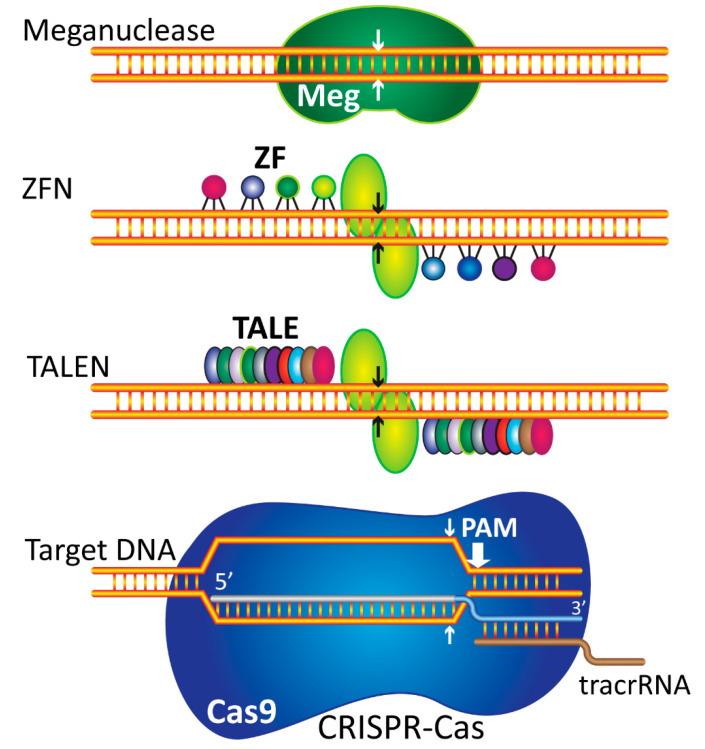
Beta (β)-thalassemia is a group of human inherited abnormalities caused by various molecular defects, which involves a decrease or cessation in the balanced synthesis of the β-globin chains in hemoglobin structure. Traditional treatment for β-thalassemia major is allogeneic bone marrow transplantation (BMT) from a completely matched donor. The limited number of human leukocyte antigen (HLA)-matched donors, long-term use of immunosuppressive regimen and higher risk of immunological complications have limited the application of this therapeutic approach. Furthermore, despite improvements in transfusion practices and chelation treatment, many lingering challenges have encouraged researchers to develop newer therapeutic strategies such as nanomedicine and gene editing. One of the most powerful arms of genetic manipulation is gene editing tools, including transcription activator-like effector nucleases, zinc-finger nucleases, and clustered regularly interspaced short palindromic repeat-Cas-associated nucleases. These tools have concentrated on γ- or β-globin addition, regulating the transcription factors involved in expression of endogenous γ-globin such as KLF1, silencing of inhibitors including BCL11A, SOX6, and LRF/ZBTB7A, and gene repair strategies. In this review article, we present a systematic overview of the appliances of gene editing tools for β-thalassemia treatment and paving the way for patients' therapy.
β地中海贫血是由多种分子缺陷引起的一组人类遗传性异常疾病,其涉及血红蛋白结构中β珠蛋白链平衡合成的减少或停止。重型β地中海贫血的传统治疗方法是来自完全匹配供体的异基因骨髓移植(BMT)。人类白细胞抗原(HLA)匹配供体数量有限、免疫抑制方案的长期使用以及免疫并发症的较高风险限制了这种治疗方法的应用。此外,尽管输血操作和螯合治疗有所改进,但许多遗留挑战促使研究人员开发更新的治疗策略,如纳米医学和基因编辑。基因操作最强大的手段之一是基因编辑工具,包括转录激活样效应核酸酶、锌指核酸酶和规律成簇间隔短回文重复序列-Cas相关核酸酶。这些工具除了专注于γ或β珠蛋白外,还调节参与内源性γ珠蛋白表达的转录因子,如KLF1,沉默包括BCL11A、SOX6和LRF/ZBTB7A在内的抑制剂,以及基因修复策略。在这篇综述文章中,我们对基因编辑工具在β地中海贫血治疗中的应用进行了系统概述,并为患者的治疗铺平道路。


 Zotero 插件