Sallam Malik, Mahafzah Azmi, Şahin Gülşen Özkaya
Department of Pathology, Microbiology and Forensic Medicine, School of Medicine, The University of Jordan, Amman 11942, Jordan.
Department of Clinical Laboratories and Forensic Medicine, Jordan University Hospital, Amman 11942, Jordan.
Healthcare (Basel). 2022 May 24;10(6):973. doi: 10.3390/healthcare10060973.
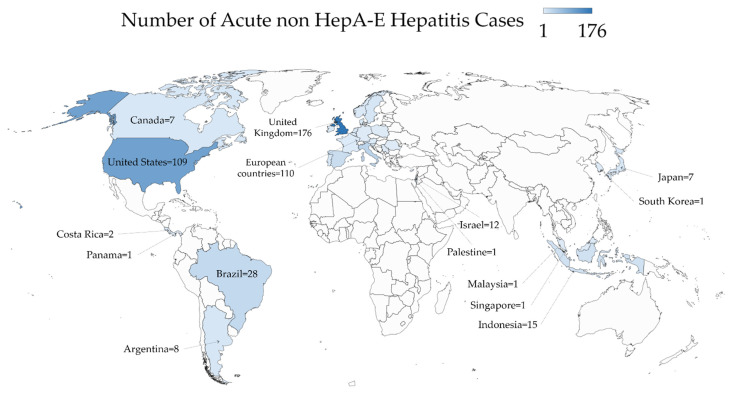
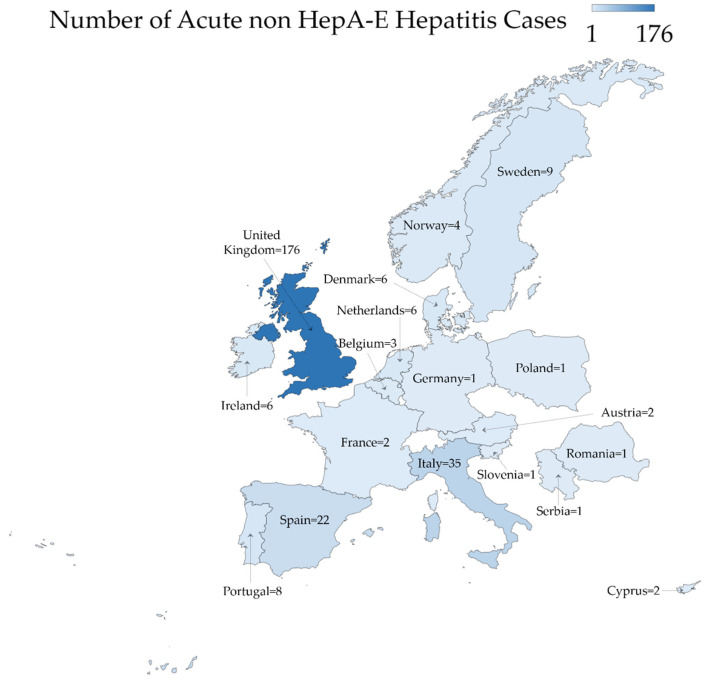
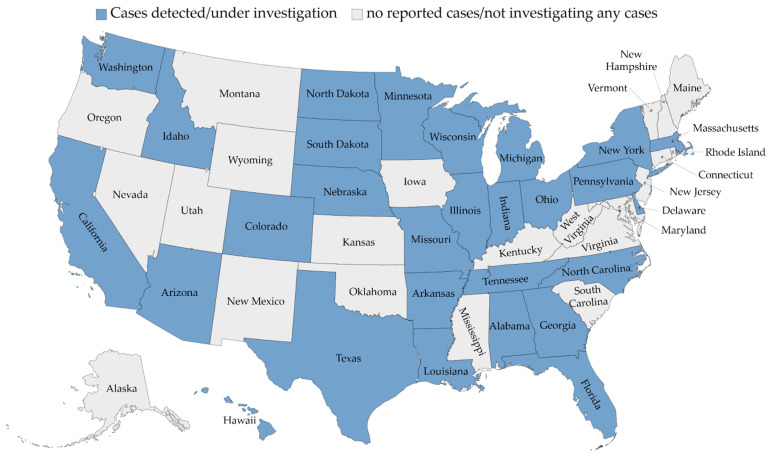
Several clusters and individual cases of acute hepatitis have been reported in the US, Europe and recently in Asia and Central America since October 2021. A laboratory investigation of the common viral hepatitis agents (HAV, HBV, HCV, HDV and HEV) yielded negative results prompting the use of the term "acute non HepA-E hepatitis" to describe this condition. The cases were characterized by the manifestations of acute hepatitis (abdominal pain, vomiting, diarrhea, jaundice and very high levels of liver enzymes) affecting children with a median age of 3-4 years. The exact underlying etiology has not been revealed yet; however, a leading hypothesis is that an infectious agent is the culprit, underlying cause or a risk factor for acute non HepA-E hepatitis occurrence. So far, laboratory testing has shown the presence of the group F human adenovirus serotype 41 (HAdV-F41) in about three-fourths of the investigated cases. As of 13 May 2022, more than 450 cases were reported worldwide, the majority of which were in the UK ( = 176), the US ( = 109), 13 European countries (at least 103 cases) and in Argentina, Brazil, Canada, Costa Rica, Indonesia, Israel, Japan, Palestine, Panama, Singapore and South Korea. Vigilant surveillance and epidemiologic investigations to identify further cases are warranted to delineate the features of this emergent public health issue. The possible role of environmental and toxic agents including foodborne toxins should also be considered. Specific guidelines for identification of further cases are necessary, particularly in low-income settings where testing for adenoviruses is not considered routinely. A genetic analysis of HAdV-F41 isolates is recommended to assess the potential changes in the virus genome with subsequent possible altered virus behavior. Immunopathogenesis is another possibility that should be evaluated considering the lack of viral structures in liver biopsies of the affected children in the US.
自2021年10月以来,美国、欧洲以及最近亚洲和中美洲都报告了几起急性肝炎聚集性病例和个别病例。对常见病毒性肝炎病原体(甲型肝炎病毒、乙型肝炎病毒、丙型肝炎病毒、丁型肝炎病毒和戊型肝炎病毒)进行的实验室调查结果均为阴性,因此使用“急性非甲戊型肝炎”一词来描述这种情况。这些病例的特征是出现急性肝炎的症状(腹痛、呕吐、腹泻、黄疸和肝酶水平极高),患病儿童的中位年龄为3至4岁。确切的潜在病因尚未明确;然而,一个主要假说是一种感染因子是急性非甲戊型肝炎发生的罪魁祸首、根本原因或风险因素。到目前为止,实验室检测显示,在约四分之三的受调查病例中存在F组41型人类腺病毒(HAdV-F41)。截至2022年5月13日,全球报告了450多例病例,其中大多数在英国(176例)、美国(109例)、13个欧洲国家(至少103例)以及阿根廷、巴西、加拿大、哥斯达黎加、印度尼西亚、以色列、日本、巴勒斯坦、巴拿马、新加坡和韩国。有必要进行警惕的监测和流行病学调查以发现更多病例,从而描绘出这一突发公共卫生问题的特征。还应考虑环境和有毒物质(包括食源性毒素)的可能作用。需要制定识别更多病例的具体指南,特别是在不常规进行腺病毒检测的低收入环境中。建议对HAdV-F41分离株进行基因分析,以评估病毒基因组的潜在变化以及随后可能改变的病毒行为。考虑到美国患病儿童肝活检中缺乏病毒结构,免疫发病机制是另一种应评估的可能性。