Department of Physiology, School of Medical Sciences, Universiti Sains Malaysia, Kubang Kerian 16150, Kelantan, Malaysia.
Int J Mol Sci. 2022 Jun 19;23(12):6827. doi: 10.3390/ijms23126827.
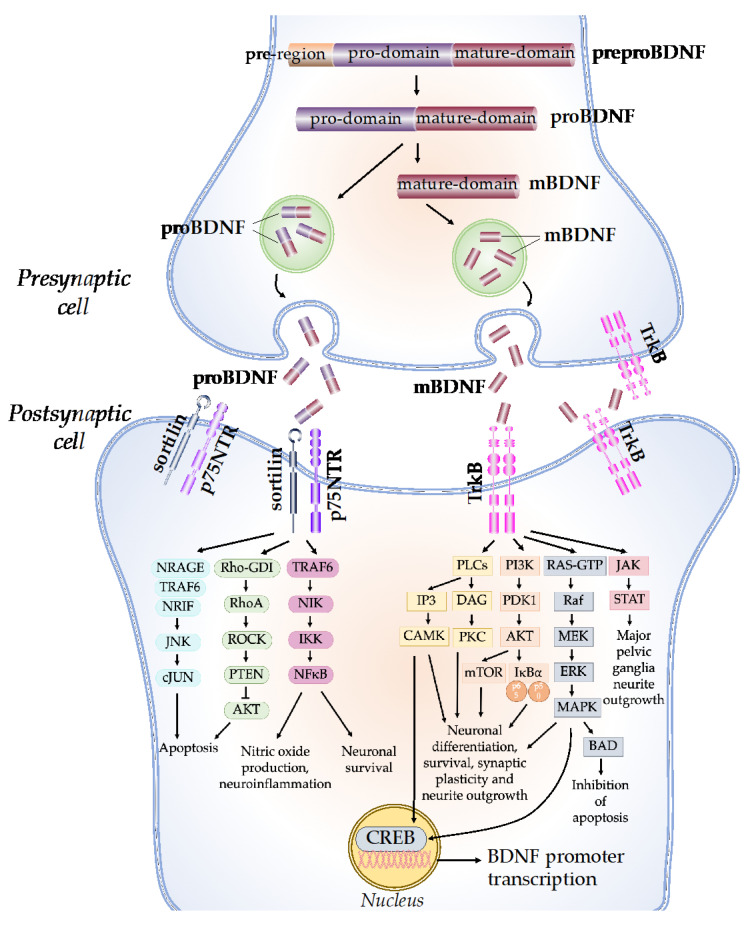
Neurotrophins, such as brain-derived neurotrophic factor (BDNF), are essential for neuronal survival and growth. The signaling cascades initiated by BDNF and its receptor are the key regulators of synaptic plasticity, which plays important role in learning and memory formation. Changes in BDNF levels and signaling pathways have been identified in several neurodegenerative diseases, including Alzheimer's disease, Parkinson's disease, and Huntington's disease, and have been linked with the symptoms and course of these diseases. This review summarizes the current understanding of the role of BDNF in several neurodegenerative diseases, as well as the underlying molecular mechanism. The therapeutic potential of BDNF treatment is also discussed, in the hope of discovering new avenues for the treatment of neurodegenerative diseases.
神经递质,如脑源性神经营养因子(BDNF),对神经元的存活和生长至关重要。BDNF 及其受体引发的信号级联反应是突触可塑性的关键调节剂,而突触可塑性在学习和记忆形成中起着重要作用。BDNF 水平和信号通路的变化已在几种神经退行性疾病中得到鉴定,包括阿尔茨海默病、帕金森病和亨廷顿病,并与这些疾病的症状和病程有关。这篇综述总结了目前对 BDNF 在几种神经退行性疾病中的作用的理解,以及潜在的分子机制。还讨论了 BDNF 治疗的治疗潜力,希望能为神经退行性疾病的治疗开辟新途径。