• 文献检索
  • 文档翻译
  • 深度研究
  • 学术资讯
  • Suppr Zotero 插件Zotero 插件
  • 邀请有礼
  • 套餐&价格
  • 历史记录
应用&插件
Suppr Zotero 插件Zotero 插件浏览器插件Mac 客户端Windows 客户端微信小程序
定价
高级版会员购买积分包购买API积分包
服务
文献检索文档翻译深度研究API 文档MCP 服务
关于我们
关于 Suppr公司介绍联系我们用户协议隐私条款
关注我们

Suppr 超能文献

核心技术专利:CN118964589B侵权必究
粤ICP备2023148730 号-1Suppr @ 2026

文献检索

告别复杂PubMed语法,用中文像聊天一样搜索,搜遍4000万医学文献。AI智能推荐,让科研检索更轻松。

立即免费搜索

文件翻译

保留排版,准确专业,支持PDF/Word/PPT等文件格式,支持 12+语言互译。

免费翻译文档

深度研究

AI帮你快速写综述,25分钟生成高质量综述,智能提取关键信息,辅助科研写作。

立即免费体验

COVID-19 引起的味觉障碍及恢复:与嗅觉障碍和口腔健康行为的关联。

COVID-19 Induced Taste Dysfunction and Recovery: Association with Smell Dysfunction and Oral Health Behaviour.

机构信息

Department of Restorative Dentistry, Dundee Dental Hospital and School, University of Dundee, Dundee DD1 4HR, UK.

出版信息

Medicina (Kaunas). 2022 May 26;58(6):715. doi: 10.3390/medicina58060715.

DOI:10.3390/medicina58060715
PMID:35743978
原文链接:https://pmc.ncbi.nlm.nih.gov/articles/PMC9231283/
Abstract

Background and Objectives: Disruption to taste and smell are common symptoms of COVID-19 infection. The current literature overlooks taste symptoms and tends to focus on the sense of smell. Persisting cases (>28 days) of taste dysfunction are increasingly recognised as a major future healthcare challenge. This study focuses on the severity and recovery of COVID-19 induced taste loss and association with olfactory symptoms, lifestyle and oral health factors. Materials and Methods: This study was a cross-sectional survey comparing 182 rapid taste recovery participants (≤28 days) with 47 participants with prolonged taste recovery >28 days. Analyses of taste loss in association with smell loss, age, sex, illness severity, diet, BMI, vitamin-D supplementation, antidepressants, alcohol use, smoking, brushing frequency, flossing, missing teeth, appliances and number of dental restorations were conducted. Differences in the severity of the loss of sour, sweet, salt, bitter and umami tastes were explored. Results: Both the severity and the duration of taste and smell loss were closely correlated (p < 0.001). Salt taste was significantly less affected than all other taste qualities (p < 0.001). Persisting taste loss was associated with older age (mean ± 95% CI = 31.73 ± 1.23 years vs. 36.66 ± 3.59 years, p < 0.001) and reduced likelihood of using floss (odds ratio ± 95% CI = 2.22 (1.15−4.25), p = 0.047). Conclusions: Smell and taste loss in COVID-19 are closely related, although a minority of individuals can experience taste or smell dysfunction in the absence of the other. The taste of salt may be less severely affected than other taste qualities and future work exploring this finding objectively is indicated. The association of flossing with rapid taste recovery adds to the growing evidence of a link between good periodontal health and favourable COVID-19 outcomes.

摘要

背景和目的

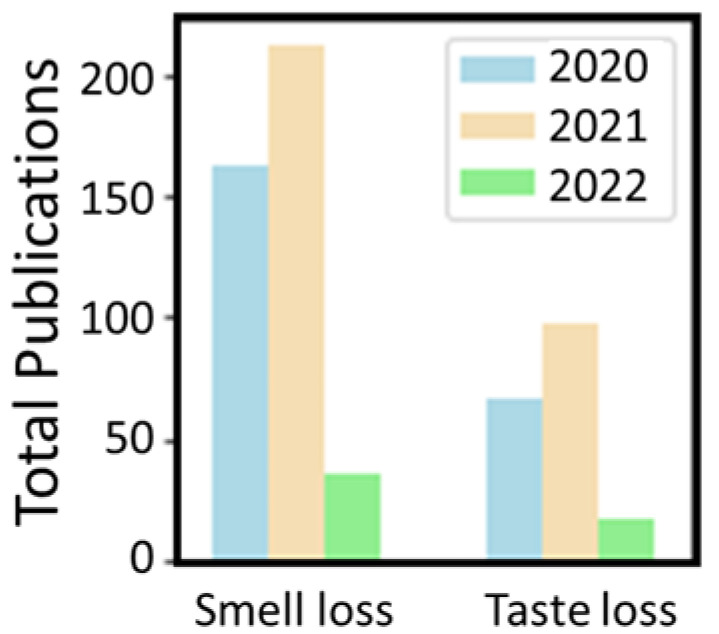
味觉和嗅觉丧失是 COVID-19 感染的常见症状。目前的文献忽略了味觉症状,倾向于关注嗅觉。越来越多的人认识到持续超过 28 天的味觉障碍是未来主要的医疗保健挑战。本研究侧重于 COVID-19 引起的味觉丧失的严重程度和恢复情况,以及与嗅觉症状、生活方式和口腔健康因素的关联。

材料和方法

本研究为一项横断面调查,比较了 182 例快速味觉恢复参与者(≤28 天)和 47 例味觉恢复时间延长(>28 天)的患者。分析了味觉丧失与嗅觉丧失、年龄、性别、疾病严重程度、饮食、BMI、维生素 D 补充剂、抗抑郁药、饮酒、吸烟、刷牙频率、使用牙线、缺牙、修复体和牙修复数量的关系。探讨了酸味、甜味、咸味、苦味和鲜味丧失严重程度的差异。

结果

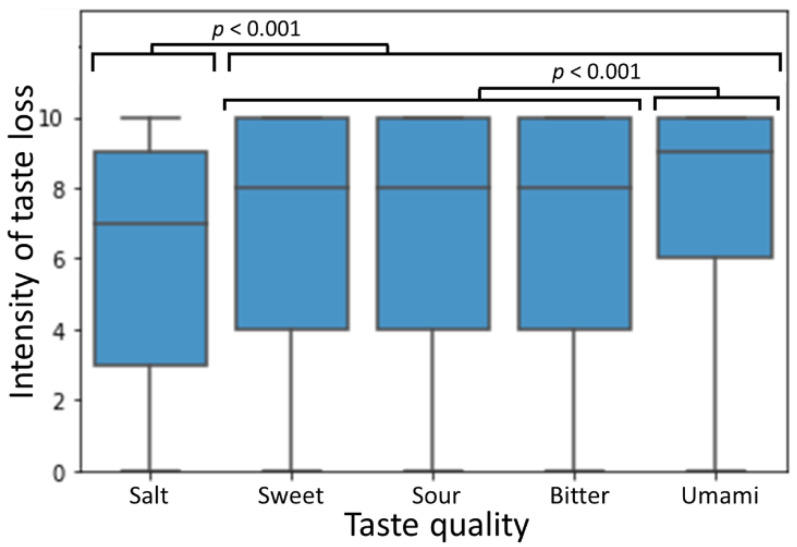
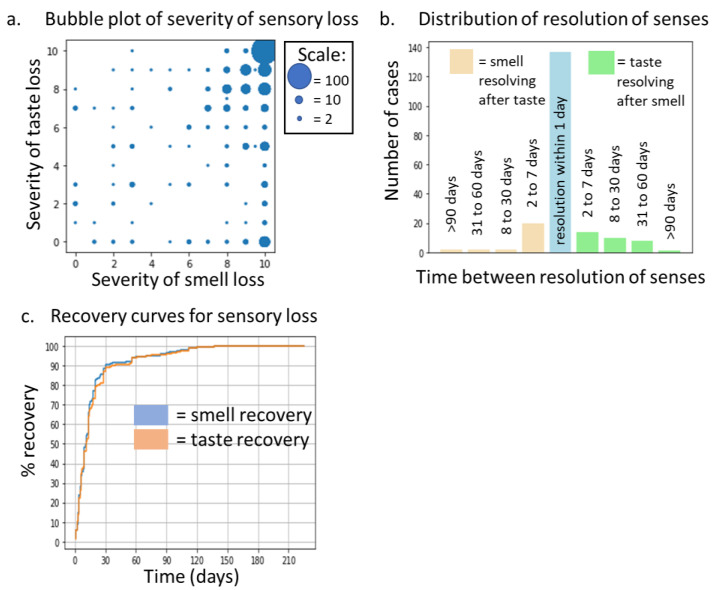
味觉和嗅觉丧失的严重程度和持续时间密切相关(p<0.001)。与其他味觉质量相比,咸味受影响明显更小(p<0.001)。味觉持续丧失与年龄较大(平均±95%CI=31.73±1.23 岁比 36.66±3.59 岁,p<0.001)和使用牙线可能性降低有关(比值比±95%CI=2.22(1.15−4.25),p=0.047)。

结论

COVID-19 患者的嗅觉和味觉丧失密切相关,尽管少数患者可能会出现另一种感觉正常而另一种异常的情况。与其他味觉质量相比,盐的味觉可能受影响较小,需要进一步的客观研究来探索这一发现。使用牙线与快速味觉恢复有关,这增加了牙周健康与 COVID-19 良好结局之间存在关联的证据。
https://cdn.ncbi.nlm.nih.gov/pmc/blobs/b4e0/9231283/e15aa359392e/medicina-58-00715-g003.jpg
https://cdn.ncbi.nlm.nih.gov/pmc/blobs/b4e0/9231283/62d6e40da095/medicina-58-00715-g001.jpg
https://cdn.ncbi.nlm.nih.gov/pmc/blobs/b4e0/9231283/f368b09dce2e/medicina-58-00715-g002.jpg
https://cdn.ncbi.nlm.nih.gov/pmc/blobs/b4e0/9231283/e15aa359392e/medicina-58-00715-g003.jpg
https://cdn.ncbi.nlm.nih.gov/pmc/blobs/b4e0/9231283/62d6e40da095/medicina-58-00715-g001.jpg
https://cdn.ncbi.nlm.nih.gov/pmc/blobs/b4e0/9231283/f368b09dce2e/medicina-58-00715-g002.jpg
https://cdn.ncbi.nlm.nih.gov/pmc/blobs/b4e0/9231283/e15aa359392e/medicina-58-00715-g003.jpg

相似文献

1
COVID-19 Induced Taste Dysfunction and Recovery: Association with Smell Dysfunction and Oral Health Behaviour.COVID-19 引起的味觉障碍及恢复:与嗅觉障碍和口腔健康行为的关联。
Medicina (Kaunas). 2022 May 26;58(6):715. doi: 10.3390/medicina58060715.
2
Relationship between Recovery from COVID-19-Induced Smell Loss and General and Oral Health Factors.COVID-19 相关嗅觉丧失的恢复与一般和口腔健康因素的关系。
Medicina (Kaunas). 2022 Feb 14;58(2):283. doi: 10.3390/medicina58020283.
3
Association of chemosensory dysfunction and COVID-19 in patients presenting with influenza-like symptoms.味觉和嗅觉功能障碍与以流感样症状就诊的 COVID-19 患者的关联。
Int Forum Allergy Rhinol. 2020 Jul;10(7):806-813. doi: 10.1002/alr.22579. Epub 2020 Jun 1.
4
Transient loss and recovery of oral chemesthesis, taste and smell with COVID-19: A small case-control series.新冠病毒感染后口腔化学感觉、味觉和嗅觉的短暂丧失和恢复:一项小型病例对照研究系列。
Physiol Behav. 2023 Nov 1;271:114331. doi: 10.1016/j.physbeh.2023.114331. Epub 2023 Aug 16.
5
Distorted chemosensory perception and female sex associate with persistent smell and/or taste loss in people with SARS-CoV-2 antibodies: a community based cohort study investigating clinical course and resolution of acute smell and/or taste loss in people with and without SARS-CoV-2 antibodies in London, UK.嗅觉和味觉障碍与女性性别相关,并与 SARS-CoV-2 抗体阳性者的持续性嗅觉和/或味觉丧失有关:一项基于社区的队列研究,在英国伦敦调查了 SARS-CoV-2 抗体阳性和阴性者急性嗅觉和/或味觉丧失的临床过程和恢复情况。
BMC Infect Dis. 2021 Feb 25;21(1):221. doi: 10.1186/s12879-021-05927-w.
6
Covid-19 affects taste independent of taste-smell confusions: results from a combined chemosensory home test and online survey from a large global cohort.Covid-19 对味觉的影响独立于味觉-嗅觉混淆:来自大型全球队列的联合化学感觉家庭测试和在线调查的结果。
Chem Senses. 2023 Jan 1;48. doi: 10.1093/chemse/bjad020.
7
Smell and Taste Dysfunction in COVID-19 Is Associated With Younger Age in Ambulatory Settings: A Multicenter Cross-Sectional Study.在门诊环境中,COVID-19 嗅觉和味觉障碍与年龄较小有关:一项多中心横断面研究。
J Investig Allergol Clin Immunol. 2020;30(5):346-357. doi: 10.18176/jiaci.0595. Epub 2020 Jun 17.
8
Prevalence of Chemosensitive Neurological Disorders of Smell and Taste and Association with Blood Groups in SARS-CoV-2 Patients: Cross-Sectional Study.新冠病毒患者中对化疗敏感的嗅觉和味觉神经紊乱的流行情况及其与血型的关系:横断面研究。
Viruses. 2023 May 30;15(6):1277. doi: 10.3390/v15061277.
9
Evolution of olfactory and gustatory dysfunctions in COVID-19 patients in India.印度 COVID-19 患者嗅觉和味觉障碍的演变。
Eur Arch Otorhinolaryngol. 2021 Aug;278(8):2875-2881. doi: 10.1007/s00405-020-06563-x. Epub 2021 Jan 3.
10
Smell and Taste Loss Associated with COVID-19 Infection.与 COVID-19 感染相关的嗅觉和味觉丧失。
Laryngoscope. 2023 Sep;133(9):2357-2361. doi: 10.1002/lary.30802. Epub 2023 Jun 2.

引用本文的文献

1
Insights into salt perception and cognitive impairment among middle-aged and older adults: a scoping review.中年及老年人对盐的感知与认知障碍的见解:一项范围综述
BMC Public Health. 2025 Feb 22;25(1):728. doi: 10.1186/s12889-025-21852-y.
2
Association of self-reported periodontal disease and inequities with long haul COVID-19.自述牙周病和不平等与长期 COVID-19 的关联。
PLoS One. 2024 Oct 10;19(10):e0311644. doi: 10.1371/journal.pone.0311644. eCollection 2024.
3
Treatments of COVID-19-Associated Taste and Saliva Secretory Disorders.

本文引用的文献

1
Morphological and Immunopathological Aspects of Lingual Tissues in COVID-19.新型冠状病毒肺炎患者舌组织的形态学和免疫病理学观察
Cells. 2022 Apr 6;11(7):1248. doi: 10.3390/cells11071248.
2
Coronavirus disease 2019 (COVID-19)-related smell and taste impairment with widespread diffusion of severe acute respiratory syndrome-coronavirus-2 (SARS-CoV-2) Omicron variant.新型冠状病毒病 2019(COVID-19)相关嗅觉和味觉障碍与严重急性呼吸综合征冠状病毒 2(SARS-CoV-2)奥密克戎变异株的广泛传播有关。
Int Forum Allergy Rhinol. 2022 Oct;12(10):1273-1281. doi: 10.1002/alr.22995. Epub 2022 Mar 24.
3
Long-Term Subjective and Objective Assessment of Smell and Taste in COVID-19.
新型冠状病毒肺炎相关味觉和唾液分泌障碍的治疗
Dent J (Basel). 2023 May 25;11(6):140. doi: 10.3390/dj11060140.
COVID-19 患者嗅觉和味觉的长期主观和客观评估
Cells. 2022 Feb 24;11(5):788. doi: 10.3390/cells11050788.
4
Relationship between Recovery from COVID-19-Induced Smell Loss and General and Oral Health Factors.COVID-19 相关嗅觉丧失的恢复与一般和口腔健康因素的关系。
Medicina (Kaunas). 2022 Feb 14;58(2):283. doi: 10.3390/medicina58020283.
5
Direct neuronal infection of SARS-CoV-2 reveals cellular and molecular pathology of chemosensory impairment of COVID-19 patients.SARS-CoV-2 直接感染神经元揭示了 COVID-19 患者嗅觉丧失的细胞和分子病理学。
Emerg Microbes Infect. 2022 Dec;11(1):406-411. doi: 10.1080/22221751.2021.2024095.
6
Bitter and sweet taste perception: relationships to self-reported oral hygiene habits and oral health status in a survey of Australian adults.苦味和甜味感知:澳大利亚成年人调查中自我报告的口腔卫生习惯和口腔健康状况的关系。
BMC Oral Health. 2021 Oct 29;21(1):553. doi: 10.1186/s12903-021-01910-8.
7
The taste of the pandemic-contemporary review on the current state of research on gustation in coronavirus disease 2019 (COVID-19).疫情时期的味觉研究综述——对 2019 冠状病毒病(COVID-19)味觉研究现状的述评。
Int Forum Allergy Rhinol. 2022 Feb;12(2):210-216. doi: 10.1002/alr.22902. Epub 2021 Oct 26.
8
Clinical manifestations of COVID-19 differ by age and obesity status.COVID-19 的临床表现因年龄和肥胖状况而异。
Influenza Other Respir Viruses. 2022 Mar;16(2):255-264. doi: 10.1111/irv.12918. Epub 2021 Oct 19.
9
Altered smell and taste: Anosmia, parosmia and the impact of long Covid-19.嗅觉和味觉改变:嗅觉障碍、幻嗅及长新冠的影响。
PLoS One. 2021 Sep 24;16(9):e0256998. doi: 10.1371/journal.pone.0256998. eCollection 2021.
10
Predictors of smell recovery in a nationwide prospective cohort of patients with COVID-19.预测 COVID-19 患者嗅觉恢复的全国前瞻性队列研究。
Am J Otolaryngol. 2022 Jan-Feb;43(1):103239. doi: 10.1016/j.amjoto.2021.103239. Epub 2021 Sep 16.