Iznalloz Health Center, Granada Metropolitan District, Andalusian Health Service, Calle Virgen de la Consolación, 12, 18015 Granada, Spain.
Albayda La Cruz Health Center, Granada Metropolitan District, Andalusian Health Service, Calle Virgen de la Consolación, 12, 18015 Granada, Spain.
Medicina (Kaunas). 2022 May 28;58(6):726. doi: 10.3390/medicina58060726.
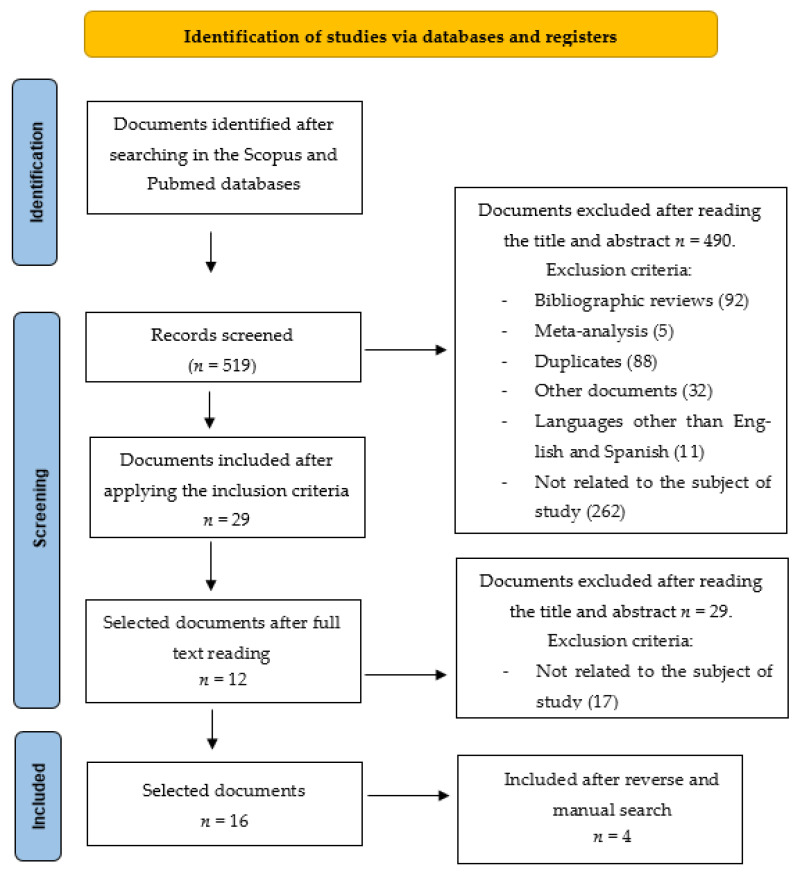
Acute respiratory distress syndrome is a life-threatening lung condition that prevents enough oxygen from getting to the lungs and blood. The causes can be varied, although since the COVID-19 pandemic began there have been many cases related to this virus. The management and evolution of ARDS in emergency situations in the last 5 years was analyzed. A systematic review was carried out in the PubMed and Scopus databases. Using the descriptors Medical Subject Headings (MeSH), the search equation was: "Emergency health service AND acute respiratory distress syndrome". The search was conducted in December 2021. Quantitative primary studies on the care of patients with ARDS in an emergency setting published in the last 5 years were included. In the initial management, adherence to standard treatment with continuous positive airway pressure (CPAP) is recommended. The use of extracorporeal membrane reduces the intensity of mechanical ventilation or as rescue therapy in acute respiratory distress syndrome (ARDS). The prone position in both intubated and non-intubated patients with severe ARDS is associated with a better survival of these patients, therefore, it is very useful in these moments of pandemic crisis. Lack of resources forces triage decisions about which patients are most likely to survive to start mechanical ventilation and this reflects the realities of intensive care and emergency care in a resource-limited setting. adequate prehospital management of ARDS and in emergency situations can improve the prognosis of patients. The therapeutic options in atypical ARDS due to COVID-19 do not seem to vary substantially from conventional ARDS.
急性呼吸窘迫综合征是一种危及生命的肺部疾病,会导致肺部和血液无法获得足够的氧气。其病因多种多样,尽管自 COVID-19 大流行开始以来,已有许多与该病毒相关的病例。分析了过去 5 年中急诊情况下 ARDS 的管理和演变。在 PubMed 和 Scopus 数据库中进行了系统评价。使用医学主题词 (MeSH) 描述符,搜索方程为:“急诊医疗服务 AND 急性呼吸窘迫综合征”。搜索于 2021 年 12 月进行。纳入了过去 5 年发表的关于急诊环境中 ARDS 患者护理的定量原始研究。在初始管理中,建议遵循持续气道正压通气 (CPAP) 的标准治疗。体外膜氧合的使用可降低机械通气的强度或作为急性呼吸窘迫综合征 (ARDS) 的抢救治疗。严重 ARDS 的气管插管和非气管插管患者采用俯卧位与这些患者的生存率提高相关,因此,在这种大流行危机时刻非常有用。资源匮乏迫使对最有可能存活的患者进行机械通气的分诊决策,这反映了资源有限的重症监护和急诊环境中的现实情况。ARDS 的适当院前管理和在急诊情况下可以改善患者的预后。由于 COVID-19 导致的非典型 ARDS 的治疗选择似乎与常规 ARDS 没有太大区别。