Department of Electrical and Computer Engineering, Sungkyunkwan University, Suwon 16419, Korea.
SKAIChips, Suwon 16419, Korea.
Sensors (Basel). 2022 Jun 16;22(12):4555. doi: 10.3390/s22124555.
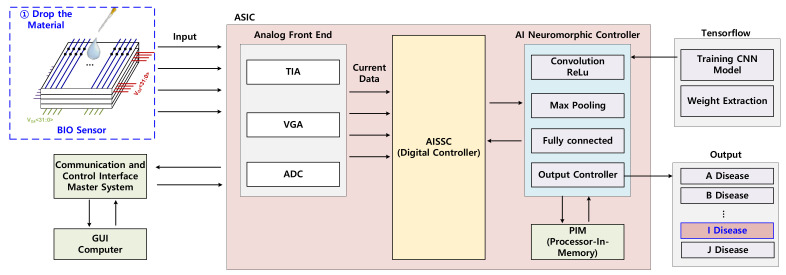
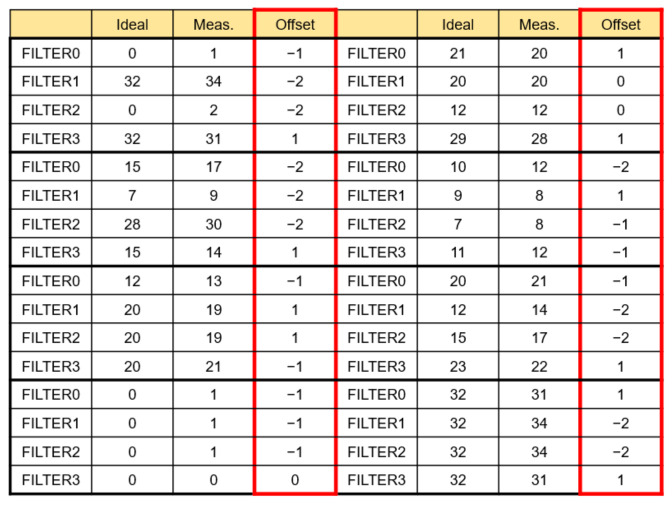
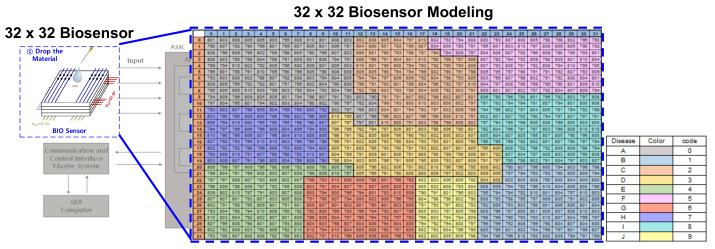
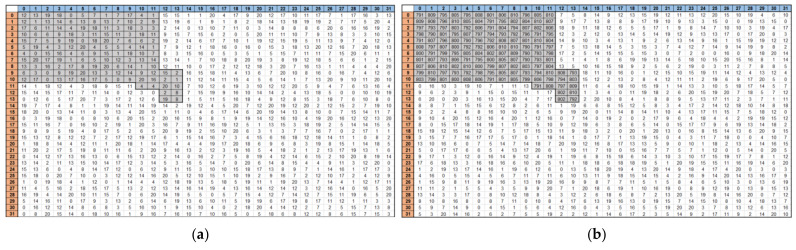
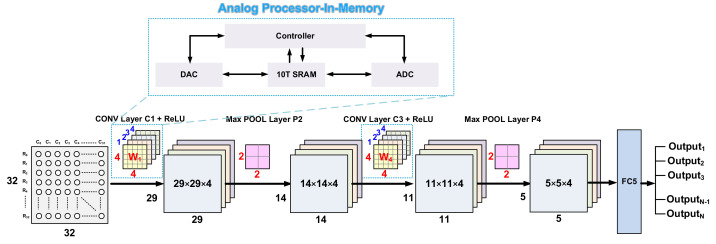
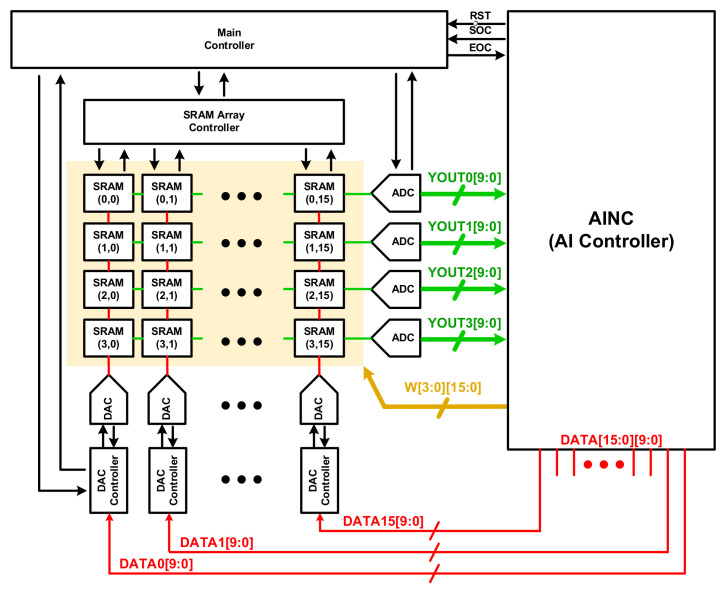
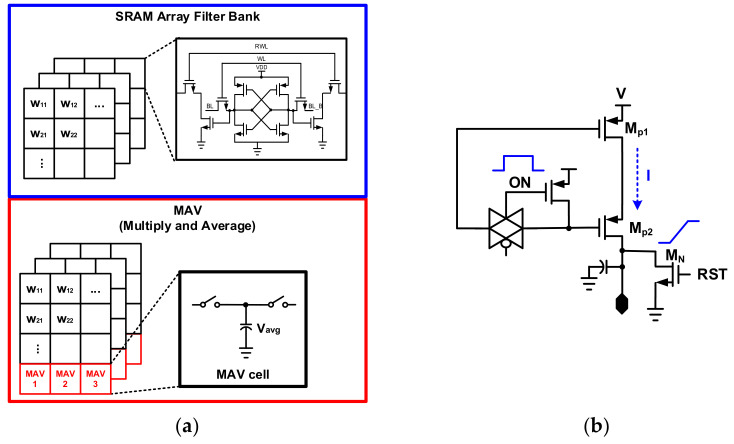
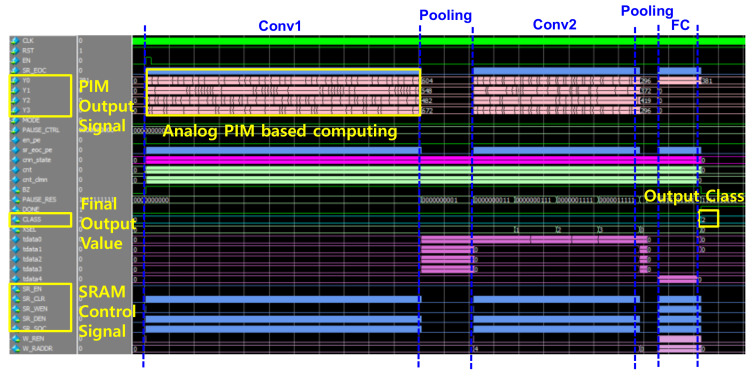
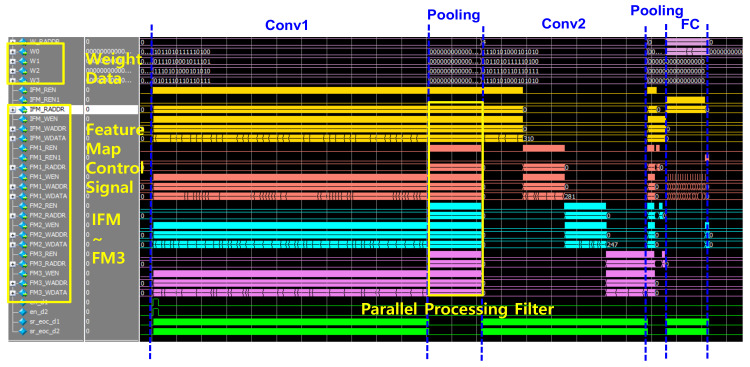
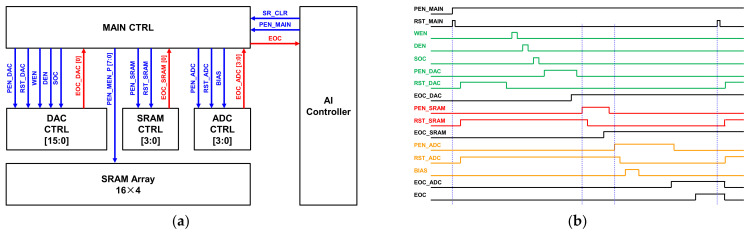
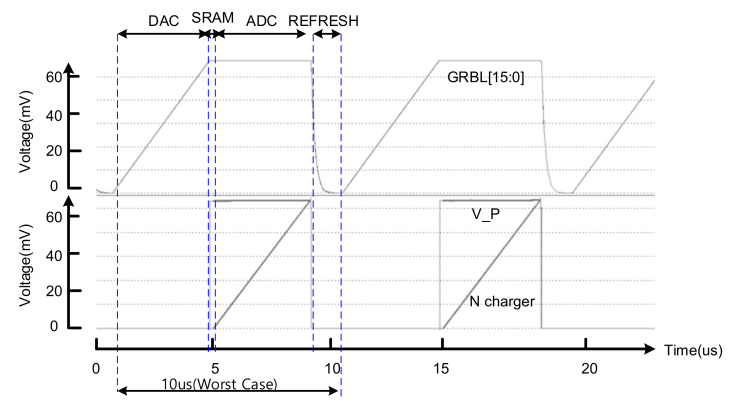
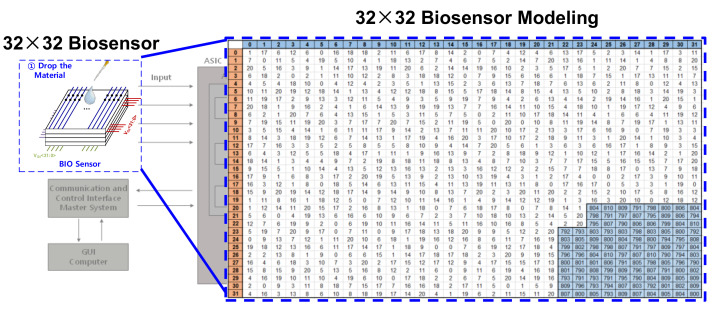
This paper presents an on-chip implementation of an analog processor-in-memory (PIM)-based convolutional neural network (CNN) in a biosensor. The operator was designed with low power to implement CNN as an on-chip device on the biosensor, which consists of plates of 32 × 32 material. In this paper, 10T SRAM-based analog PIM, which performs multiple and average (MAV) operations with multiplication and accumulation (MAC), is used as a filter to implement CNN at low power. PIM proceeds with MAV operations, with feature extraction as a filter, using an analog method. To prepare the input feature, an input matrix is formed by scanning a 32 × 32 biosensor based on a digital controller operating at 32 MHz frequency. Memory reuse techniques were applied to the analog SRAM filter, which is the core of low power implementation, and in order to accurately grasp the MAC operational efficiency and classification, we modeled and trained numerous input features based on biosignal data, confirming the classification. When the learned weight data was input, 19 mW of power was consumed during analog-based MAC operation. The implementation showed an energy efficiency of 5.38 TOPS/W and was differentiated through the implementation of 8 bits of high resolution in the 180 nm CMOS process.
本文提出了一种在生物传感器中实现基于模拟处理器内存储器 (PIM) 的卷积神经网络 (CNN) 的片上实现。该算子设计的功耗低,可将 CNN 作为生物传感器上的片上设备实现,该生物传感器由 32×32 材料的板组成。在本文中,使用基于 10T SRAM 的模拟 PIM 作为滤波器,执行乘法和累加 (MAC) 的多次和平均 (MAV) 操作,以低功耗实现 CNN。PIM 采用 MAV 操作,使用模拟方法作为滤波器进行特征提取。为了准备输入特征,通过以 32 MHz 频率运行的数字控制器扫描 32×32 生物传感器来形成输入矩阵。模拟 SRAM 滤波器应用了内存复用技术,这是低功耗实现的核心,为了准确掌握 MAC 操作效率和分类,我们根据生物信号数据对大量输入特征进行建模和训练,确认了分类。当输入学习的权重数据时,模拟基于 MAC 操作消耗了 19 mW 的功率。该实现的能效为 5.38 TOPS/W,并通过在 180nm CMOS 工艺中实现 8 位高分辨率进行了区分。