Jiang Zhujun, Lin Haishuang, Zhang Haoran, Shi Ningning, Zheng Zhetao, Dong Liangzhen, Yang Yuelin, Xia Qing
Department of Chemical Biology, State Key Laboratory of Natural and Biomimetic Drugs, School of Pharmaceutical Sciences, Peking University, Beijing 100191, China.
Vaccines (Basel). 2022 May 30;10(6):878. doi: 10.3390/vaccines10060878.
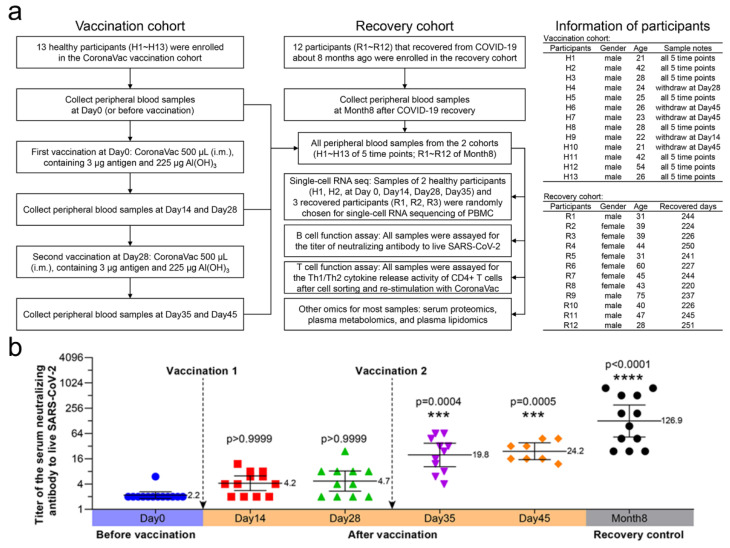
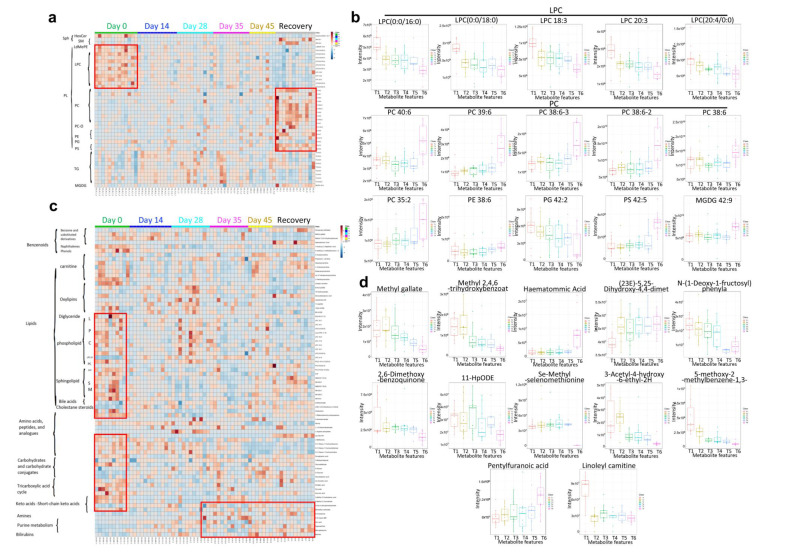
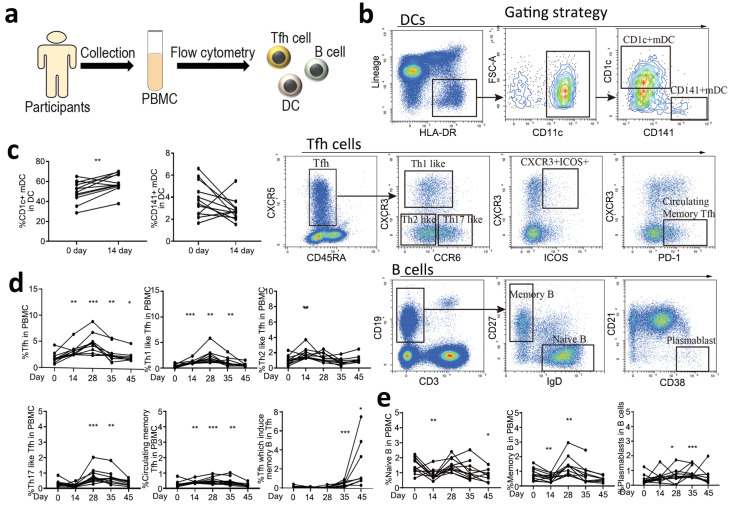
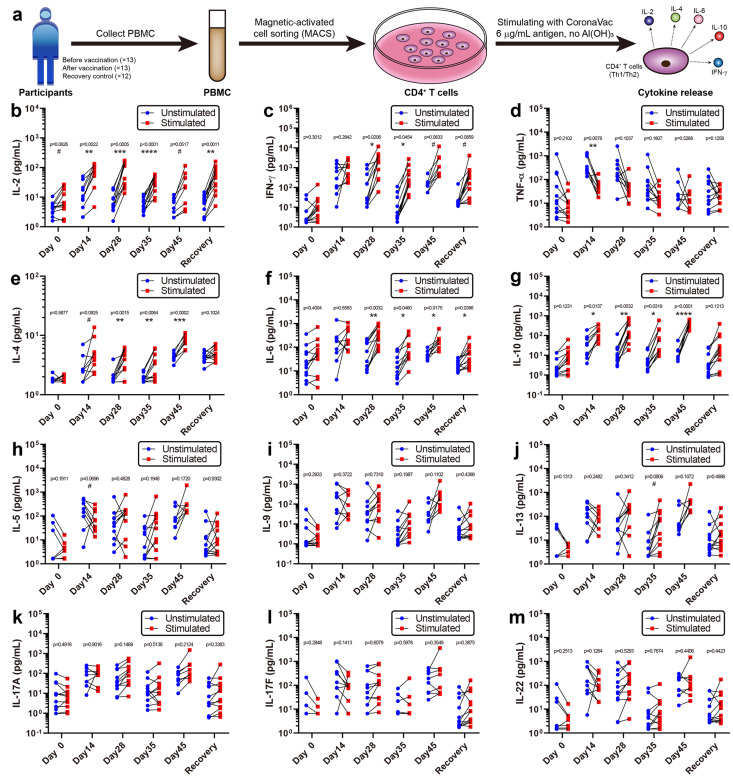
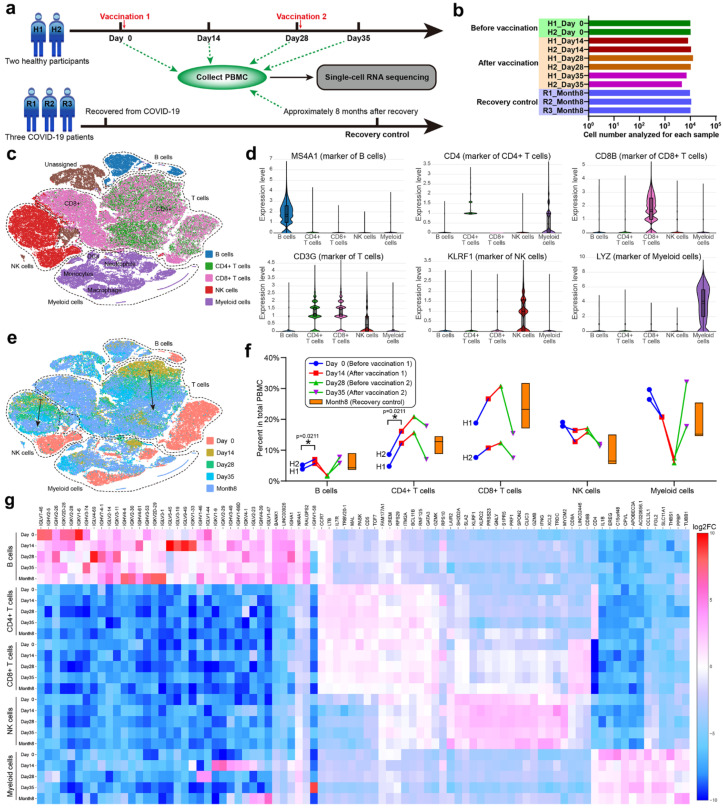
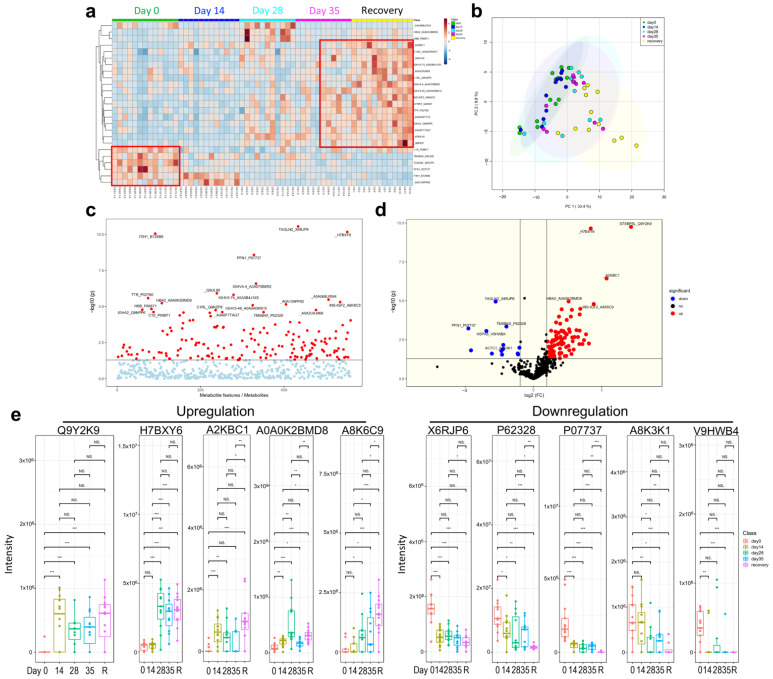
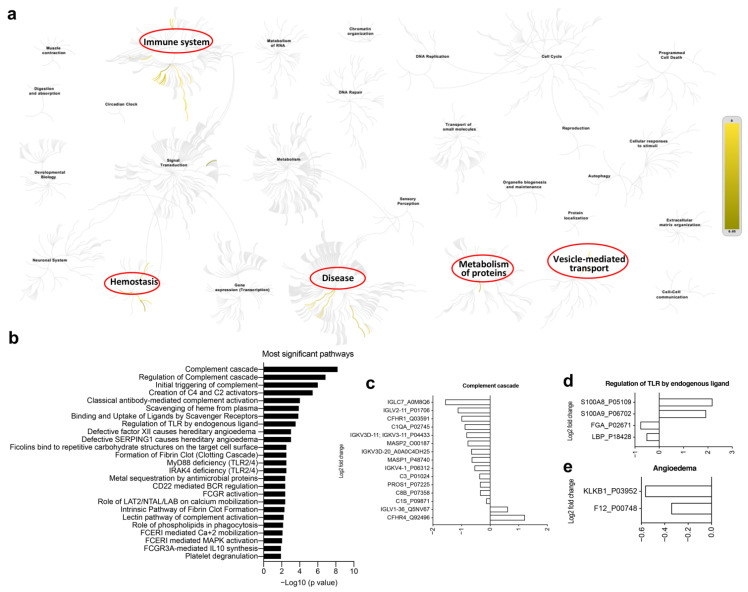
Currently, an inactivated vaccine has been widely used with encouraging results as a prophylactic agent against COVID-19 infection, which is caused by severe acute respiratory syndrome coronavirus 2 (SARS-CoV-2) and its variants. However, in vitro SARS-CoV-2 vaccine-specific immune features remain elusive, hindering the promotion of a third dose of the vaccine. Here, we present a detailed in vitro immune cellular response and large-scale multi-omics analysis for peripheral blood mononuclear cells (PBMCs) from participants vaccinated with CoronaVac (Sinovac Life Sciences, Beijing, China) and recovered participants from COVID-19. The mean titers of SARS-CoV-2 serum-neutralizing antibodies were significantly increased after the boosting immunization (Day 45) compared to the unimmunized state. We observed that type-1 helper T cells (Th1) tended to dominate after the first dose of vaccine, while humoral immune responses became dominant after the second dose due to the activation of type-2 helper T cell (Th2), memory B cells, and plasmablasts. T follicular helper cells (Tfh) involved in antibody production were activated after the first dose and were maintained for the observed time points. Single-cell RNA sequencing of PBMCs revealed specific changes in cell compositions and gene expression in immunized participants. Multi-omics analysis also demonstrated that CoronaVac-specific serum proteins, plasma metabolites, and plasma lipid changes were skewed to those changes in convalescent patients. Collectively, we provide a comprehensive understanding of CoronaVac-specific in vitro immune features.
目前,一种灭活疫苗已被广泛用作预防由严重急性呼吸综合征冠状病毒2(SARS-CoV-2)及其变体引起的COVID-19感染的预防剂,且效果令人鼓舞。然而,体外SARS-CoV-2疫苗特异性免疫特征仍不清楚,这阻碍了第三剂疫苗的推广。在此,我们对接种科兴新冠疫苗(中国北京科兴生物制品有限公司)的参与者以及COVID-19康复者的外周血单个核细胞(PBMC)进行了详细的体外免疫细胞反应和大规模多组学分析。与未免疫状态相比,加强免疫(第45天)后SARS-CoV-2血清中和抗体的平均滴度显著增加。我们观察到,在接种第一剂疫苗后1型辅助性T细胞(Th1)倾向于占主导地位,而在接种第二剂疫苗后,由于2型辅助性T细胞(Th2)、记忆B细胞和成浆细胞的激活,体液免疫反应占主导地位。参与抗体产生的滤泡辅助性T细胞(Tfh)在接种第一剂疫苗后被激活,并在观察的时间点维持激活状态。PBMC的单细胞RNA测序揭示了免疫参与者细胞组成和基因表达的特定变化。多组学分析还表明,科兴新冠疫苗特异性血清蛋白、血浆代谢物和血浆脂质变化与康复患者的变化存在偏差。总体而言,我们提供了对科兴新冠疫苗特异性体外免疫特征的全面理解。