Guangxi Key Laboratory of Beibu Gulf Marine Biodiversity Conservation, College of Marine Sciences, Beibu Gulf University, Qinzhou 535000, China.
Guangxi Key Laboratory of Aquatic Biotechnology and Modern Ecological Aquaculture, Guangxi Engineering Research Center for Fishery Major Diseases Control and Efficient Healthy Breeding Industrial Technology (GERCFT), Guangxi Academy of Sciences, Nanning 530015, China.
Viruses. 2022 Jun 5;14(6):1227. doi: 10.3390/v14061227.
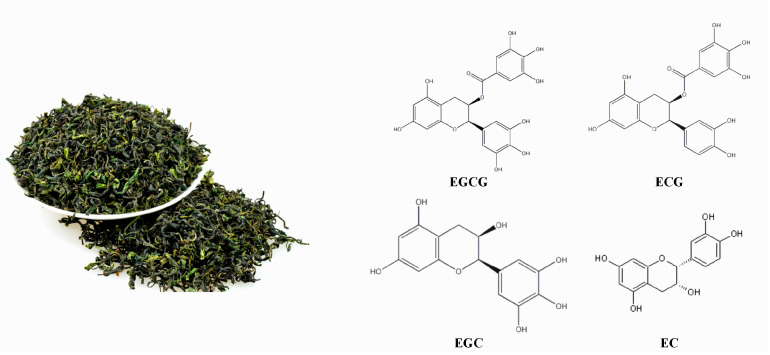
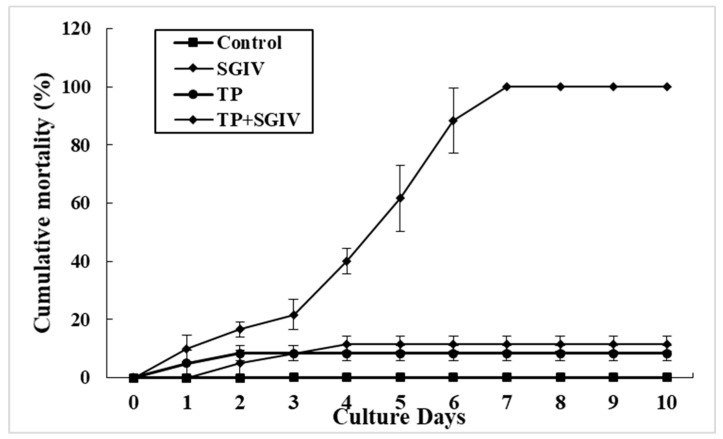
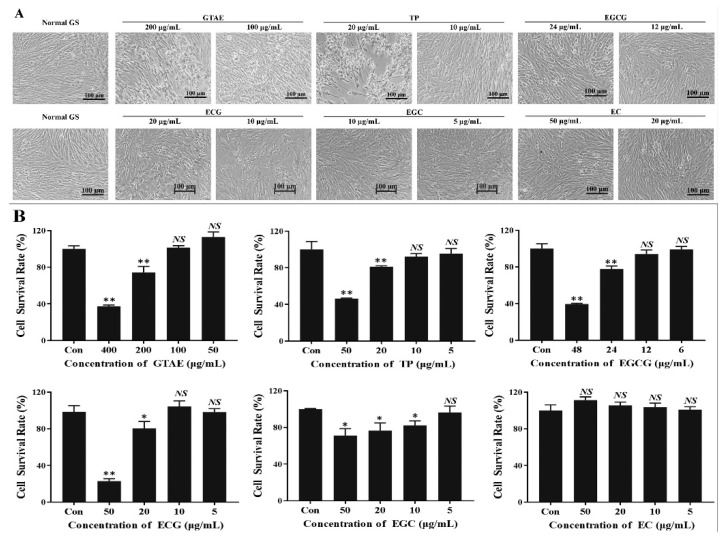
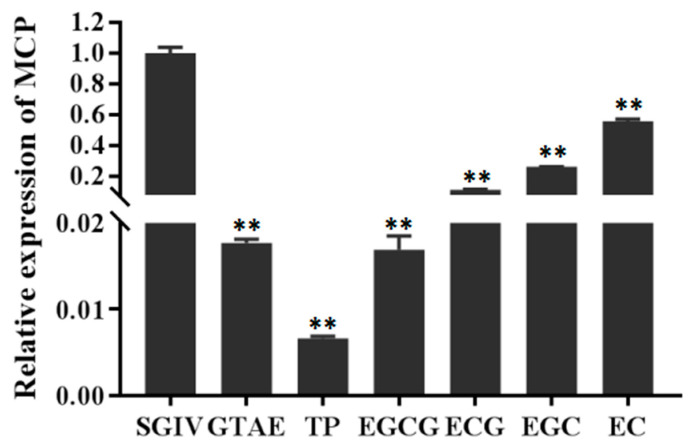
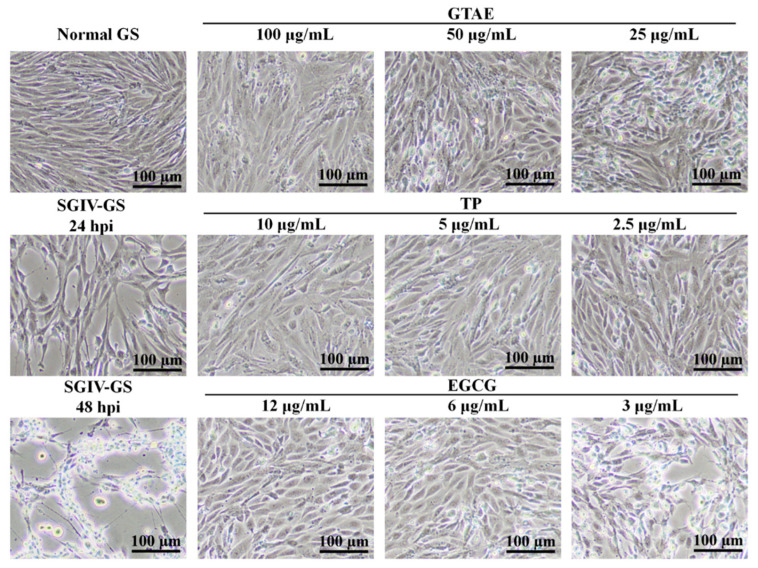
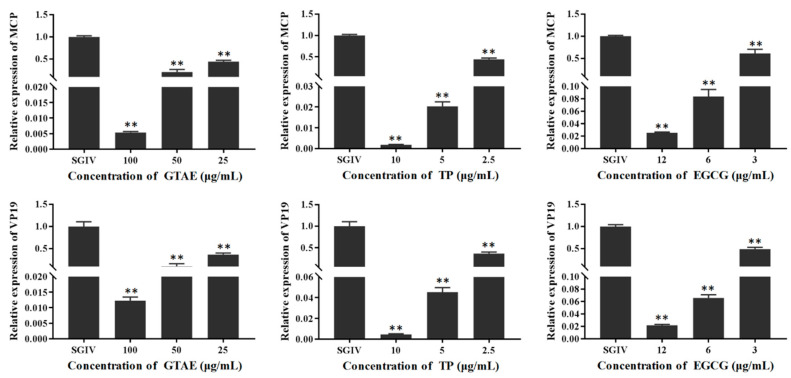
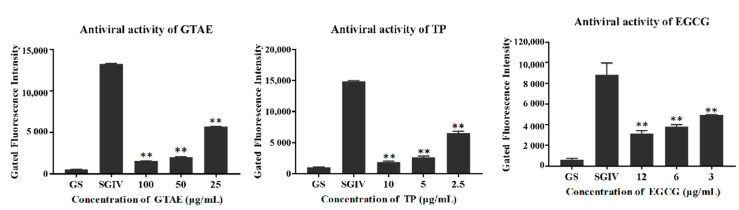
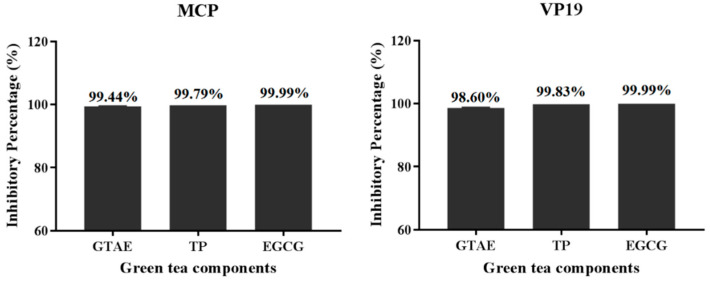
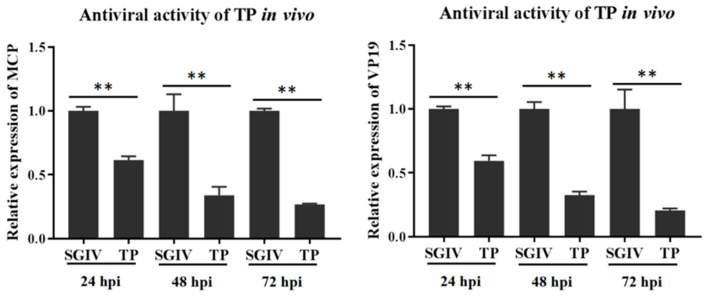
(1) Background: Singapore grouper iridovirus (SGIV) can cause extensive fish deaths. Therefore, developing treatments to combat virulent SGIV is of great economic importance to address this challenge to the grouper aquaculture industry. Green tea is an important medicinal and edible plant throughout the world. In this study, we evaluated the use of green tea components against SGIV infection. (2) Methods: The safe working concentrations of green tea components were identified by cell viability detection and light microscopy. Additionally, the antiviral activity of each green tea component against SGIV infection was determined with light microscopy, an aptamer (Q5c)-based fluorescent molecular probe, and reverse transcription quantitative PCR. (3) Results: The safe working concentrations of green tea components were green tea aqueous extract (GTAE) ≤ 100 μg/mL, green tea polyphenols (TP) ≤ 10 μg/mL, epigallocatechin-3-gallate (EGCG) ≤ 12 μg/mL, (-)-epigallocatechin (EGC) ≤ 10 μg/mL, (-)-epicatechin gallate (EGC) ≤ 5 μg/mL, and (-)-epicatechin (EC) ≤ 50 μg/mL. The relative antiviral activities of the green tea components determined in terms of MCP gene expression were TP > EGCG > GTAE > ECG > EGC > EC, with inhibition rates of 99.34%, 98.31%, 98.23%, 88.62%, 73.80%, and 44.31%, respectively. The antiviral effect of aptamer-Q5c was consistent with the results of qPCR. Also, TP had an excellent antiviral effect in vitro, wherein the mortality of fish in only the SGIV-injection group and TP + SGIV-injection group were 100% and 11.67%, respectively. (4) Conclusions: In conclusion, our results suggest that green tea components have effective antiviral properties against SGIV and may be candidate agents for the effective treatment and control of SGIV infections in grouper aquaculture.
(1)背景:新加坡石斑鱼虹彩病毒(SGIV)可导致鱼类大量死亡。因此,开发治疗方法来对抗强毒 SGIV 对石斑鱼养殖业具有重要的经济意义。绿茶是全世界重要的药用和食用植物。在本研究中,我们评估了绿茶成分对 SGIV 感染的作用。(2)方法:通过细胞活力检测和光镜观察确定绿茶成分的安全工作浓度。此外,还通过光镜观察、基于适体(Q5c)的荧光分子探针和反转录定量 PCR 确定了每种绿茶成分对 SGIV 感染的抗病毒活性。(3)结果:绿茶成分的安全工作浓度为绿茶水提物(GTAE)≤100μg/mL,绿茶多酚(TP)≤10μg/mL,表没食子儿茶素-3-没食子酸酯(EGCG)≤12μg/mL,(-)-表儿茶素(EGC)≤10μg/mL,(-)-表没食子儿茶素没食子酸酯(ECG)≤5μg/mL,和(-)-表儿茶素(EC)≤50μg/mL。以 MCP 基因表达表示的绿茶成分的相对抗病毒活性为 TP>EGCG>GTAE>ECG>EGC>EC,抑制率分别为 99.34%、98.31%、98.23%、88.62%、73.80%和 44.31%。适体-Q5c 的抗病毒效果与 qPCR 的结果一致。此外,TP 在体外具有极好的抗病毒作用,仅在 SGIV 注射组和 TP+SGIV 注射组中,鱼的死亡率分别为 100%和 11.67%。(4)结论:总之,我们的结果表明,绿茶成分对 SGIV 具有有效的抗病毒特性,可能是石斑鱼养殖中有效治疗和控制 SGIV 感染的候选药物。