Beijing Center for Disease Prevention and Control, Beijing, China.
Experimental Center for Basic Medical Teaching, School of Basic Medical Sciences, Capital Medical University, Beijing, China.
Immunology. 2022 Oct;167(2):221-232. doi: 10.1111/imm.13531. Epub 2022 Jul 6.
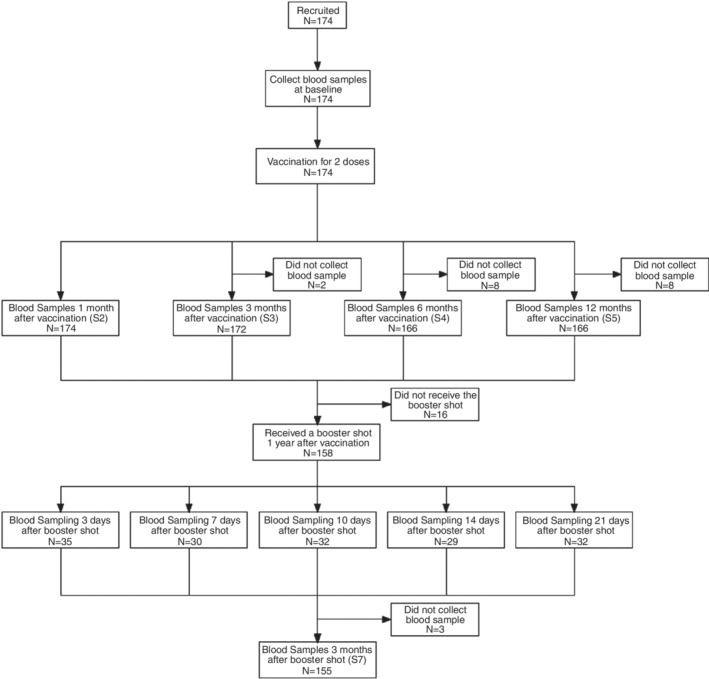
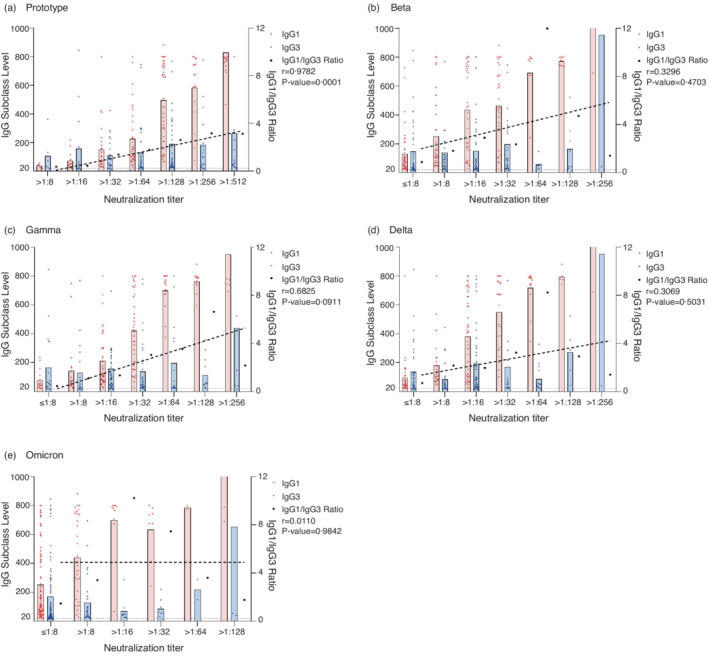
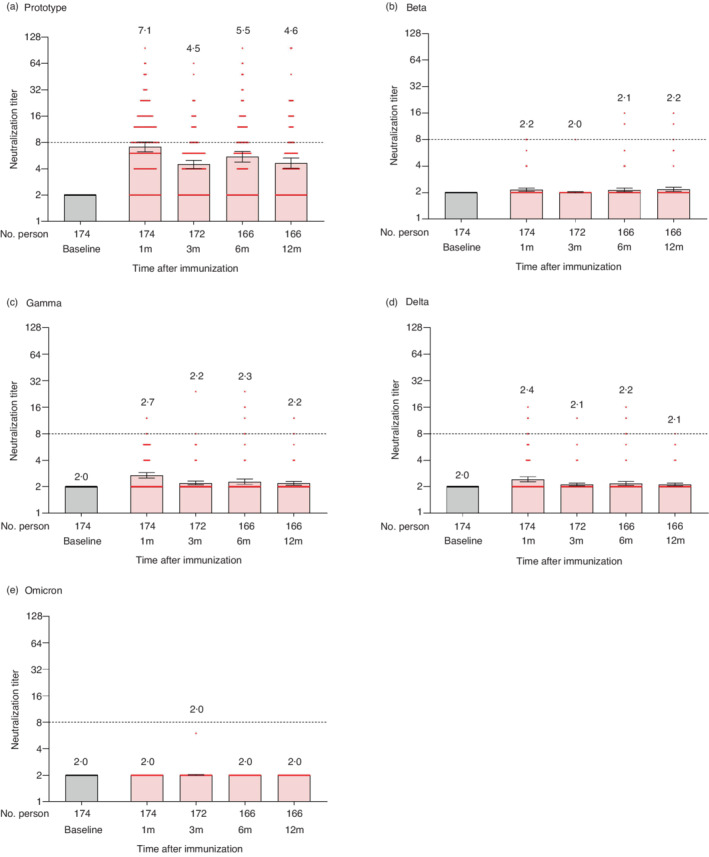
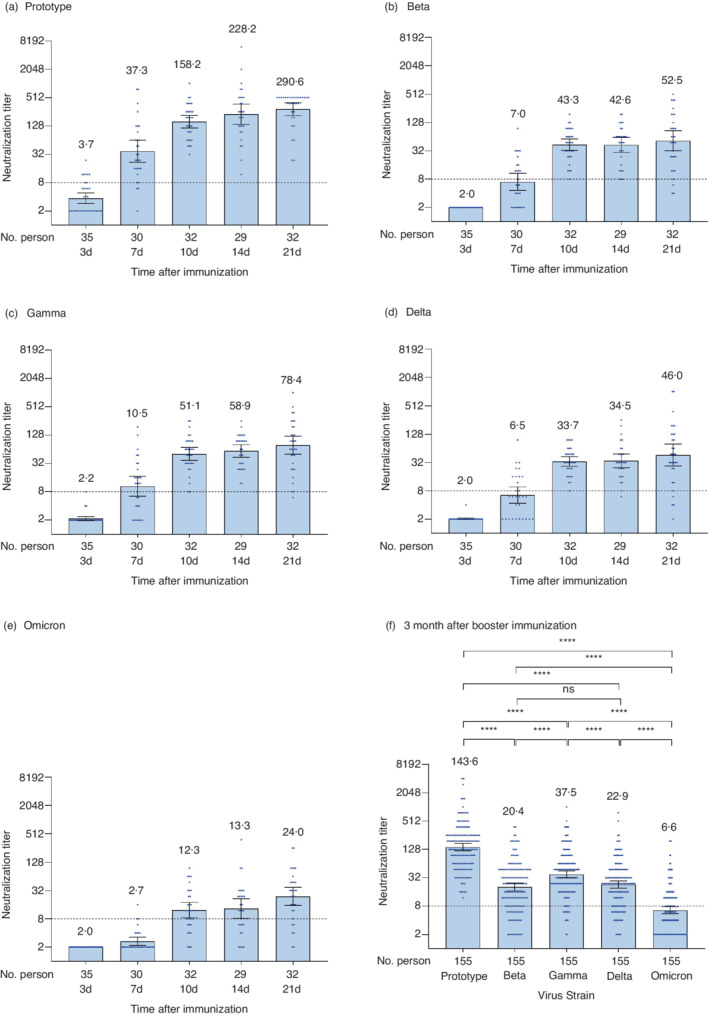
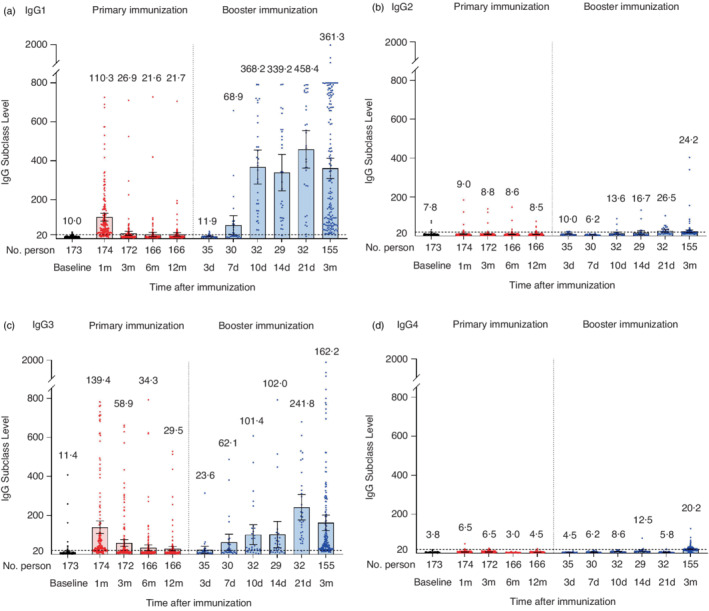
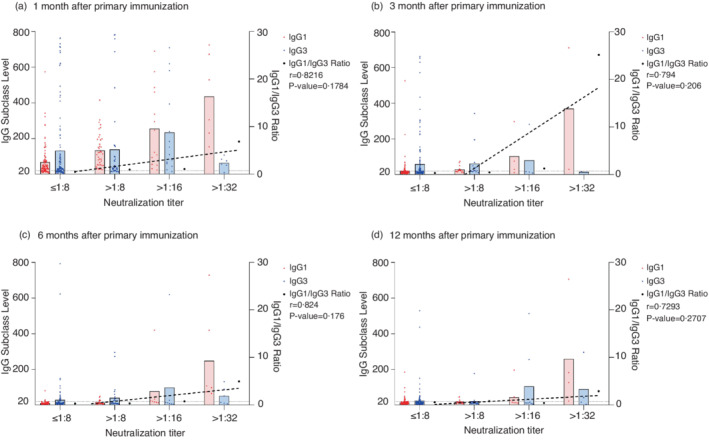
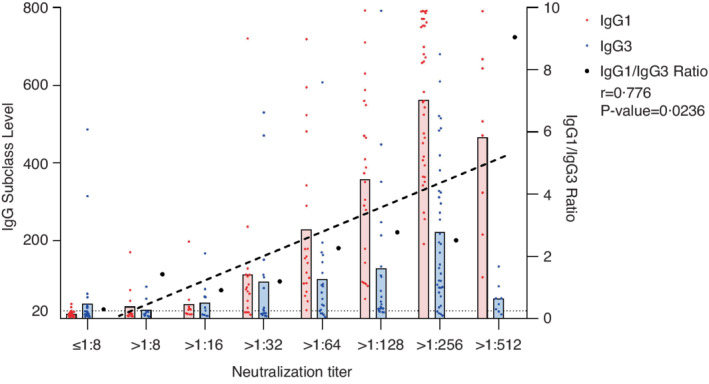
Neutralizing antibody is an important indicator of vaccine efficacy, of which IgG is the main component. IgG can be divided into four subclasses. Up to now, studies analysing the humoral response to SARS-CoV-2 vaccination have mostly focused on measuring total IgG, and the contribution of specific IgG subclasses remains elusive. The aim of this study is to investigate the kinetics of neutralizing antibodies and IgG subclasses, and to explore their relationships in people vaccinated with inactivated COVID-19 vaccine. We conducted a prospective cohort study in 174 healthy adults aged 18-59 years old who were administrated 2 doses of CoronaVac 14 days apart and a booster dose 1 year after the primary immunization, and followed up for 15 months. Blood samples were collected at various time points after primary and booster immunization. We used live SARS-CoV-2 virus neutralizing assay to determine neutralizing ability against the wild-type strain and 4 variants (Beta, Gamma, Delta and Omicron) and ELISA to quantify SARS-CoV-2 RBD-specific IgG subclasses. The results showed that the 2-dose primary immunization only achieved low neutralizing ability, while a booster shot can significantly enhance neutralizing ability against the wild-type strain, Beta, Gamma, Delta and Omicron variants. IgG1 and IgG3 were the most abundant serum antibodies, and IgG2 and IgG4 were hardly detected at any time. The ratio of IgG1/IgG3 was positively associated with the neutralization ability. The underlying mechanism requires further exploration.
中和抗体是疫苗效力的一个重要指标,其中 IgG 是主要成分。IgG 可分为四个亚类。迄今为止,分析针对 SARS-CoV-2 疫苗接种的体液反应的研究大多集中在测量总 IgG 上,而特定 IgG 亚类的贡献仍不清楚。本研究旨在研究接种灭活 COVID-19 疫苗后人群中中和抗体和 IgG 亚类的动力学,并探讨它们之间的关系。我们进行了一项前瞻性队列研究,纳入了 174 名年龄在 18-59 岁的健康成年人,他们间隔 14 天接种 2 剂科兴疫苗,并在初次免疫后 1 年进行加强免疫,随访 15 个月。在初次和加强免疫后的不同时间点采集血样。我们使用活 SARS-CoV-2 病毒中和测定法来确定对野生型株和 4 种变异株(Beta、Gamma、Delta 和 Omicron)的中和能力,并用 ELISA 定量 SARS-CoV-2 RBD 特异性 IgG 亚类。结果显示,两剂基础免疫仅产生低水平的中和能力,而加强免疫可显著增强对野生型株、Beta、Gamma、Delta 和 Omicron 变异株的中和能力。IgG1 和 IgG3 是最丰富的血清抗体,在任何时间点几乎都检测不到 IgG2 和 IgG4。IgG1/IgG3 比值与中和能力呈正相关。其潜在机制需要进一步探索。