de Campos-Mata Leire, Tejedor Vaquero Sonia, Tachó-Piñot Roser, Piñero Janet, Grasset Emilie K, Arrieta Aldea Itziar, Rodrigo Melero Natalia, Carolis Carlo, Horcajada Juan P, Cerutti Andrea, Villar-García Judit, Magri Giuliana
Translational Clinical Research Program Institut Hospital del Mar d'Investigacions Mèdiques (IMIM) Barcelona Spain.
Research Programme on Biomedical Informatics (GRIB) Hospital del Mar Medical Research Institute (IMIM) Department of Experimental and Health Sciences Pompeu Fabra University (UPF) Barcelona Spain.
Clin Transl Immunology. 2021 Sep 5;10(9):e1339. doi: 10.1002/cti2.1339. eCollection 2021.
SARS-CoV-2 infection induces virus-reactive memory B cells expressing unmutated antibodies, which hints at their emergence from naïve B cells. Yet, the dynamics of virus-specific naïve B cells and their impact on immunity and immunopathology remain unclear.
We longitudinally profiled SARS-CoV-2-specific B-cell responses in 25 moderate-to-severe COVID-19 patients by high-dimensional flow cytometry and isotyping and subtyping ELISA. We also explored the relationship of B-cell responses to SARS-CoV-2 with the activation of effector and regulatory cells from the innate or adaptive immune system.
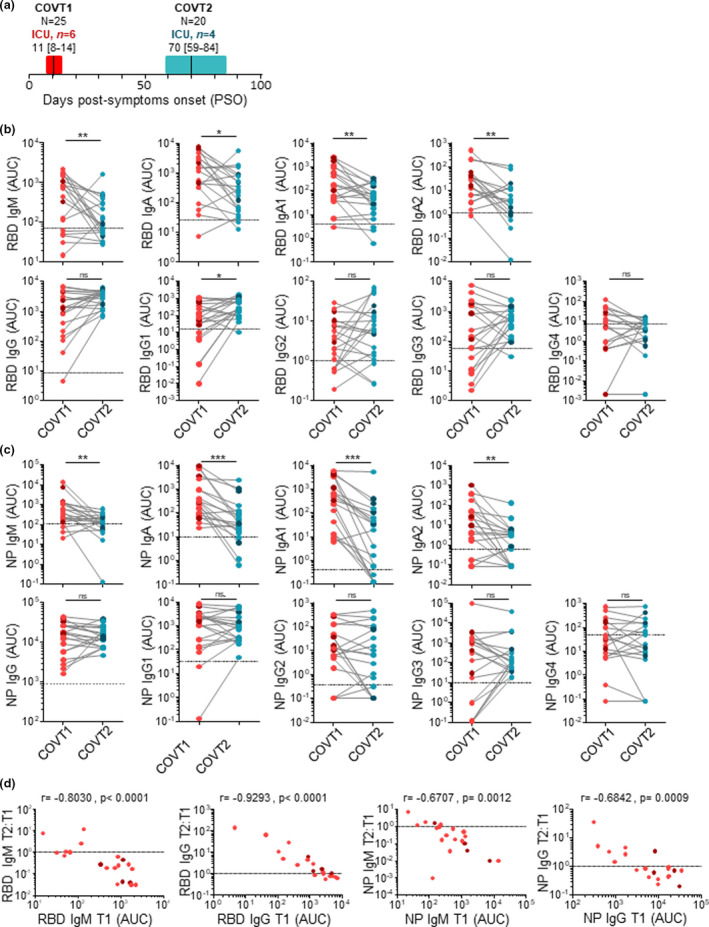
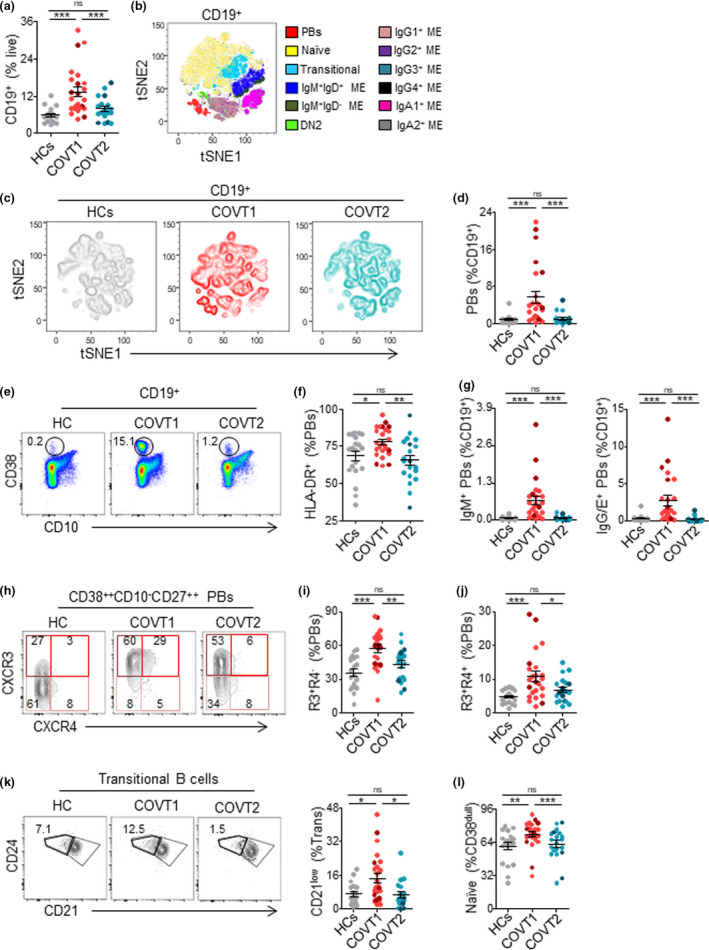
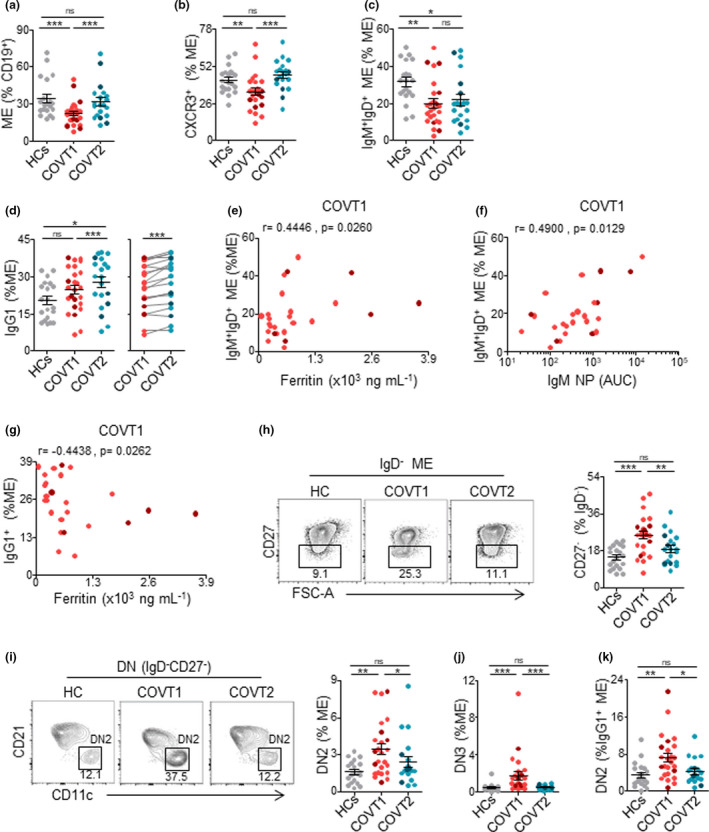
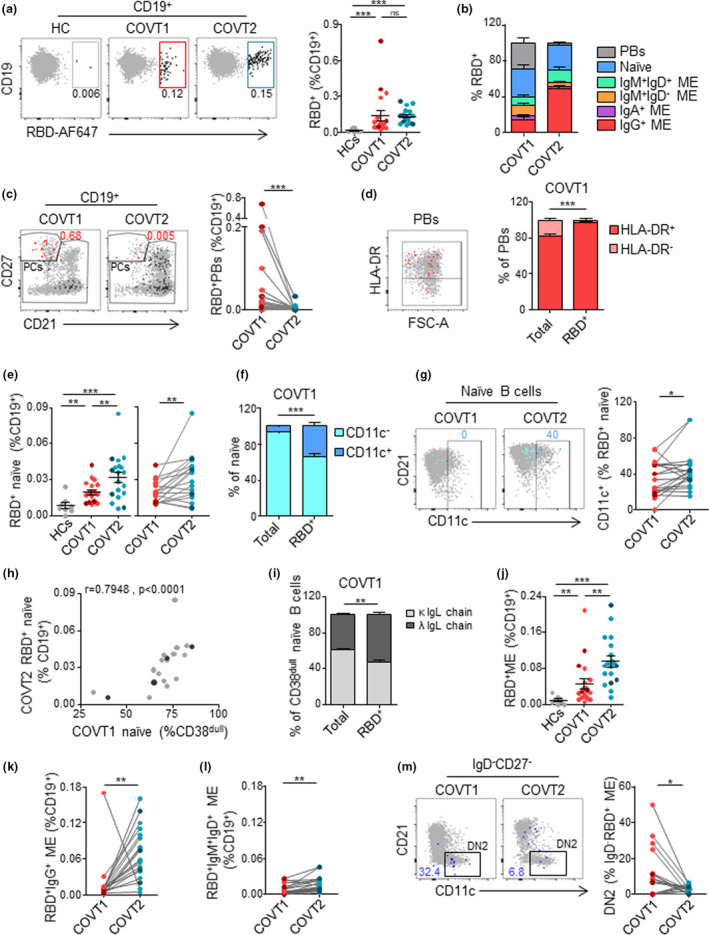
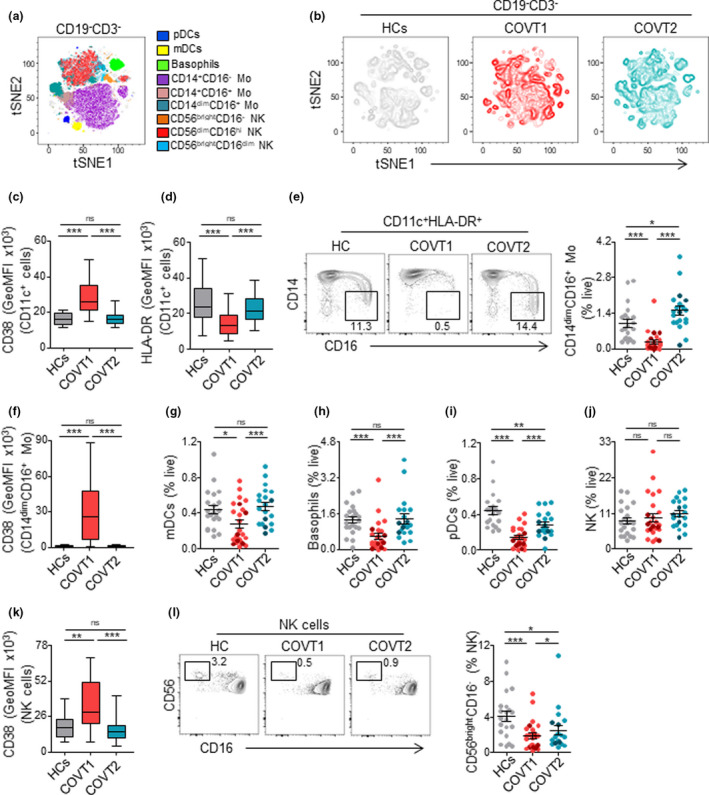
We found a virus-specific antibody response with a broad spectrum of classes and subclasses during acute infection, which evolved into an IgG1-dominated response during convalescence. Acute infection was associated with increased mature B-cell progenitors in the circulation and the unexpected expansion of virus-targeting naïve-like B cells. The latter further augmented during convalescence together with virus-specific memory B cells. In addition to a transitory increase in tissue-homing CXCR3 plasmablasts and extrafollicular memory B cells, most COVID-19 patients showed persistent activation of CD4 and CD8 T cells along with transient or long-lasting changes of key innate immune cells. Remarkably, virus-specific antibodies and the frequency of naïve B cells were among the major variables defining distinct immune signatures associated with disease severity and inflammation.
Aside from providing new insights into the complexity of the immune response to SARS-CoV-2, our findings indicate that the recruitment of mature B-cell precursors into the periphery may be central to the induction of antiviral immunity.
严重急性呼吸综合征冠状病毒2(SARS-CoV-2)感染可诱导表达未突变抗体的病毒反应性记忆B细胞,这提示它们源自初始B细胞。然而,病毒特异性初始B细胞的动态变化及其对免疫和免疫病理学的影响仍不清楚。
我们通过高维流式细胞术以及同型和亚型酶联免疫吸附测定(ELISA),纵向分析了25例中重度新型冠状病毒肺炎(COVID-19)患者的SARS-CoV-2特异性B细胞反应。我们还探讨了SARS-CoV-2特异性B细胞反应与先天或适应性免疫系统中效应细胞和调节细胞激活之间的关系。
我们发现,急性感染期间存在具有广泛类别和亚类的病毒特异性抗体反应,恢复期则演变为以IgG1为主的反应。急性感染与循环中成熟B细胞祖细胞增加以及靶向病毒的类初始B细胞意外扩增有关。后者在恢复期与病毒特异性记忆B细胞一起进一步增加。除了组织归巢CXCR3浆母细胞和滤泡外记忆B细胞短暂增加外,大多数COVID-19患者的CD4和CD8 T细胞持续激活,同时关键先天免疫细胞出现短暂或持久变化。值得注意的是,病毒特异性抗体和初始B细胞频率是定义与疾病严重程度和炎症相关的不同免疫特征的主要变量。
除了为SARS-CoV-2免疫反应的复杂性提供新见解外,我们的研究结果表明,成熟B细胞前体向外周的募集可能是诱导抗病毒免疫的核心。