Key Laboratory of Aquatic Botany and Watershed Ecology, Wuhan Botanical Garden, Chinese Academy of Sciences, Wuhan 430074, China.
Center of Conservation Biology, Core Botanical Gardens, Chinese Academy of Sciences, Wuhan 430074, China.
DNA Res. 2022 Jun 25;29(4). doi: 10.1093/dnares/dsac022.
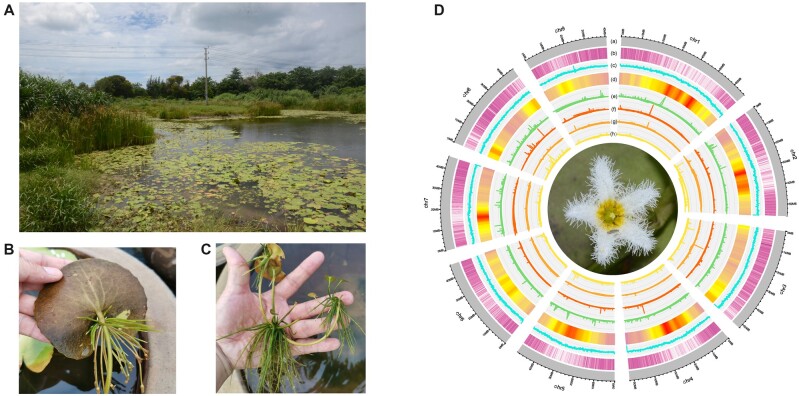
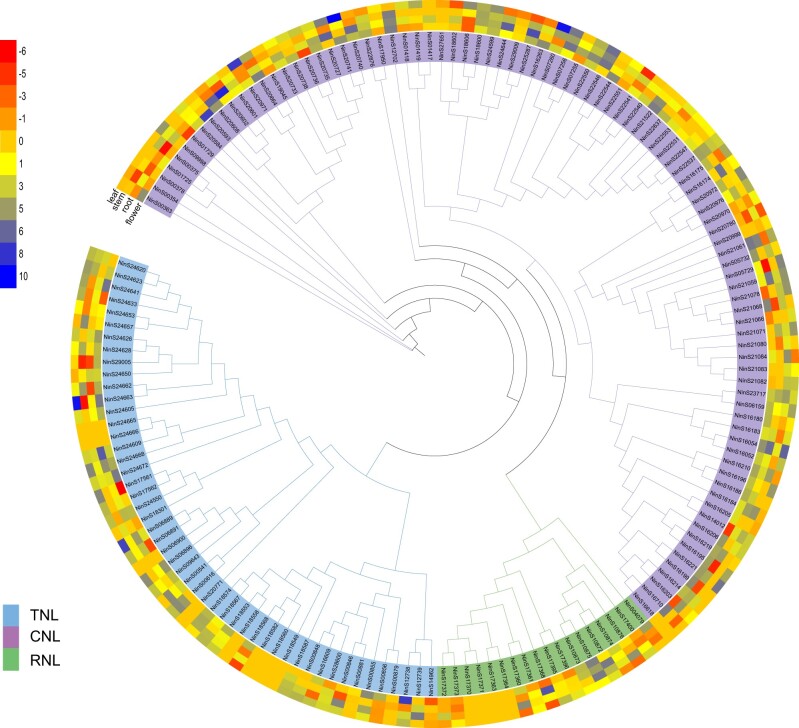
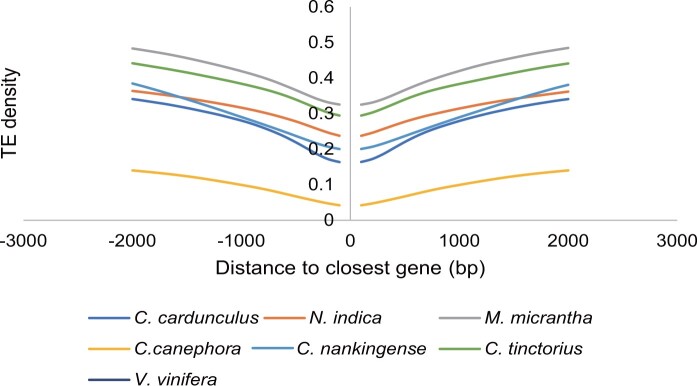
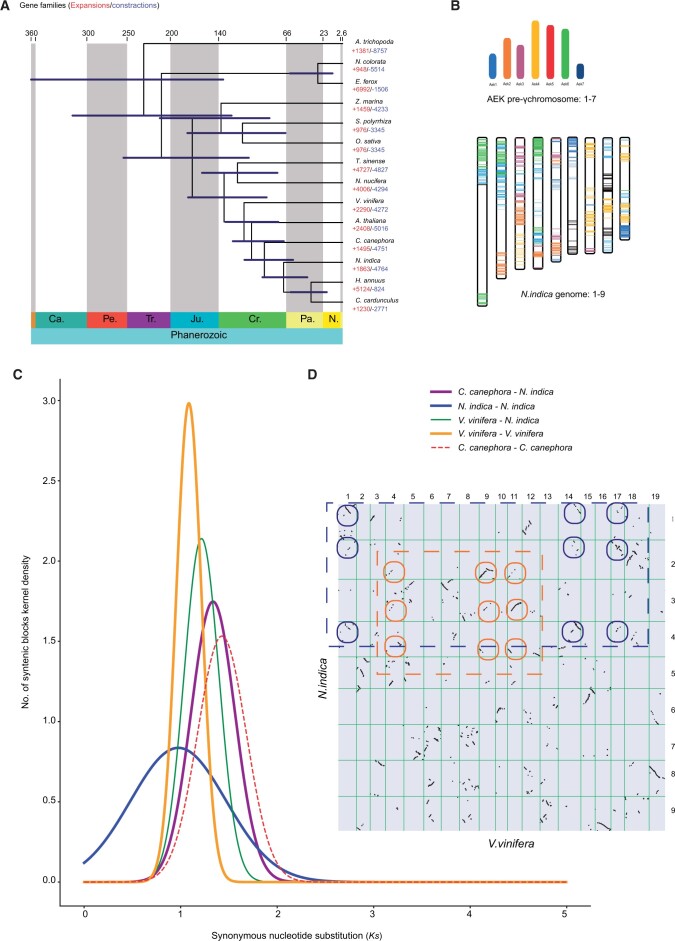
Nymphoides indica, an aquatic plant, is an invasive species that causes both ecological and economic damage in North America and elsewhere. However, the lack of genomic data of N. indica limits the in-depth analysis of this invasive species. Here, we report a chromosome-level genome assembly of nine pseudochromosomes of N. indica with a total size of ∼ 520 Mb. More than half of the N. indica genome consists of transposable elements (TEs), and a higher density of TEs around genes may play a significant role in response to an ever-changing environment by regulating the nearby gene. Additionally, our analysis revealed that N. indica only experienced a gamma (γ) whole-genome triplication event. Functional enrichment of the N. indica-specific and expanded gene families highlighted genes involved in the responses to hypoxia and plant-pathogen interactions, which may strengthen the ability to adapt to external challenges and improve ecological fitness. Furthermore, we identified 160 members of the nucleotide-binding site and leucine-rich repeat gene family, which may be linked to the defence response. Collectively, the high-quality N. indica genome reported here opens a novel avenue to understand the evolution and rapid invasion of Nymphoides spp.
印度眼子菜是一种水生植物,是一种入侵物种,在北关和其他地区造成生态和经济破坏。然而,印度眼子菜缺乏基因组数据限制了对这种入侵物种的深入分析。在这里,我们报告了印度眼子菜的九个假染色体的染色体水平基因组组装,总大小约为 520Mb。印度眼子菜基因组的一半以上由转座元件(TEs)组成,基因周围更高密度的 TEs 可能通过调节附近的基因在应对不断变化的环境方面发挥重要作用。此外,我们的分析表明,印度眼子菜仅经历了一次伽马(γ)全基因组三倍体事件。印度眼子菜特有的和扩展的基因家族的功能富集突出了参与缺氧和植物-病原体相互作用的基因,这可能增强了适应外部挑战和提高生态适应性的能力。此外,我们鉴定了 160 个核苷酸结合位点和富含亮氨酸重复基因家族成员,它们可能与防御反应有关。总的来说,这里报道的高质量印度眼子菜基因组为理解眼子菜属的进化和快速入侵开辟了新的途径。