Hubei Provincial Key Laboratory for Protection and Application of Special Plant Germplasm in Wuling Area of China, Key Laboratory of State Ethnic Affairs Commission for Biological Technology, College of Life Sciences, South-Central University for Nationalities, Wuhan, China.
National Key Laboratory of Crop Genetic Improvement, Huazhong Agricultural University, Wuhan, China.
Plant Biotechnol J. 2021 Sep;19(9):1725-1742. doi: 10.1111/pbi.13586. Epub 2021 Apr 8.
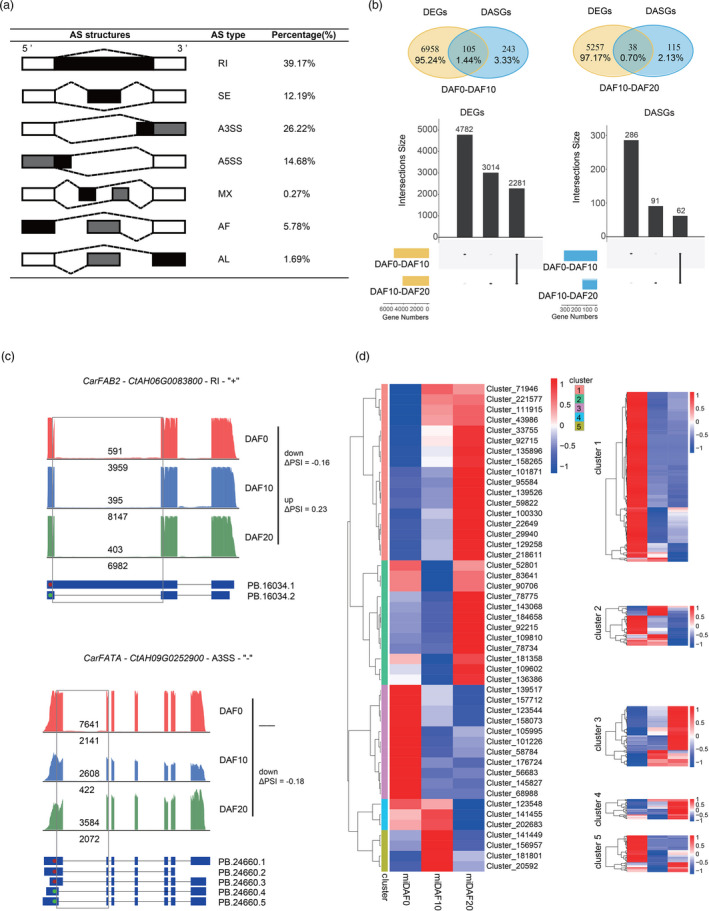
Safflower (Carthamus tinctorius L.), a member of the Asteraceae, is a popular crop due to its high linoleic acid (LA) and flavonoid (such as hydroxysafflor yellow A) contents. Here, we report the first high-quality genome assembly (contig N50 of 21.23 Mb) for the 12 pseudochromosomes of safflower using single-molecule real-time sequencing, Hi-C mapping technologies and a genetic linkage map. Phyloge nomic analysis showed that safflower diverged from artichoke (Cynara cardunculus) and sunflower (Helianthus annuus) approximately 30.7 and 60.5 million years ago, respectively. Comparative genomic analyses revealed that uniquely expanded gene families in safflower were enriched for those predicted to be involved in lipid metabolism and transport and abscisic acid signalling. Notably, the fatty acid desaturase 2 (FAD2) and chalcone synthase (CHS) families, which function in the LA and flavonoid biosynthesis pathways, respectively, were expanded via tandem duplications in safflower. CarFAD2-12 was specifically expressed in seeds and was vital for high-LA content in seeds, while tandemly duplicated CarFAD2 genes were up-regulated in ovaries compared to CarFAD2-12, which indicates regulatory divergence of FAD2 in seeds and ovaries. CarCHS1, CarCHS4 and tandem-duplicated CarCHS5˜CarCHS6, which were up-regulated compared to other CarCHS members at early stages, contribute to the accumulation of major flavonoids in flowers. In addition, our data reveal multiple alternative splicing events in gene families related to fatty acid and flavonoid biosynthesis. Together, these results provide a high-quality reference genome and evolutionary insights into the molecular basis of fatty acid and flavonoid biosynthesis in safflower.
红花(Carthamus tinctorius L.),菊科植物,因其富含亚油酸(LA)和类黄酮(如羟基红花黄色素 A)而成为一种受欢迎的作物。在这里,我们使用单分子实时测序、Hi-C 作图技术和遗传连锁图谱,首次报道了红花 12 条假染色体的高质量基因组组装(N50 为 21.23 Mb)。系统发育基因组分析表明,红花与蓟(Cynara cardunculus)和向日葵(Helianthus annuus)分别在约 3070 万年前和 6050 万年前分化。比较基因组分析表明,红花中独特扩张的基因家族富集了那些预测与脂类代谢和运输以及脱落酸信号有关的基因。值得注意的是,脂肪酸去饱和酶 2(FAD2)和查尔酮合酶(CHS)家族分别在红花中通过串联重复扩张,在 LA 和类黄酮生物合成途径中发挥作用。CarFAD2-12 在种子中特异性表达,对种子中高 LA 含量至关重要,而串联重复的 CarFAD2 基因在卵巢中比 CarFAD2-12 上调,这表明 FAD2 在种子和卵巢中的调控分化。CarCHS1、CarCHS4 和串联重复的 CarCHS5~CarCHS6 在早期与其他 CarCHS 成员相比上调,有助于花中主要类黄酮的积累。此外,我们的数据揭示了与脂肪酸和类黄酮生物合成相关的基因家族中多种选择性剪接事件。总之,这些结果为红花中脂肪酸和类黄酮生物合成的分子基础提供了高质量的参考基因组和进化见解。