Department of Endocrinology and Metabolism, Shanghai Jiao Tong University Affiliated Sixth People's Hospital, Shanghai, China; Shanghai Clinical Center for Diabetes, Shanghai Key Clinical Center for Metabolic Disease, Shanghai, China; Shanghai Key Laboratory of Diabetes Mellitus, Shanghai Diabetes Institute, Shanghai, China.
Department of Geriatrics, Shanghai Jiao Tong University Affiliated Sixth People's Hospital, Shanghai, China.
Mol Metab. 2022 Sep;63:101531. doi: 10.1016/j.molmet.2022.101531. Epub 2022 Jun 24.
White adipose tissue (WAT) possesses the remarkable remodeling capacity, and maladaptation of this ability contributes to the development of obesity and associated comorbidities. Calsyntenin-3 (CLSTN3) is a transmembrane protein that promotes synapse development in brain. Even though this gene has been reported to be associated with adipose tissue, its role in the regulation of WAT function is unknown yet. We aim to further assess the expression pattern of CLSTN3 gene in human adipose tissue, and investigate its regulatory impact on WAT function.
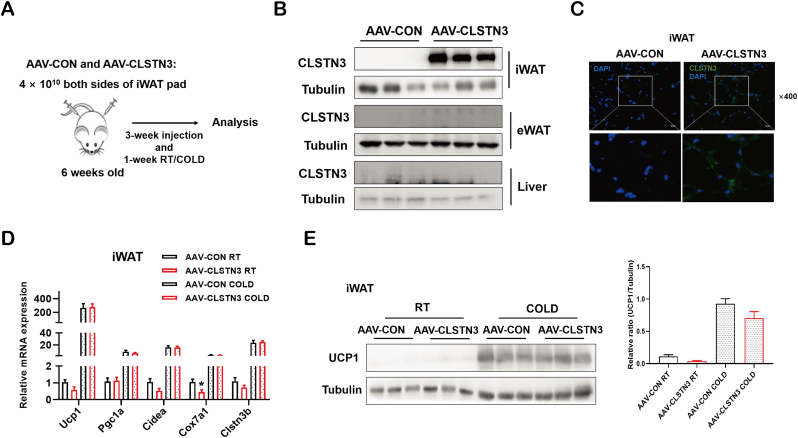
In our study, we observed the expression pattern of Clstn3/CLSTN3 gene in mouse and human WAT. Genetic association study and expression quantitative trait loci analysis were combined to identify the phenotypic effect of CLSTN3 gene variant in humans. This was followed by mouse experiments using adeno-associated virus-mediated human CLSTN3 overexpression in inguinal WAT. We investigated the effect of CLSTN3 on WAT function and overall metabolic homeostasis, as well as the possible underlying molecular mechanism.
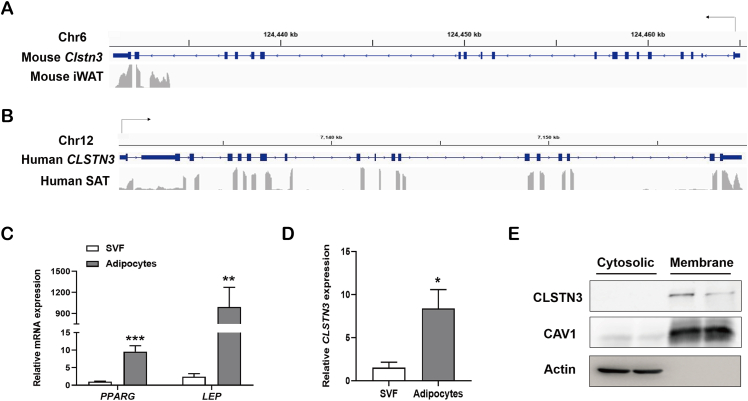
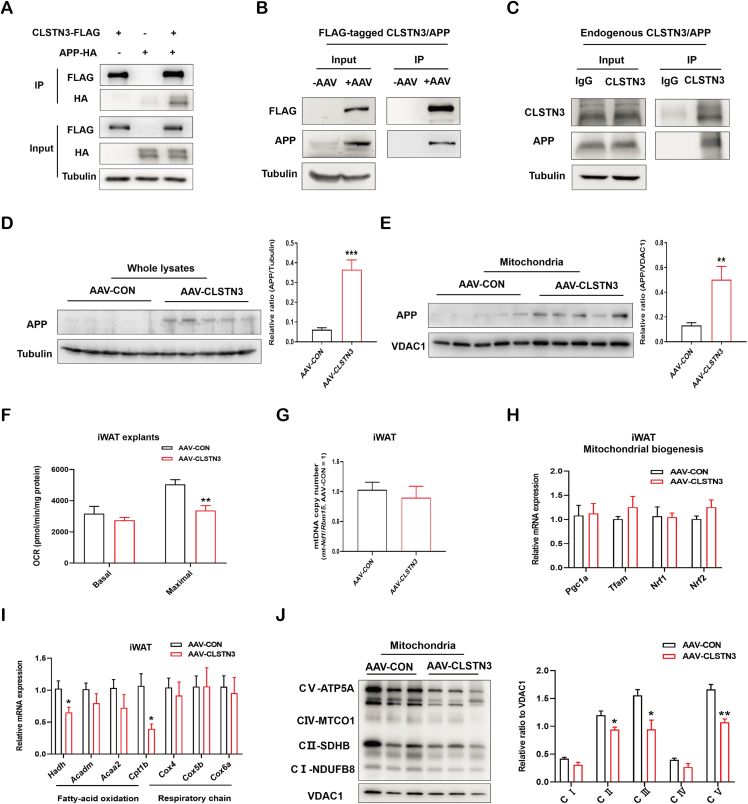
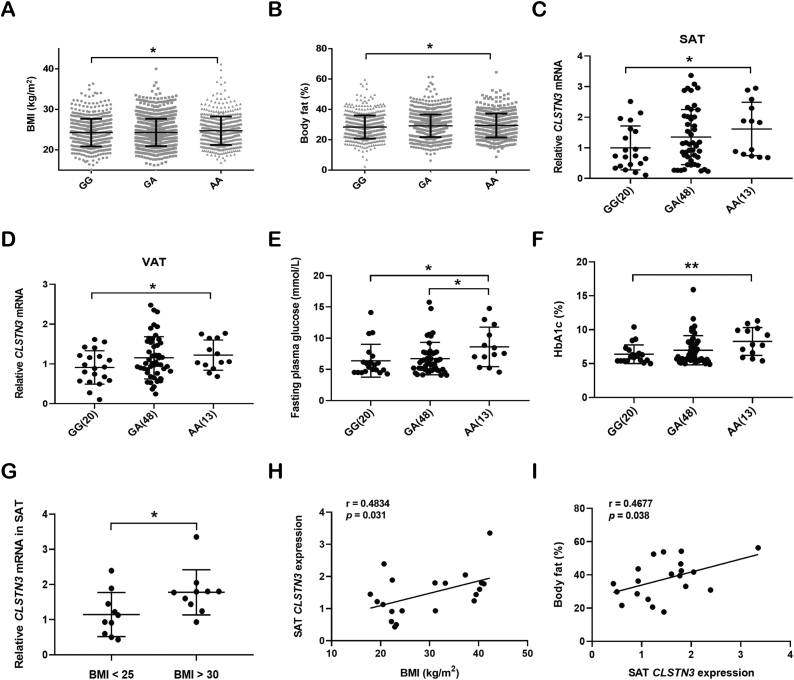
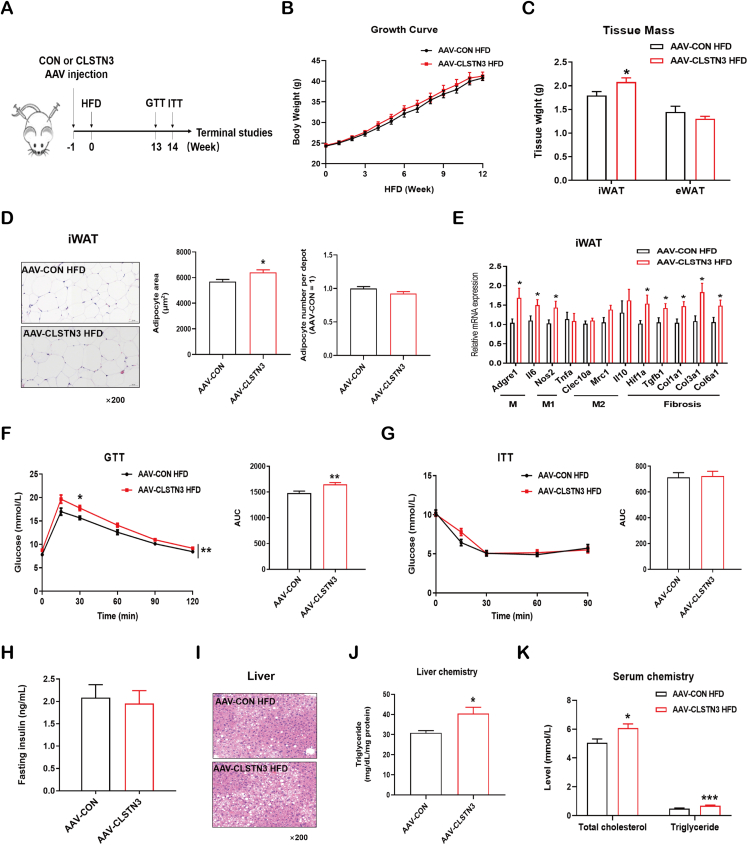
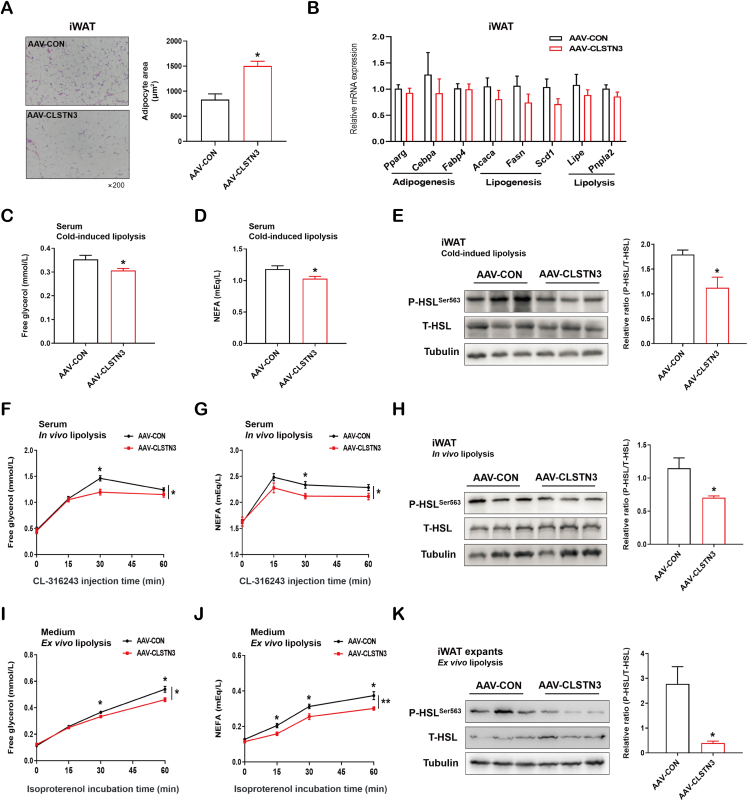
We observed that CLSTN3 gene was routinely expressed in human WAT and predominantly enriched in adipocyte fraction. Furthermore, we identified that the variant rs7296261 in the CLSTN3 locus was associated with a high risk of obesity, and its risk allele was linked to an increase in CLSTN3 expression in human WAT. Overexpression of CLSTN3 in inguinal WAT of mice resulted in diet-induced local dysfunctional expansion, liver steatosis, and systemic metabolic deficiency. In vivo and ex vivo lipolysis assays demonstrated that CLSTN3 overexpression attenuated catecholamine-stimulated lipolysis. Mechanistically, CLSTN3 could interact with amyloid precursor protein (APP) in WAT and increase APP accumulation in mitochondria, which in turn impaired adipose mitochondrial function and promoted obesity.
Taken together, we provide the evidence for a novel role of CLSTN3 in modulating WAT function, thereby reinforcing the fact that targeting CLSTN3 may be a potential approach for the treatment of obesity and associated metabolic diseases.
白色脂肪组织(WAT)具有显著的重塑能力,而这种能力的适应不良导致肥胖及其相关并发症的发生。钙黏蛋白-3(CLSTN3)是一种跨膜蛋白,可促进大脑中突触的发育。尽管该基因已被报道与脂肪组织有关,但它在调节 WAT 功能方面的作用尚不清楚。我们旨在进一步评估 CLSTN3 基因在人脂肪组织中的表达模式,并研究其对 WAT 功能的调节作用。
在本研究中,我们观察了 Clstn3/CLSTN3 基因在小鼠和人 WAT 中的表达模式。结合遗传关联研究和表达数量性状基因座分析,确定 CLSTN3 基因变异在人类中的表型效应。随后,我们使用腺相关病毒介导的人 CLSTN3 在腹股沟 WAT 中的过表达进行了小鼠实验。我们研究了 CLSTN3 对 WAT 功能和整体代谢稳态的影响,以及潜在的分子机制。
我们观察到 CLSTN3 基因在人 WAT 中常规表达,并且主要富集在脂肪细胞部分。此外,我们发现 CLSTN3 基因座中的 rs7296261 变异与肥胖的高风险相关,其风险等位基因与人类 WAT 中 CLSTN3 表达的增加相关。在小鼠腹股沟 WAT 中过表达 CLSTN3 导致饮食诱导的局部功能扩张、肝脂肪变性和全身代谢缺陷。体内和体外脂肪分解测定表明,CLSTN3 过表达减弱了儿茶酚胺刺激的脂肪分解。机制上,CLSTN3 可以在 WAT 中与淀粉样前体蛋白(APP)相互作用,并增加 APP 在线粒体中的积累,从而损害脂肪线粒体功能并促进肥胖。
综上所述,我们提供了 CLSTN3 调节 WAT 功能的新作用证据,从而强化了靶向 CLSTN3 可能是治疗肥胖及其相关代谢疾病的潜在方法的事实。