Mikkelsen Mai B, Tramm Gitte, Zachariae Robert, Gravholt Claus H, O'Toole Mia S
Dept. of Psychology and Behavioral Sciences, Aarhus University, Denmark.
Dept. of Oncology, Aarhus University Hospital, Aarhus, Denmark.
Compr Psychoneuroendocrinol. 2020 Dec 11;5:100020. doi: 10.1016/j.cpnec.2020.100020. eCollection 2021 Feb.
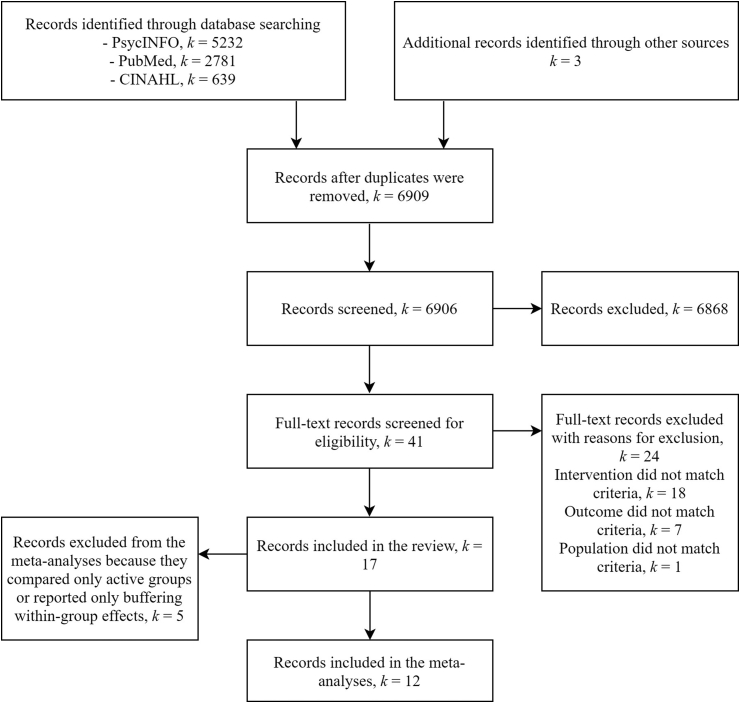
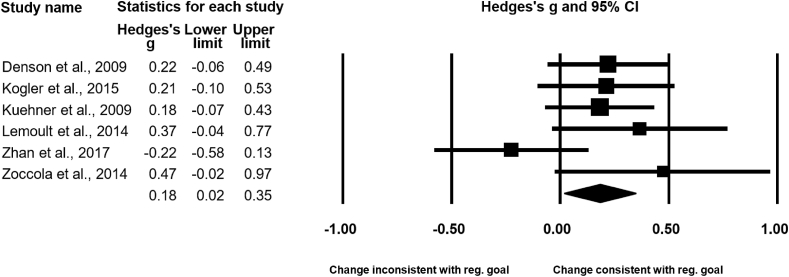
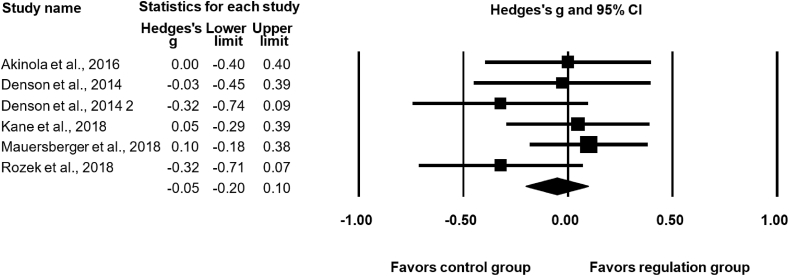
It is generally acknowledged that hormones are implicated in socioemotional behavior, yet little is known about the role of hormones in the context of emotion regulation. The aims of the present review and meta-analysis were to review and synthesize the available evidence pertaining to the effect of emotion regulation instructions on hormones, and to investigate whether this effect varies according to: type of hormone, context (e.g., emotion-induction procedure), emotion regulation characteristics (e.g., emotion regulation strategy), and presence and type of psychiatric disorder. PubMed, PsycINFO, and CINAHL were searched for experimental studies assessing the effect of instructed emotion regulation on levels of hormones (i.e., testosterone, cortisol, oxytocin, estradiol, and vasopressin) in physically healthy adults. The literature search yielded 17 relevant studies, 16 investigating cortisol and one investigating testosterone. Of these, 12 cortisol studies had eligible data for the meta-analysis. The results of the meta-analysis indicated no statistically significant effect of receiving an emotion regulation instruction compared with receiving no instruction on the cortisol response to subsequent emotion induction ( = -0.05, = .48). However, within-person comparisons of change from an unregulated response to a regulated response indicated a significant change in cortisol levels ( = 0.18, = .03) consistent with the specified regulation goal (i.e., either up- or downregulation). No statistically significant effects were found in subgroup meta-analyses conducted according to context, emotion regulation characteristics or psychiatric disorders. Taken together, the findings indicate that emotion-induction procedures are associated with increases in cortisol that may subsequently return to equilibrium regardless of emotion-regulation instructions. Based on the large gaps in research (e.g., few studies investigated other hormones than cortisol, few studies included self-report measures of emotions) identified in the present review, we conclude that the effect of emotion regulation on hormones remains poorly understood.
CRD42020157336.
人们普遍认为激素与社会情感行为有关,但对于激素在情绪调节背景下的作用却知之甚少。本综述和荟萃分析的目的是回顾和综合有关情绪调节指令对激素影响的现有证据,并调查这种影响是否因以下因素而异:激素类型、背景(如情绪诱导程序)、情绪调节特征(如情绪调节策略)以及精神疾病的存在和类型。在PubMed、PsycINFO和CINAHL数据库中搜索了评估情绪调节指令对身体健康成年人激素水平(即睾酮、皮质醇、催产素、雌二醇和加压素)影响的实验研究。文献检索产生了17项相关研究,其中16项研究皮质醇,1项研究睾酮。其中,12项皮质醇研究有符合荟萃分析条件的数据。荟萃分析结果表明,与未接受指令相比,接受情绪调节指令对随后情绪诱导的皮质醇反应没有统计学上的显著影响(效应量= -0.05,P值= 0.48)。然而,从无调节反应到调节反应的个体内变化比较表明,皮质醇水平有显著变化(效应量= 0.18,P值= 0.03),与指定的调节目标(即上调或下调)一致。在根据背景、情绪调节特征或精神疾病进行的亚组荟萃分析中未发现统计学上的显著影响。综上所述,研究结果表明,情绪诱导程序与皮质醇增加有关,无论情绪调节指令如何,皮质醇随后可能会恢复到平衡状态。基于本综述中发现的研究差距(如很少有研究调查除皮质醇以外的其他激素,很少有研究纳入情绪的自我报告测量),我们得出结论,情绪调节对激素的影响仍然知之甚少。
PROSPERO注册编号:CRD42020157336。