Zhao Rongrong, Shi Huihui, Yin Jiajun, Sun Zhen, Xu Yahui
The First Affiliated Hospital and College of Clinical Medicine of Henan University of Science and Technology, Luoyang, China.
Brain Science Basic Laboratory, The Affiliated Wuxi Mental Health Center with Nanjing Medical University, Wuxi, China.
Front Genet. 2022 Jun 9;13:915513. doi: 10.3389/fgene.2022.915513. eCollection 2022.
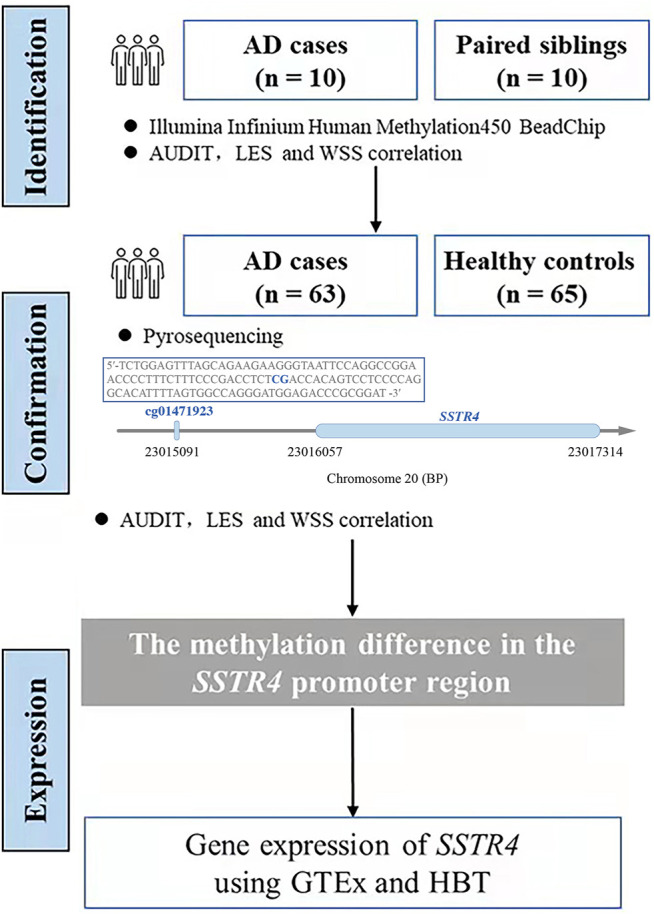
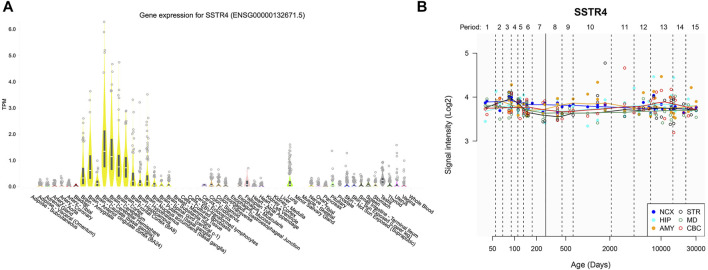
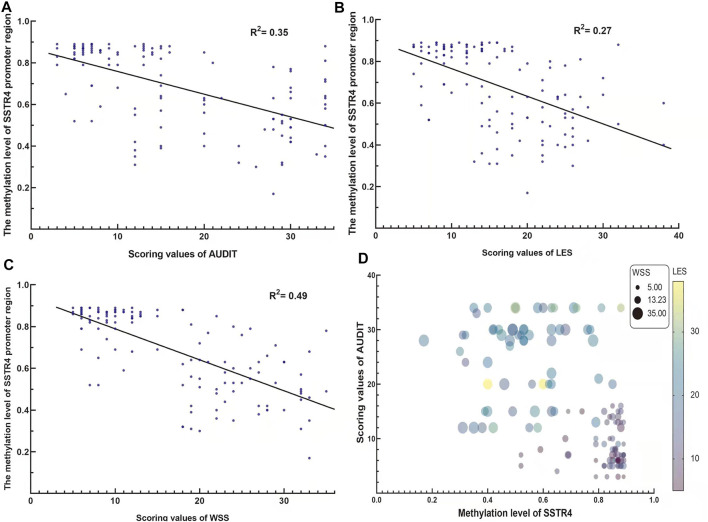
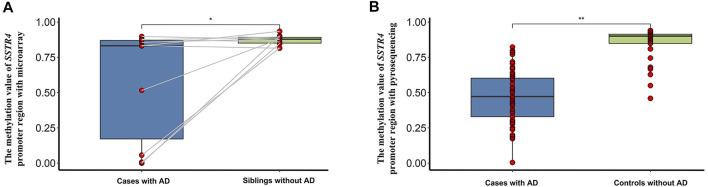
Alcohol dependence (AD), a disease can be affected by environmental factors with epigenetic modification like DNA methylation changes, is one of the most serious and complex public health problems in China and worldwide. Previous findings from our laboratory using the Illumina Infinium Human Methylation450 BeadChip suggested that methylation at the promoter of was one of the major form of DNA modification in alcohol-dependent populations. To investigate whether DNA methylation levels of the promoter influence alcohol-dependent behaviors, genomic DNA was extracted from the peripheral blood sample of 63 subjects with AD and 65 healthy controls, and pyrosequencing was used to verify the results of BeadChip array. Linear regression was used to analyze the correlation between the methylation levels of promoter and the scores of alcohol dependence scales. Gene expression of in brain tissue was obtained from the Genotype-Tissue Expression (GTEx) project and Human Brain Transcriptome database (HBT). We found the methylation levels of in AD group were significantly lower than healthy controls (two-tailed -test, 14.723, < 0.001). In addition, only weak to moderate correlations between the methylation levels of the promoter region and scale scores of Alcohol Use Disorders Identification Test (AUDIT), Life Events Scale (LES) and Wheatley Stress Profile (WSS) based on linear regression analyses (AUDIT: 0.35, < 0.001; LES: = 0.27, < 0.001; WSS: = 0.49, < 0.001). The hypomethylated status of may involve in the development of AD and increase the risk of AD persistence in Han Chinese males.
酒精依赖(AD)是一种可受环境因素影响并伴有DNA甲基化变化等表观遗传修饰的疾病,是中国乃至全球最严重、最复杂的公共卫生问题之一。我们实验室之前使用Illumina Infinium Human Methylation450 BeadChip得出的结果表明,[具体基因名称]启动子区域的甲基化是酒精依赖人群中DNA修饰的主要形式之一。为了研究[具体基因名称]启动子的DNA甲基化水平是否影响酒精依赖行为,我们从63名酒精依赖受试者和65名健康对照者的外周血样本中提取了基因组DNA,并采用焦磷酸测序法验证BeadChip芯片阵列的结果。采用线性回归分析[具体基因名称]启动子甲基化水平与酒精依赖量表得分之间的相关性。脑组织中[具体基因名称]的基因表达数据来自基因型-组织表达(GTEx)项目和人类大脑转录组数据库(HBT)。我们发现,酒精依赖组中[具体基因名称]的甲基化水平显著低于健康对照组(双侧t检验,t = 14.723,P < 0.001)。此外,基于线性回归分析,[具体基因名称]启动子区域的甲基化水平与酒精使用障碍识别测试(AUDIT)、生活事件量表(LES)和惠特利压力量表(WSS)得分之间仅存在弱至中度相关性(AUDIT:r = 0.35,P < 0.001;LES:r = 0.27,P < 0.001;WSS:r = 0.49,P < 0.001)。[具体基因名称]的低甲基化状态可能参与了酒精依赖的发生发展,并增加了汉族男性酒精依赖持续存在的风险。