Department of General Practice, Institute of Health and Society, University of Oslo, Oslo, Norway.
General Practice Research Unit, Department of General Practice, Institute of Health and Society, University of Oslo, Oslo, Norway.
J Nutr Sci. 2022 Jun 13;11:e46. doi: 10.1017/jns.2022.45. eCollection 2022.
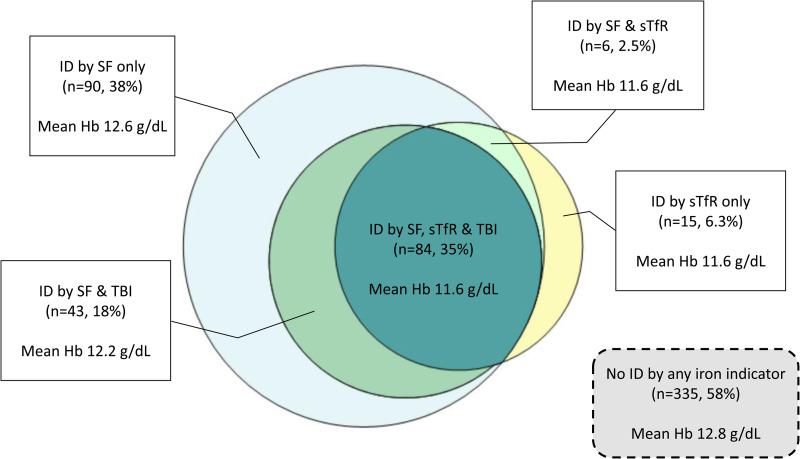
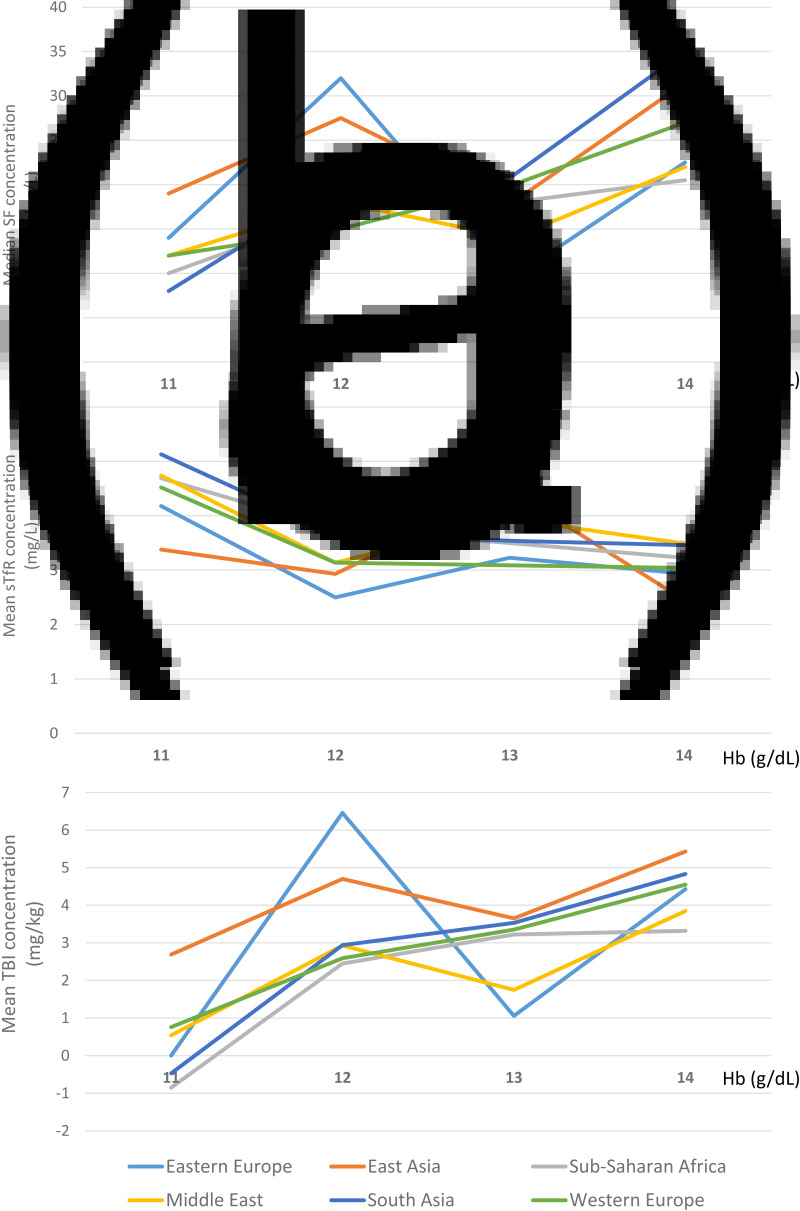
Worldwide, there are limited data on the prevalence of postpartum anaemia and iron status. The aims of the present study were to assess the prevalence of anaemia and iron deficiency (ID) by three iron indicators 14 weeks postpartum, their relations to haemoglobin (Hb) and associations with ethnicity and clinical factors in a multi-ethnic population. We conducted a population-based cohort study of 573 women followed from early pregnancy. The prevalence of postpartum anaemia (Hb <12·0 g/dl) was 25 %. ID prevalence varied from 39 % by serum ferritin (SF <15 μg/l), to 19 % by soluble transferrin receptor (sTfR >4·4 mg/l) and 22 % by total body iron (TBI < 0 mg/kg). The mean Hb concentration was 12·8 g/dl in women with no ID, 12·6 g/dl in those with ID by SF only and 11·6 g/dl in those with ID by SF, sTfR and TBI. ID by sTfR and TBI defined by the current threshold values probably identified a more severe iron-deficient population compared with ID assessed by SF. Compared with Western Europeans, the prevalence of anaemia was at least the double in ethnic minorities (26-40 % . 14 %; < 0·01-0·05), and the prevalence of ID by sTfR and TBI, but not of ID by SF < 15 μg/l, was significantly higher in some minority groups. After adjustment for covariates, only South Asians had lower Hb and higher sTfR concentration. Insufficient iron intake, gestational anaemia or ID, and postpartum haemorrhage were associated with lower postpartum Hb concentration and poorer iron status.
全球范围内,有关产后贫血和铁状况的患病率数据有限。本研究旨在评估三种铁指标在产后 14 周时的贫血和缺铁(ID)患病率,及其与血红蛋白(Hb)的关系,并在多民族人群中探讨与种族和临床因素的相关性。我们对 573 名从早孕期开始随访的妇女进行了一项基于人群的队列研究。产后贫血(Hb<12.0 g/dl)的患病率为 25%。根据血清铁蛋白(SF<15 μg/l),ID 的患病率为 39%;根据可溶性转铁蛋白受体(sTfR>4.4 mg/l)为 19%;根据总铁量(TBI<0 mg/kg)为 22%。无 ID 的妇女平均 Hb 浓度为 12.8 g/dl,SF 仅 ID 的妇女为 12.6 g/dl,SF、sTfR 和 TBI 均 ID 的妇女为 11.6 g/dl。与当前阈值相比,sTfR 和 TBI 定义的 ID 可能比 SF 评估的 ID 更能确定缺铁人群的严重程度。与西欧人相比,少数民族的贫血患病率至少是其两倍(26-40%,<0.01-0.05),某些少数族裔人群的 sTfR 和 TBI 定义的 ID 患病率较高,而 SF<15 μg/l 定义的 ID 患病率则无显著差异。调整协变量后,只有南亚人 Hb 较低,sTfR 浓度较高。铁摄入不足、妊娠期贫血或 ID 以及产后出血与产后 Hb 浓度较低和铁状况较差相关。