Puig-Saus Cristina, Ribas Antoni
Division of Hematology-Oncology, Department of Medicine, David Geffen School of Medicine, University of California, Los Angeles (UCLA), Los Angeles, USA.
Division of Surgical Oncology, Department of Surgery, UCLA, Los Angeles, USA.
Immunooncol Technol. 2019 Jun 14;1:19-26. doi: 10.1016/j.iotech.2019.06.001. eCollection 2019 Jul.
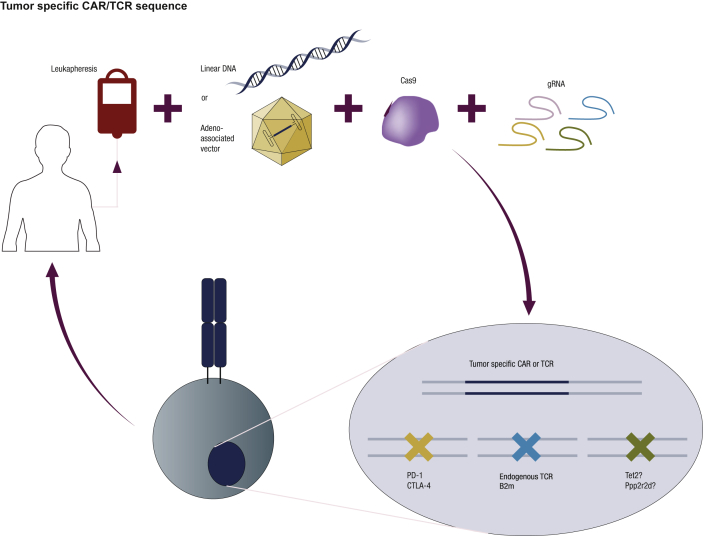
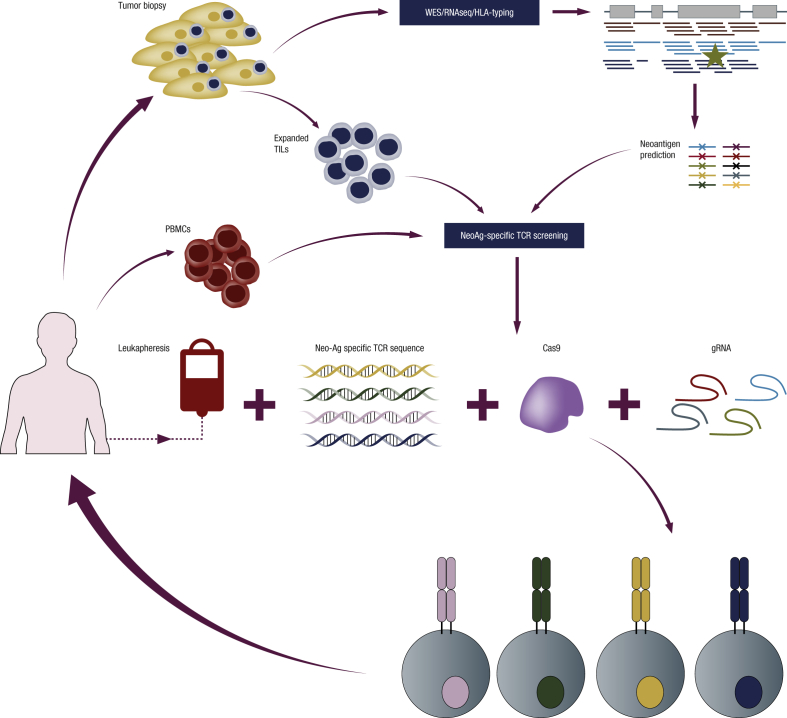
First-generation adoptive T-cell transfer (ACT) administering tumor-infiltrating lymphocytes (TILs), and second-generation ACT using autologous T cells genetically modified to express tumor-specific T-cell receptors (TCRs) or chimeric antigen receptors (CARs) have both shown promise for the treatment of several cancers, including melanoma, leukemia and lymphoma. However, these treatments require labor-intensive manufacturing of the cell product for each patient, frequently utilize lentiviral or retroviral vectors to genetically modify the T cells, and have limited antitumor efficacy in solid tumors. Gene editing is revolutionizing the field of gene therapy, and ACT is at the forefront of this revolution. Gene-editing technologies can be used to re-engineer the phenotype of T cells to increase their antitumor potency, to generate off-the-shelf ACT products, and to replace endogenous TCRs with tumor-specific TCRs or CARs using homology-directed repair (HDR) donor templates. Adeno-associated viral vectors or linear DNA have been used as HDR donor templates. Of note, non-viral delivery substantially reduces the time required to generate clinical-grade reagents for manufacture of T-cell products-a critical step for the translation of personalized T-cell therapies. These technological advances in the field using gene editing open the door to the third generation of ACT therapies.
第一代过继性T细胞转移(ACT)是给予肿瘤浸润淋巴细胞(TILs),第二代ACT则是使用经过基因改造以表达肿瘤特异性T细胞受体(TCR)或嵌合抗原受体(CAR)的自体T细胞,这两种方法在治疗包括黑色素瘤、白血病和淋巴瘤在内的多种癌症方面均显示出前景。然而,这些治疗方法需要为每位患者进行劳动密集型的细胞产品制造,经常使用慢病毒或逆转录病毒载体对T细胞进行基因改造,并且在实体瘤中的抗肿瘤疗效有限。基因编辑正在彻底改变基因治疗领域,而ACT处于这场革命的前沿。基因编辑技术可用于重新设计T细胞的表型以增强其抗肿瘤效力,生产现成的ACT产品,以及使用同源定向修复(HDR)供体模板用肿瘤特异性TCR或CAR替代内源性TCR。腺相关病毒载体或线性DNA已被用作HDR供体模板。值得注意的是,非病毒递送大大减少了生产用于制造T细胞产品的临床级试剂所需的时间,这是个性化T细胞疗法转化的关键一步。该领域中使用基因编辑的这些技术进步为第三代ACT疗法打开了大门。